

On the afternoon of November 12th, the National Assembly questioned Prime Minister Pham Minh Chinh. Representative Mai Thi Phuong Hoa ( Nam Dinh ) stated that the Government has set the task of genuinely improving the effectiveness and efficiency of the administrative apparatus by linking it with reasonable decentralization and delegation of power between different levels.
However, the implementation process still has some shortcomings and limitations, such as the slow pace of reviewing, amending, and supplementing legal regulations related to the specialized field.
Delegates questioned the Prime Minister about solutions to further promote decentralization and delegation of power between the Government and ministries, departments, and localities in the coming period.
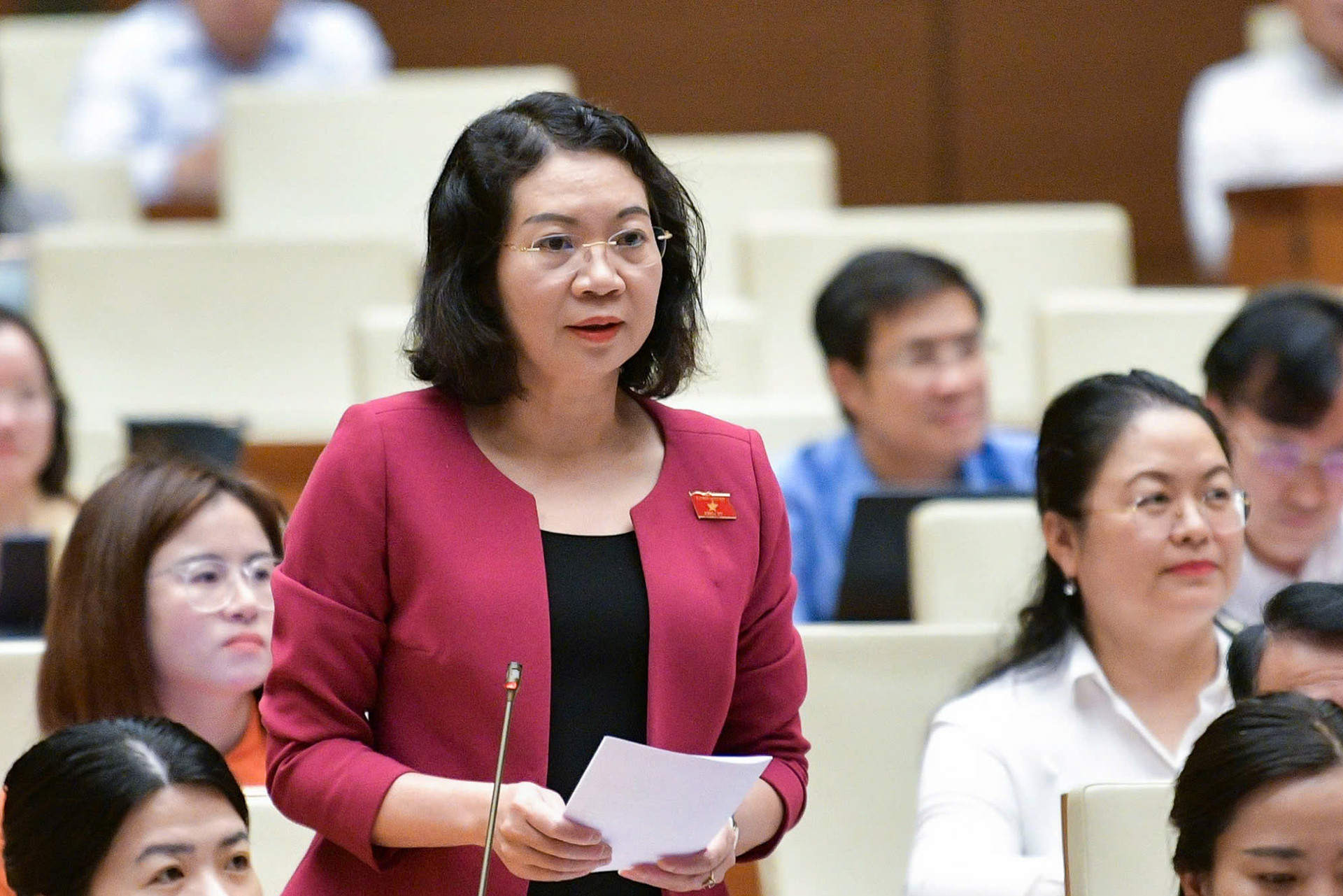
Representative Mai Thi Phuong Hoa. Photo: National Assembly
According to Prime Minister Pham Minh Chinh, decentralization and delegation of power is a major issue that has been discussed and implemented extensively. To date, the Government has submitted 14 related laws and 9 resolutions to the National Assembly for promulgation, and has supplemented or replaced 27 decrees.
However, the Prime Minister acknowledged that there are still obstacles regarding decentralization and delegation of power. "The main obstacles are concentrated at the central level, to be honest. This is a major bottleneck," the Prime Minister stated.
Regarding solutions, the Prime Minister stated that it is necessary to review legal regulations; review the institutions, functions, tasks, and powers of agencies… to recalculate decentralization and delegation of authority; improve standards and regulations; and strengthen supervision and inspection.
The Prime Minister stated that decentralization and delegation of power must go hand in hand with resource allocation and improved implementation capacity at all levels.
A growth rate of 6-7% makes it difficult to achieve the centenary target.
Next, delegate Nguyen Thi Yen (Ba Ria - Vung Tau) stated that the Government and the Prime Minister have identified institutional reform as one of the key tasks and have achieved important results in removing barriers and creating an environment and impetus for socio-economic development. The delegate asked what the Prime Minister has chosen as the most important focus for the coming period.
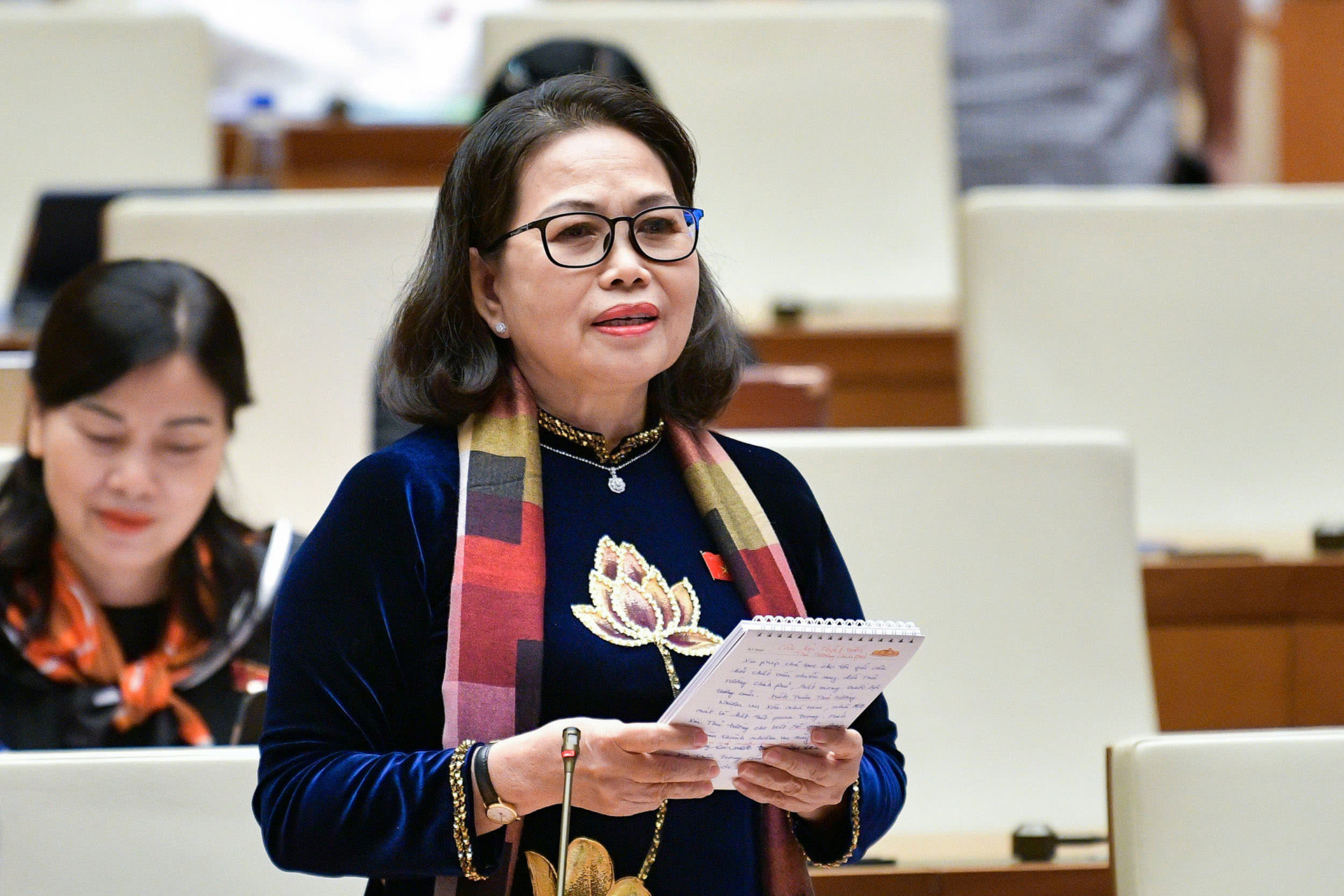
Representative Nguyen Thi Yen. Photo: National Assembly
In response to questions, the Prime Minister stated that the first priority is decentralization and delegation of power. Regarding the priorities for national development, the Prime Minister said that it is necessary to remove institutional bottlenecks – “the bottleneck of bottlenecks” as General Secretary To Lam mentioned – and that the main priority is growth.
"Prioritizing growth requires resources. If growth remains at the current 6-7%, it will be very difficult to achieve the two goals set for the 100th anniversary of the nation's founding. Prioritizing growth requires removing institutional barriers to mobilize all resources from the state, the people, society, public-private partnerships, and direct and indirect foreign investment," the Prime Minister analyzed.
Speaking about green transformation, digital transformation, and the circular economy, the Prime Minister affirmed that this is a new trend, and the implementation process faces many difficulties due to a lack of experience and incomplete legal frameworks.
Therefore, the Prime Minister believes that it is necessary to improve institutions, considering them as the goal, driving force, and resource for development. "To achieve breakthroughs, we must make breakthroughs in institutions," the Prime Minister emphasized.
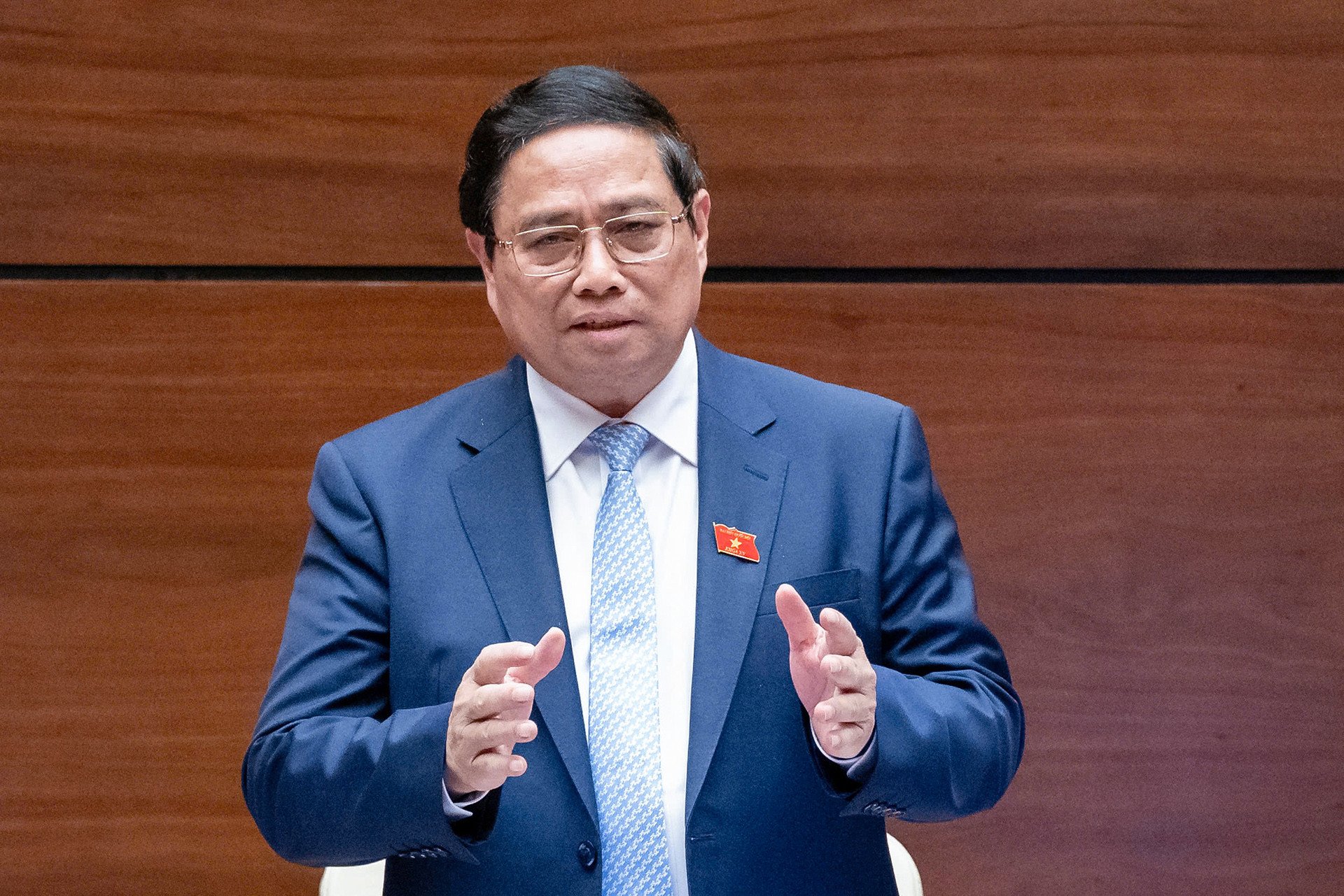
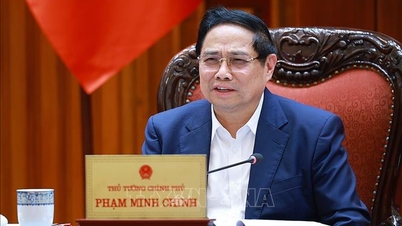
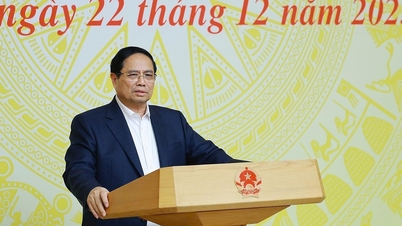
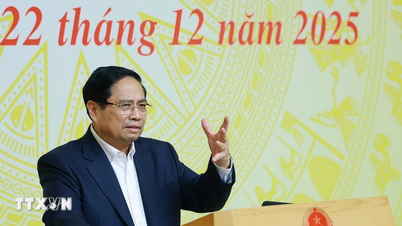
Prime Minister Pham Minh Chinh answers questions during the National Assembly session. Photo: National Assembly
The Prime Minister emphasized the principle in institution building that clearly and specifically defines what is permitted, what can be done flexibly, and opens up opportunities for development to help people and businesses feel secure when doing so.
The Party's overarching policy is to ensure the legitimate rights and interests of citizens and businesses; and to avoid criminalizing economic, civil, and administrative relations. "To achieve this, we must build a clear institutional framework," the Prime Minister affirmed.
Regarding institutional development in cyberspace management, the Prime Minister agreed with the Minister of Information and Communications' opinion that "virtual space should be the same as the real world," meaning that cyberspace should be managed in the same way as in real life.
The Prime Minister also reiterated General Secretary To Lam's directive to abandon the mindset of "if you can't manage it, ban it."
The Prime Minister emphasized that institutional building must both serve management purposes and open up creative spaces to encourage stakeholders. "Innovation leads to greater heights, creativity leads to greater reach, and integration leads to progress," the Prime Minister stated.
Representative Nguyen Thi Kim Thuy (Da Nang) raised the urgent issue of combating waste, including addressing projects that are behind schedule. Voters highly appreciate the Government's and Prime Minister's decisive and determined approach in resolving outstanding and stalled projects. However, some stalled projects and some weak credit institutions remain unresolved. The representative requested the Prime Minister to explain the reasons, solutions, and progress.
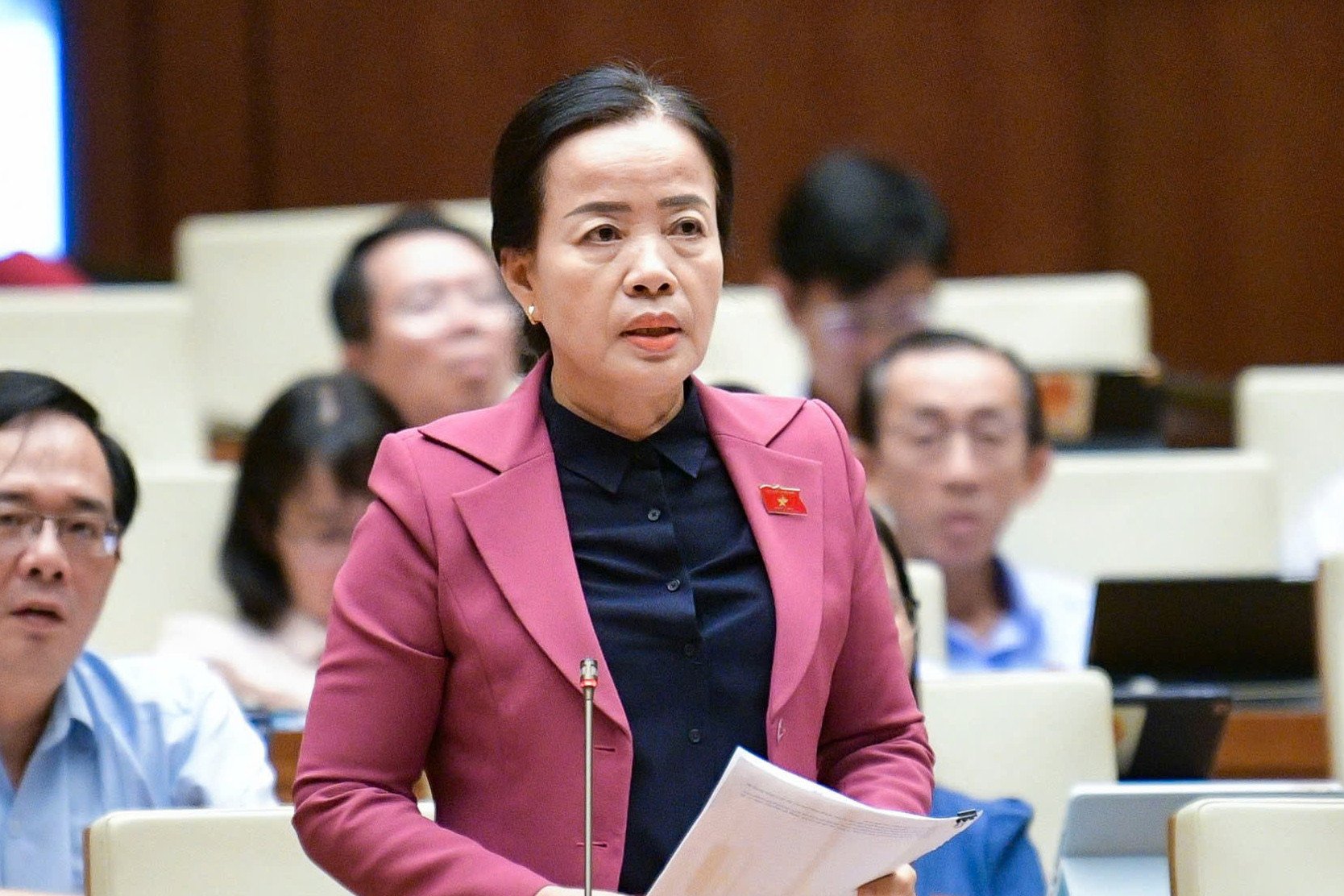
Representative Nguyen Thi Kim Thuy. Photo: National Assembly
The Prime Minister stated that there are many long-standing stalled projects. Twelve major stalled projects have essentially received approval from the Politburo, and the Government is currently implementing them within its functions, duties, and powers. For any matters exceeding its responsibilities and powers, the Government will report to and seek the opinion of the National Assembly.
The government will also review similar projects, handling them in a spirit of respecting the status quo, adhering to the principle that "losses and damages have already occurred, and those who violated the law have been dealt with," and continuing to resolve legal obstacles.
The Prime Minister said the handling should be in the same spirit as the handling of the Cat Linh-Ha Dong railway project, the O Mon Thermal Power Center, the Block B gas field, the Thai Binh 2 thermal power plant, etc.
Regarding weak banks, the Prime Minister emphasized the goal of ensuring system safety, protecting the rights of citizens, and strictly controlling assets to prevent losses. Currently, two banks have been transferred, while the remaining two banks and SCB are under review.
Vietnamnet.vn
Source: https://vietnamnet.vn/thu-tuong-phan-cap-phan-quyen-phai-di-doi-voi-phan-bo-nguon-luc-2341312.html





































































Comment (0)