

High risk but lack of protection tools.
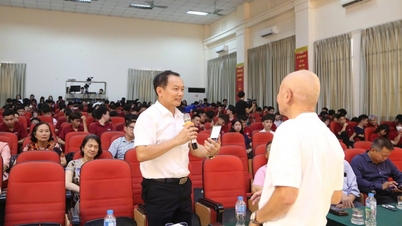
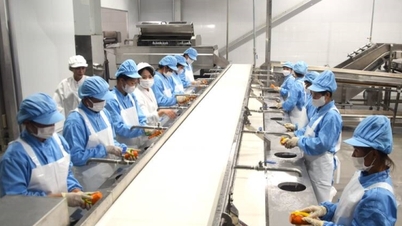
At the seminar "Improving credit policies for digital and green agriculture " organized by the People's Representatives Newspaper, Mr. Nguyen Van Long, Chairman and Director of Nhat Long Joint Stock Company, stated that the fisheries sector faces significant pressure from various risks but lacks sufficiently robust financial tools for protection.
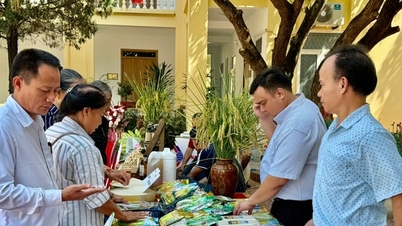
.jpg)
According to Mr. Long, aquaculture activities have been continuously affected by natural disasters and diseases in recent times. In particular, Typhoon Yagi in 2024 caused severe damage to many businesses, increasing the demand for insurance. However, in reality, access to agricultural insurance remains very limited.
The main reason lies in the inadequacies of the asset valuation mechanism. Even though businesses have complete legal documentation such as land use rights certificates or aquaculture zone plans, the inflexible land lease arrangements and financial mechanisms prevent the full recognition of asset value. This makes it difficult for businesses to meet insurance requirements and access credit.
As a result, after major natural disasters, the majority of seafood businesses remain uninsured. It is estimated that around 90% of businesses in this sector have not accessed risk insurance, reducing their ability to recover production and increasing the caution of credit institutions when providing funding.
Furthermore, businesses also face pressure from fluctuations in the output market. In the value chain model, businesses often commit to purchasing products from farmers. However, when market prices fall sharply, difficulties in selling the products will directly affect cash flow and the ability to repay debts.
Asset valuations do not accurately reflect the reality of production.
According to Mr. Nguyen Van Long, the core of the problems lies in the asset valuation method, which does not accurately reflect the specific characteristics of agricultural production, especially in the fisheries sector.
Currently, due to the mechanism of annual land lease payments and the lack of permission for long-term land lease payments, the value of land use rights is not fully recognized in the assets of enterprises. This leads to the assets on the land not being valued appropriately, limiting their potential use as collateral.
Meanwhile, the aquaculture industry requires enormous investment. Each farming cycle can use tens of millions of fry; electricity costs can reach billions of dong per month; annual feed costs can amount to hundreds of billions of dong, along with many other expenses such as biological products and system operation.
However, most assets generated during the production process, such as breeding stock, rearing costs, or biomass value, are not fully accounted for in the valuation process. This leads to a paradox: businesses make large investments but lack recognized assets to use as a basis for borrowing capital or participating in insurance.
Based on this reality, Mr. Long suggested that the method of asset valuation needs to be reformed to be more comprehensive, including both fixed assets and assets created during the production process. At the same time, land policies need to be improved to be more flexible in order to fully recognize the value of enterprises' assets.
On the part of credit institutions, there is a strong need to shift towards appraisal methods based on cash flow and value chain efficiency, instead of relying primarily on collateral. At the same time, credit products should be designed to be more suitable to the specific characteristics of agricultural production.
For businesses, improving governance capabilities, financial transparency, and the application of digital technology are crucial conditions for increasing access to capital and participating in modern financial models.
According to Mr. Nguyen Van Long, if these solutions are implemented synchronously, value chain credit will be effective, not only helping businesses expand production but also increasing added value, contributing to promoting sustainable agricultural development and enhancing the competitiveness of Vietnam's fisheries sector.
Source: https://daibieunhandan.vn/thuy-san-thieu-la-chan-tai-chinh-truc-rui-ro-10415324.html
![[Photo] First session of the 14th Congress of the Vietnam Trade Union](https://vphoto.vietnam.vn/thumb/1200x675/vietnam/resource/IMAGE/2026/06/03/1780465947883_ndo_br_img-3852-jpg.webp)

![[Photo] Secretary of the National Assembly Party Committee, Chairman of the National Assembly presides over the meeting of the Standing Committee and Executive Committee of the National Assembly Party Committee.](https://vphoto.vietnam.vn/thumb/1200x675/vietnam/resource/IMAGE/2026/06/03/1780480353201_ndo_br_bnd-2585-jpg.webp)

![[Photo] General Secretary and President To Lam presides over a meeting with the Central Organizing Committee.](https://vphoto.vietnam.vn/thumb/1200x675/vietnam/resource/IMAGE/2026/06/03/1780482764658_a1-bnd-4741-3342-jpg.webp)










































![[Video] Sunset at Lap An Lagoon – Where the sun sets over the fishing nets](https://vphoto.vietnam.vn/thumb/1200x675/vietnam/resource/IMAGE/2026/05/31/1780192137701_beach-landscape-sea-water-nature-grass-745871-pxhere-com.jpeg)



























Comment (0)