


Mechanization is not yet synchronized.
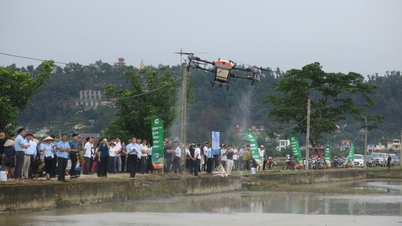
In the Mekong Delta, the use of combine harvesters for land preparation and harvesting has reached nearly 100%. Unmanned aerial vehicles (drones) are also becoming increasingly common for spraying pesticides and applying fertilizers.
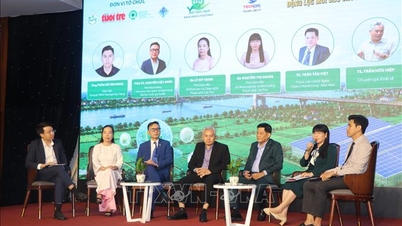
According to Ms. Nguyen Thi Giang, Deputy Director of the Department of Agriculture and Environment of Can Tho City, key stages such as land preparation, irrigation, and harvesting using combine harvesters in the city have been fully mechanized (100%). Other stages such as sowing, transplanting, and crop care have also reached approximately 90% mechanization, while the application of unmanned aerial vehicles (drones) for spraying pesticides and fertilizing has reached 50% of the cultivated area.
However, according to Mr. Ho Phi Tuan, Head of the Mechanical and Electrical Engineering Department, Department of Cooperative Economics and Rural Development ( Ministry of Agriculture and Environment ), this process still faces many major limitations. The fragmentation of farmland leads to low machinery efficiency. Notably, the domestic machinery manufacturing industry only meets less than 30% of the demand, making production heavily dependent on imported machinery.
"The delay in applying smart technologies such as artificial intelligence (AI) or the Internet of Things (IoT) also creates a major obstacle to management," Mr. Tuan noted.
Furthermore, current mechanization is not yet synchronized, mainly focusing on the "two ends" of land preparation and harvesting, while intermediate stages such as planting, caring for crops, processing by-products, and post-harvest preservation are still very weak.
According to Dr. Phan Hieu Hien, former Director of the Center for Energy and Agricultural Machinery (Ho Chi Minh City University of Agriculture and Forestry), the rice industry in the Mekong Delta currently faces a serious imbalance between drying and preservation. While the drying rate has reached nearly 98%, the rate of preservation according to mechanized standards is still less than 1%. Dr. Phan Hieu Hien argues that existing infrastructure such as covered sheds or conveyor belts are not true preservation equipment, because a standard system must be able to precisely control the temperature and humidity of the rice batch.
From a business perspective, Ms. Dao Thi Nhu He, representative of Saigon Kim Hong Company, shared a thought-provoking reality: although cluster-based seeding machines yield very good results, farmers are still hesitant to invest due to difficulties in accessing capital. Ms. He also warned against the overuse of drones in seeding because it is difficult to control the amount of seeds, leading to difficulties in achieving the goal of reducing input costs.
Analyzing the economic aspects, Ms. Hè cited the example of a cluster seeding machine costing over 100 million VND with a lifespan of 10 years, while in some cases, farmers who invested in drones had to replace 22 machines in 8 years at a cost of over 10 billion VND. Therefore, she suggested that local authorities should support farmers in accessing capital and prioritize sustainable mechanization solutions.
Solving the problem

To overcome these "bottlenecks," experts assert that the shift from individual mechanization to synchronized mechanization along the value chain is an urgent requirement; in which digital transformation plays the role of the "backbone."
Dr. Nguyen Van Hung from the International Rice Research Institute (IRRI) emphasized that the digitalization of mechanization will create a data system to effectively connect supply and demand between farmers and service providers. Instead of impulsive investments leading to localized shortages and surpluses of machinery, a data system and maps adapted to mechanization will help to flexibly coordinate resources.
Currently, the IRRI implementation team has collected data on area, planting schedules, and machinery usage levels for 2025 to develop a suitable mechanization map for rice cultivation in the Mekong Delta. This map helps identify the appropriate technology for each specific terrain, thereby effectively supporting the 1 million hectare high-quality rice program.
The application of technologies such as AI, IoT, GPS, and Big Data not only replaces human labor but also helps manage production more accurately and transparently. This contributes to resolving the logistics bottleneck caused by excessive rice production during peak seasons, which overloads drying and transportation systems.
To address the problem of "bumper harvests leading to price drops" in the rice crop, Dr. Phan Hieu Hien, former Director of the Center for Energy and Agricultural Machinery (Ho Chi Minh City University of Agriculture and Forestry), proposed applying solar-powered cold storage technology. According to Dr. Hien, cold storage not only helps maintain the best quality of rice but also creates a new economic direction. Instead of focusing on the low-profit and labor-intensive autumn-winter crop, farmers can dedicate a portion of their high-quality winter-spring rice to cold storage and sell it after six months.
According to Dr. Phan Hieu Hien, although farmers have to bear additional costs such as interest and cold storage operating fees, the profit from selling rice at a higher price (expected difference of about 2,000 VND/kg) is still significantly higher than planting a third crop. Furthermore, this method offers enormous environmental benefits by allowing the land to rest, creating a natural source of organic nitrogen from cover crops, thereby reducing fertilizer costs by 30% and cutting emissions for the next crop.
Sharing the same perspective on sustainability, Ms. Nguyen Thi Giang, Deputy Director of the Department of Agriculture and Environment of Can Tho City, believes that the rice industry needs to shift strongly towards a model that reduces costs and improves quality based on digital data. In Can Tho, circular agriculture models such as processing rice straw to produce mushrooms and organic fertilizer have helped farmers increase their income by approximately 33.5 million VND/hectare/year, while also protecting the environment.
The core objective of the agricultural sector in the coming period is to form a smart agricultural ecosystem. The focus is on building a synchronized mechanization service system through cooperatives and integrated businesses. This will help farmers access modern machinery at low cost without having to own the equipment themselves.
Furthermore, promoting the localization of agricultural machinery is considered a "vital" factor in building a modern agricultural sector. Simultaneously, land replanning and consolidation are needed to create large fields, allowing machinery to operate most efficiently. Mr. Ho Phi Tuan stated that the Department of Cooperative Economics and Rural Development is striving to improve policy mechanisms, especially by promoting the issuance of a Decree on synchronized mechanization. At the same time, training human resources for professional operation and service management will also be emphasized.
The combination of synchronized mechanization and digital technology not only enhances productivity but is also the inevitable path to reducing emissions, meeting the stringent standards of export markets, and ensuring the sustainable development of Vietnamese rice on the world agricultural map.
Source: https://baotintuc.vn/kinh-te/tich-hop-cong-nghe-so-tang-co-gioi-hoa-nganh-lua-gao-20260513163341896.htm
![[Image] Pleasant weather helps students enter the 10th grade entrance exam with confidence.](https://vphoto.vietnam.vn/thumb/1200x675/vietnam/resource/IMAGE/2026/05/29/1780034401612_ngay-1-thi-lop-10-minh-duy-8-5009-jpg.webp)


![[Photo] Ba Lang An Lighthouse - the "eye of the sea" amidst the "rock museum" of Quang Ngai province.](https://vphoto.vietnam.vn/thumb/1200x675/vietnam/resource/IMAGE/2026/05/29/1780038698840_anh-man-hinh-2026-05-29-luc-14-10-42.png)







































































Comment (0)