

 |
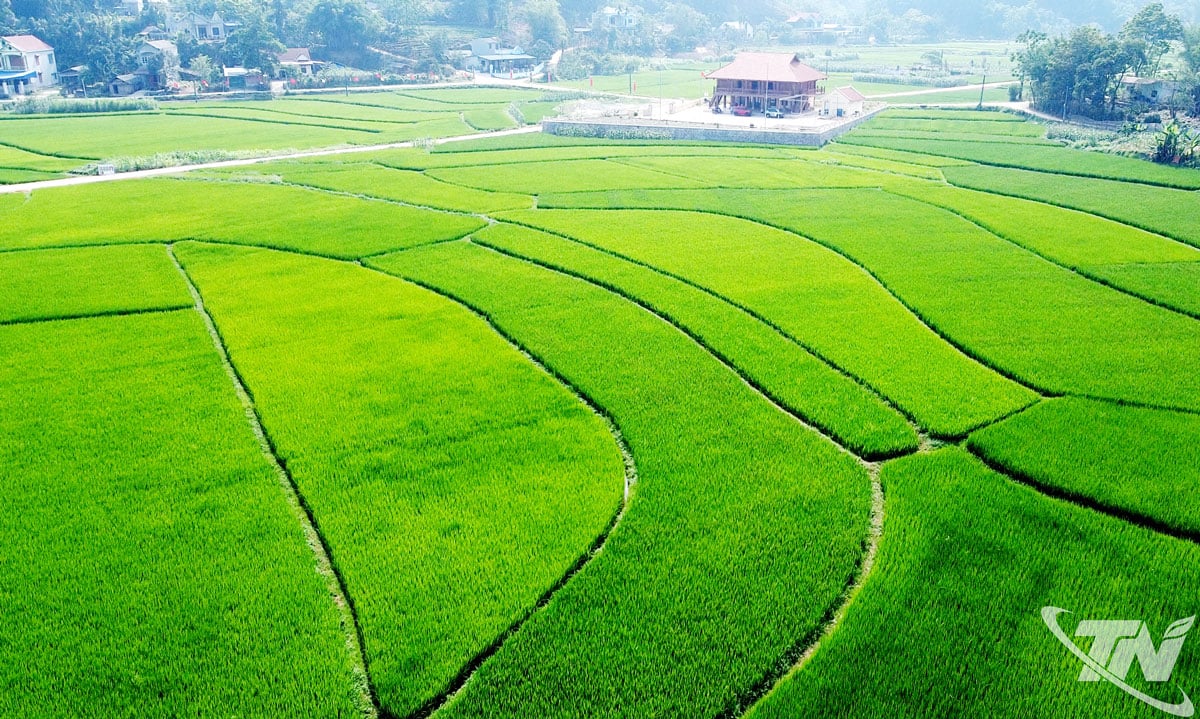
| The alternating wet-dry (AWD) rice farming model, implemented by over 100 households in Ban Dong hamlet, Hop Thanh commune ( Thai Nguyen province) since the spring crop of 2025, has brought many practical benefits. |
The first model to receive carbon credit in Thai Nguyen.
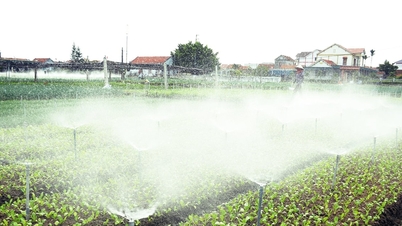
In the fields of Ban Dong hamlet, Hop Thanh commune, more than 100 households have boldly switched to a smart rice farming model using the alternating wet-dry irrigation (AWD) method. This change in practice has helped farmers save up to 30% of water and reduce methane emissions by half – a greenhouse gas that is dozens of times more potent than CO2.
As a result, the water supply from Na Mat Lake, which was previously insufficient during the peak seasons of both crops, is now adequate for downstream areas and ensures aquaculture production.
The flat fields allow for the planting of hybrid rice in the spring, while in the autumn season, the value of high-quality specialty glutinous rice varieties can be fully utilized.
More importantly, the model opens up new avenues by gradually participating in the carbon credit market, where farmers' efforts are "measured" by both economic value and environmental contribution.
For generations, farmers have been accustomed to maintaining a water level of "one handspan" from planting to harvesting. While this method limits weed growth, it creates an anaerobic environment, causing the decomposition of organic matter to generate a large amount of methane gas.
Experts estimate that one hectare of continuously flooded rice fields can emit up to tons of CO2 equivalent per crop. With its large rice-growing area, Thai Nguyen is facing pressure to reduce emissions from its agricultural sector.
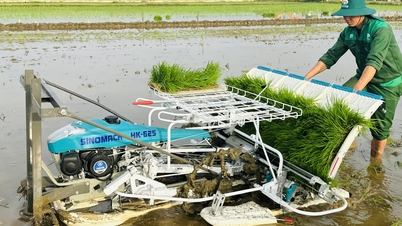
In response to the demand for green agricultural development, in 2025, the Provincial Department of Crop Production and Plant Protection, in collaboration with NetZero Carbon Company, will pilot the AWD model in On Luong commune (now Hop Thanh commune). On an area of 12 hectares, more than 100 households will participate and receive training in techniques such as sparse planting, transplanting young seedlings, organic fertilization, the use of biological products, and especially the application of a scientific irrigation and drainage process.
Farmers are also instructed to keep production logs and take photos to update them via the NetZero Carbon app, marking a significant step in bringing digital technology into the fields.
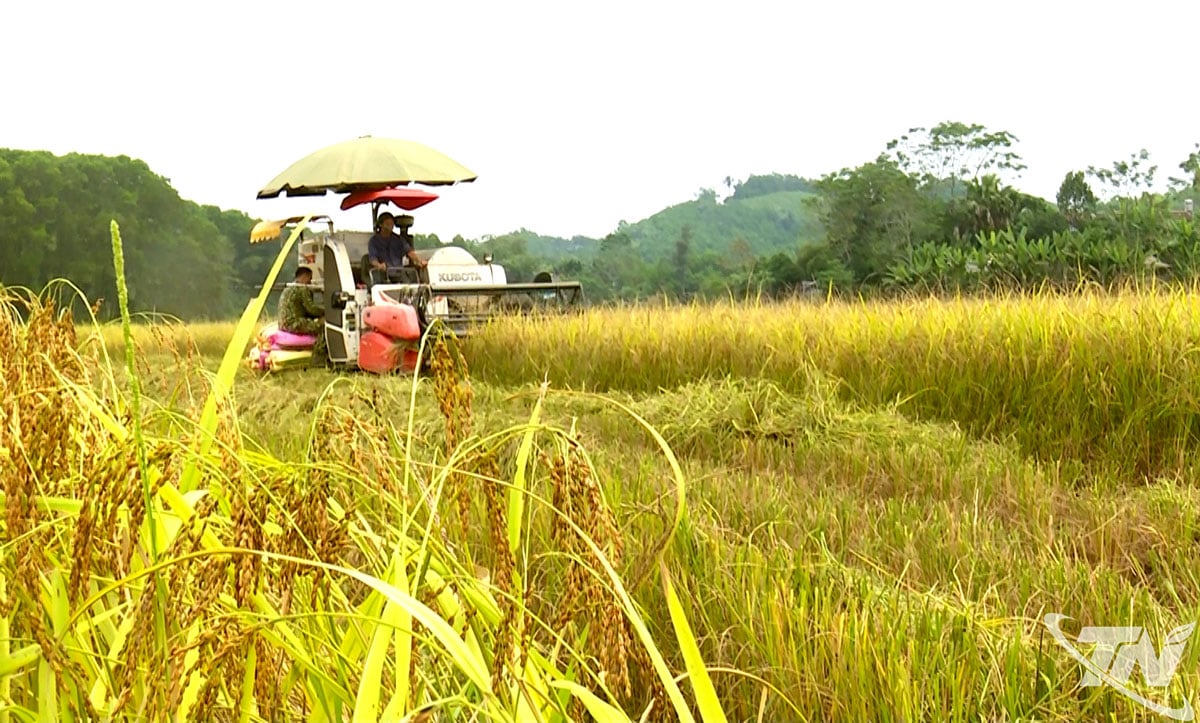 |
| In the first implementation, rice yield in the alternating wet-dry (AWD) smart rice farming model reached 6.79 tons/ha. |
Initial results show positive signs. Rice yield in the model reached 6.79 tons/ha, 0.89 tons/ha higher than traditionally cultivated fields. Average profit increased by 23.7 million VND/ha, equivalent to a 56% increase. Costs for seeds, nitrogen fertilizer, and pesticides all decreased by 30 to 50%.
Notably, all the post-harvest straw, approximately 65 tons across the model area, was treated with biological preparations instead of being burned, thus supplementing the local organic fertilizer source and contributing to reducing air pollution.
In particular, the model reduced CO2 emissions by 44.51 tons in just one crop cycle, equivalent to 3.71 tons/ha, yielding an economic benefit of 17.4 million VND. This is an important foundation for Thai Nguyen to move towards building agricultural carbon credits – a new field but one that promises to bring additional income to rice farmers.
Towards a carbon credit market
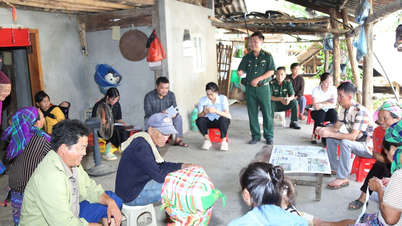
It's not just about the numbers on paper; farmers are the ones who feel the effectiveness of the model most clearly.
Ms. Phan Thi Hai from Ban Dong hamlet shared: "Compared to the old method, this model helps reduce nitrogen fertilizer by about 30%, the rice plants are stronger, and there are fewer pests and diseases. The yield is also higher, so we feel very reassured."
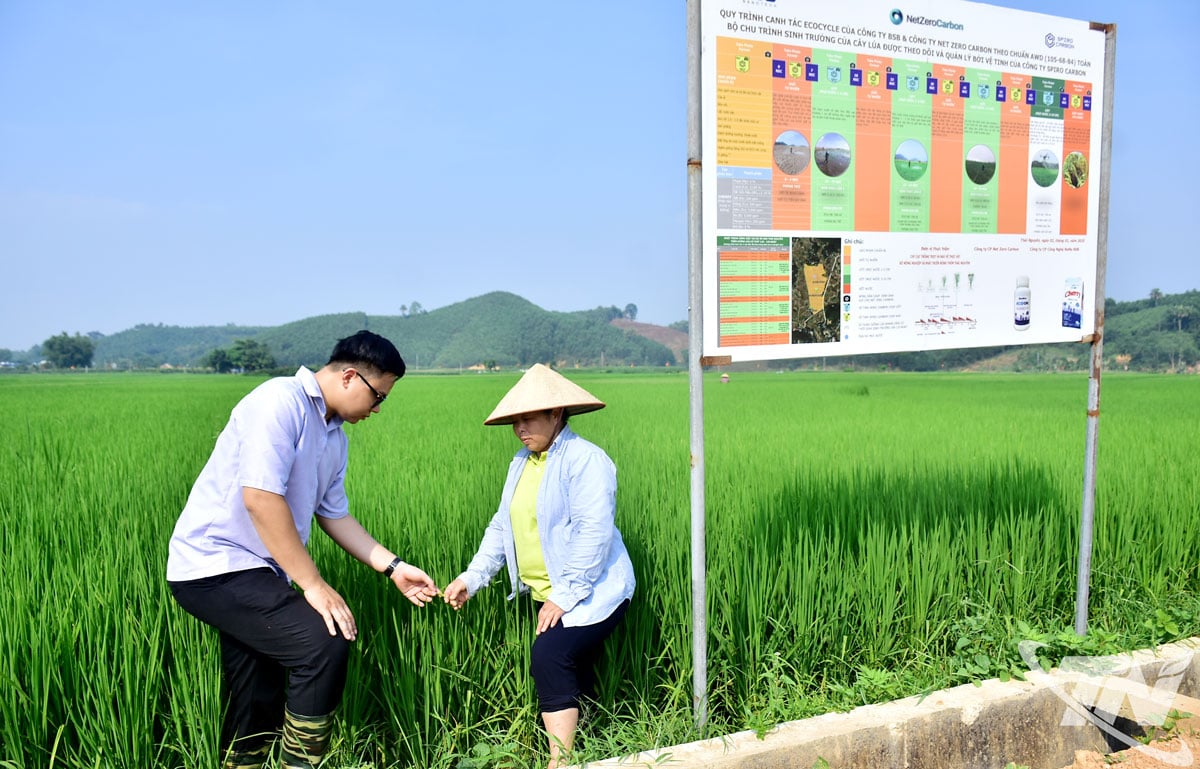 |
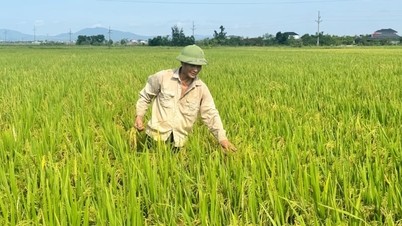
| Technical staff and local farmers inspect the rice fields where the model is being implemented. |
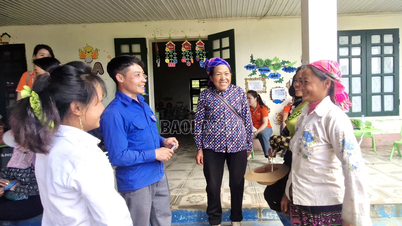
Ms. Hoang Thi Huong, Head of the Farmers' Association in Ban Dong hamlet, said: "Initially, the villagers were hesitant, but when they saw the clear benefits, from increased productivity to water conservation, everyone was excited. More importantly, we have learned how to practice agriculture while protecting the environment and taking care of our own health and the health of our family members."
From an expert's perspective, Mr. Nguyen Thanh Huong, Project Manager of BNS at NetZero Carbon Company, commented: "In addition to productivity benefits, we will use the satellite system to calculate and reward farmers with an amount of money corresponding to the amount of carbon emissions reduced."
Based on monitoring and inspection results, the BNS Project awarded greenhouse gas emission reduction certificates to participating households, becoming the first carbon credit model in Thai Nguyen province.
Meanwhile, Mr. Trinh Kim Thuy, Deputy Secretary of the Party Committee and Chairman of the People's Committee of Hop Thanh commune, said: If replicated, the model will both create sustainable livelihoods for farmers and help the locality gradually participate in the carbon credit market – a new but promising field.
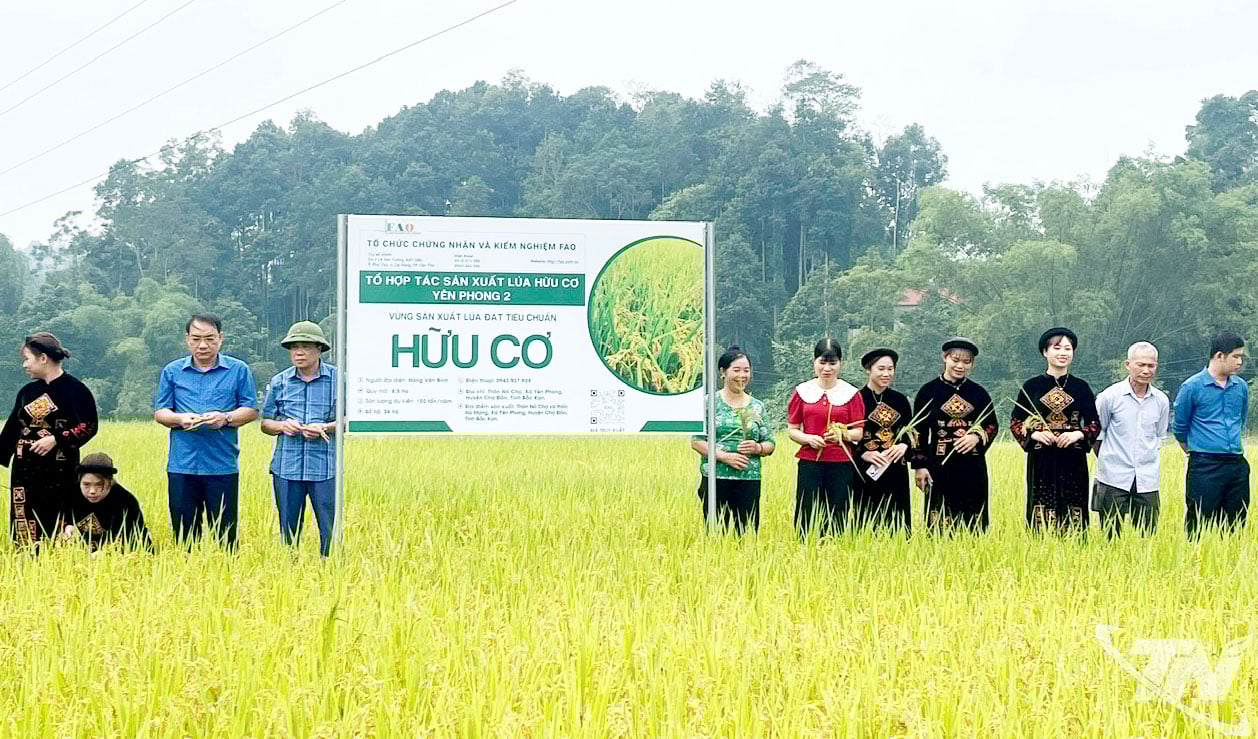 |
| The organic rice farming area in Yen Phong commune mainly uses Japonica rice varieties, yielding high efficiency. |
Mr. Nguyen Ta, Head of the Provincial Department of Crop Production and Plant Protection, emphasized: With approximately 90,000 hectares of rice, if the model is replicated, Thai Nguyen will not only increase farmers' income but also make a practical contribution to the province's and the country's goal of zero net emissions.
From a pilot model, initial results have demonstrated that carbon-credit-linked rice farming is a viable approach, meeting multiple requirements simultaneously.
This approach helps increase farmers' income, use water resources efficiently, reduce greenhouse gas emissions, and directly contribute to the goal of achieving net-zero emissions by 2050. It's not just a solution for one crop season, but a foundation for sustainable agricultural development, bringing long-term benefits to people, localities, and the nation.
Source: https://baothainguyen.vn/kinh-te/202508/tin-chi-carbon-da-loi-ich-trongcanh-tac-lua-eff0d82/

![[Photo] Admire the coral "masterpiece" amidst the million-year-old heritage of Dak Lak province.](https://vphoto.vietnam.vn/thumb/1200x675/vietnam/resource/IMAGE/2026/05/31/1780221235105_anh-man-hinh-2026-05-31-luc-16-53-27.png)

![[Photo] The General Secretary, President and his wife begin their state visit to the Philippines.](https://vphoto.vietnam.vn/thumb/1200x675/vietnam/resource/IMAGE/2026/05/31/1780230559452_anh-man-hinh-2026-05-31-luc-19-28-11.png)
![[Image] Hanoi Police officially crowned champions of V-League 2025/2026](https://vphoto.vietnam.vn/thumb/1200x675/vietnam/resource/IMAGE/2026/05/31/1780244769054_ndo_br_039d561b692be875b13a-jpg.webp)
![[Photo] Solemn bathing ceremony and Buddha procession in Hue](https://vphoto.vietnam.vn/thumb/1200x675/vietnam/resource/IMAGE/2026/05/31/1780228263543_1-jpg.webp)













![[Video] Sunset at Lap An Lagoon – Where the sun sets over the fishing nets](https://vphoto.vietnam.vn/thumb/340x192/vietnam/resource/IMAGE/2026/05/31/1780192137701_beach-landscape-sea-water-nature-grass-745871-pxhere-com.jpeg)




























![[Photo] Admire the coral "masterpiece" amidst the million-year-old heritage of Dak Lak province.](https://vphoto.vietnam.vn/thumb/402x226/vietnam/resource/IMAGE/2026/05/31/1780221235105_anh-man-hinh-2026-05-31-luc-16-53-27.png)




























Comment (0)