

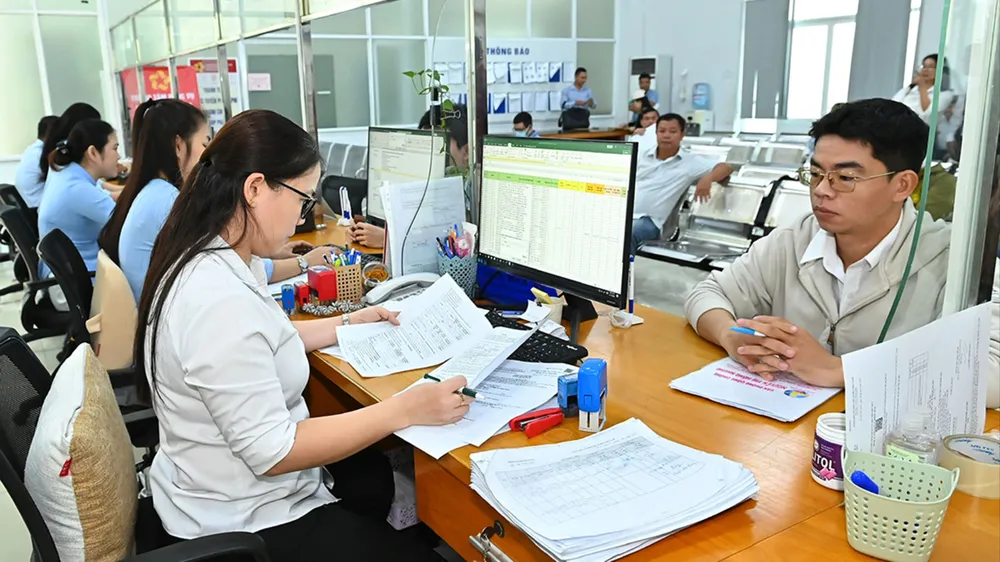
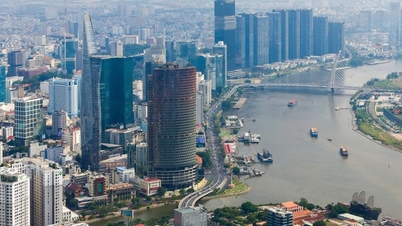
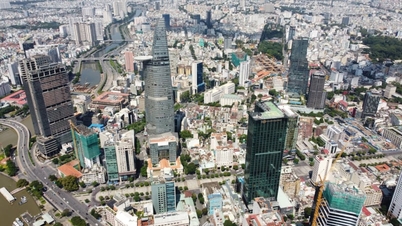
Ho Chi Minh City is at a major turning point as its post-expansion development space connects the central urban area with high-tech industries, seaports, logistics, finance, the digital economy , the green economy, the maritime economy, and regional corridors. This scale of development demands a new way of thinking about people. Today's talented individuals are not only scientists mastering core technologies, engineers designing smart urban systems, international financial experts, leading doctors, innovative educators, and entrepreneurs daring to invest in new technologies, but also grassroots officials who know how to solve people's problems with responsibility and creativity.
Therefore, valuing talent needs to be understood more broadly than simply attracting skilled individuals to work. The key is to create an environment where talented people can perform to their abilities, are trusted with challenging tasks, are protected when they dare to innovate for the common good, and are evaluated based on concrete results. A place that retains talent must have a transparent and open work culture, be open to feedback, and respect genuine value.
First and foremost, attracting and utilizing talent must begin in the public sector. A modern, service-oriented, and efficient municipal government needs a workforce with a growth mindset, a deep understanding of the law, technological proficiency, data-driven expertise, and the ability to engage in dialogue with businesses, scientists , and citizens. As the city aims for regional and international central status, its administrators must also grow to match that stature. Familiar approaches, heavily reliant on procedures and seniority, will struggle to meet the demands of managing a dynamic, complex, and highly competitive megacity.
With that in mind, the city needs to boldly expand the mechanisms for selecting, employing, and rewarding high-quality human resources in key areas such as urban planning, big data, artificial intelligence, public finance, logistics, energy transition, specialized healthcare, high-quality education , and economic diplomacy. For major projects, we must find the right people to entrust them with. For talented individuals, we must grant them clear authority, specific responsibilities, and ample space to act so they can produce results.
The way we reward talented individuals also needs to be more realistic. Salaries, bonuses, and income are important factors in an increasingly competitive job market. However, talented individuals also need a supportive environment, complete data, streamlined procedures, experimental budgets, the right to propose ideas, and mechanisms to protect them from objective risks during innovation. A skilled expert will struggle to thrive if they have to spend most of their time navigating cumbersome administrative hurdles. A proactive official will also find it difficult to maintain enthusiasm if every initiative is viewed with hesitation and fear of making mistakes.
Ho Chi Minh City also needs to know how to connect talented people in society. The city's intellectual resources lie in its research institutes, universities, businesses, startup communities, Vietnamese experts abroad, and international investors with experience in urban development, technology, finance, healthcare, and education. If we know how to gather them, the city can create a continuous flow of intellectual capital, where knowledge from both within and outside the country meets, complements each other, and together serves the city's major challenges.
Policy advisory councils, independent expert groups, and advisory networks for specific sectors and key projects need to operate effectively, avoiding mere formality. Because valuing talent is not just about inviting them, but also about knowing how to delegate tasks, listen, absorb feedback, and effectively utilize the results of their advice.
Ultimately, valuing talent is a matter of human resource culture. Talented individuals often possess strong opinions, high professional standards, a habit of critical thinking, and sometimes approach things differently from conventional thinking. A large city must be tolerant enough to listen to differing opinions, courageous enough to accept debate, and impartial enough to distinguish experimental errors from self-serving behavior. When capable people are trusted, those who dare to think are protected, and those who do genuine work are recognized, the city will have more energy to break through.
Throughout its history, Ho Chi Minh City has always grown from its people's strength, its pioneering spirit, and its willingness to take responsibility for life. The new resolution has opened up a broad vision. To make that vision a reality, the city needs to start with a policy of genuinely valuing, progressive, and humane talent. A city that wants to reach new heights must know how to place its trust in people capable of creating new value.
Source: https://www.sggp.org.vn/trong-dung-nhan-tai-nen-tang-de-tphcm-but-pha-post854476.html

![[Photo] The heat at the fireworks display site on the opening night of the Da Nang International Fireworks Festival 2026](https://vphoto.vietnam.vn/thumb/1200x675/vietnam/resource/IMAGE/2026/05/27/1779889741485_ndo_br_z7872039145157-fecaba5112f39e8352544099d7ef4738-5140-jpg.webp)
![[Photo] Life on both banks of the river returns to its bustling pace on the day the Long Bien Bridge opens to traffic.](https://vphoto.vietnam.vn/thumb/1200x675/vietnam/resource/IMAGE/2026/05/28/1779949763708_cau-long-bien-minh-duy-7-3610-jpg.webp)






























































Comment (0)