

For the first time, a team of scientists in China has grown kidneys containing human cells inside pig embryos, showing promise as an alternative to organ transplantation.
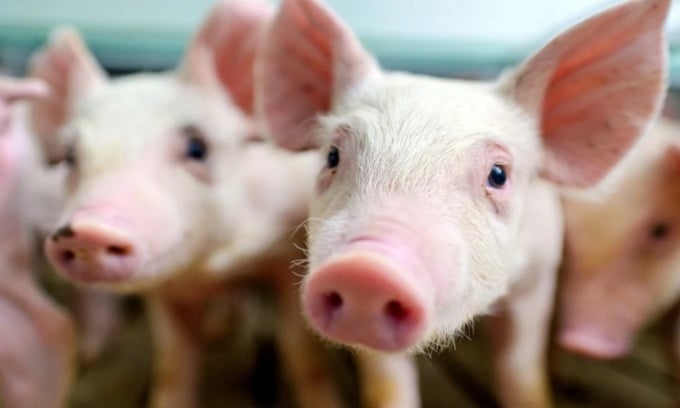
Organs grown in pig embryos contain 50-60% human cells. Photo: SCMP
A research team at the Guangzhou Institute of Biomedical Sciences under the Chinese Academy of Sciences published a paper in the journal Cell Stem Cell on September 7th, showing the potential for growing organs for transplantation and research in pigs. According to China Science Net, this is the first time human organs have been grown inside the body of another species.
Kidneys are one of the most common organs for transplantation. However, the shortage of donated kidneys makes it difficult to provide healthy organs to recipients. Cultivating human organs within the embryos of large mammals could be a groundbreaking solution to this problem. Lai Liangxue, co-author of the study, explains that his team's method involves introducing human stem cells into the recipient's tissue, improving the cultivation of human stem cells within the embryo.
Of the more than 1,800 embryos used in the study, five developed successfully without degeneration. These embryos nurtured kidneys containing 50-60% human cells. Due to ethical considerations and the risk of embryonic degeneration, the gestation was stopped at 28 days. The research team used the CRISPR gene-editing tool to target two genes responsible for kidney development and restrict the growth of pig cells. Dai Zhen, a member of the research team, said this created space in the pig embryos, leaving room for the human cells to develop.
A major concern when creating hybrid embryos (embryos containing cells from both humans and pigs) is the possibility of human cells contributing to the pig cell line. Human cells were found in the brain and spinal cord of the embryos, but not around the genital groove, indicating that the human cells did not mix with the pig's reproductive cells. Darius Widera, professor of stem cell biology at the University of Reading in the UK, commented that the research is a major milestone, but the discovery of human cells in the embryo's brain raises "important ethical questions".
According to the study, this could be overcome by removing the gene responsible for the development of the specific cell line, but that would also affect the kidney. The paper also identifies other challenges such as the large number of degenerated embryos in the experiment, the possibility of organ rejection due to differences in cell type, and other problems that could arise if the embryo survives longer.
Researchers are working to overcome the organ shortage problem. Genetic modifications can prevent the expression of genes that cause rejection, according to the Langone Medical Center at New York University (NYU). Last year, doctors at NYU successfully transplanted a pig kidney with just one genetic modification into a brain-dead patient. The organ continued to function 32 days after the procedure.
An Khang (According to South China Morning Post )
Source link


![[Photo] General Secretary and President To Lam presides over the meeting to approve the draft report on the results of the second inspection by the Politburo of the Standing Committee of the Hanoi City Party Committee.](https://vphoto.vietnam.vn/thumb/1200x675/vietnam/resource/IMAGE/2026/05/26/1779789811432_a2-bnd-4430-9620-jpg.webp)













![[GALLERY] Ubisoft suffers record losses, cancels 7 games, shocking the gaming industry.](https://vphoto.vietnam.vn/thumb/402x226/vietnam/resource/IMAGE/2026/05/26/1779805711288_uni-2-png.webp)



![[GALLERY] USB-C AA batteries are causing a sensation because they're so convenient for tech enthusiasts.](https://vphoto.vietnam.vn/thumb/402x226/vietnam/resource/IMAGE/2026/05/26/1779798818575_p-png.webp)






























































































Comment (0)