

Young people say it's change, it's civilization. But for the elderly who have spent their whole lives diligently working the land by the bamboo groves of their villages, year after year, it's like a farewell with no promise of return.
All of that will remain in memory.
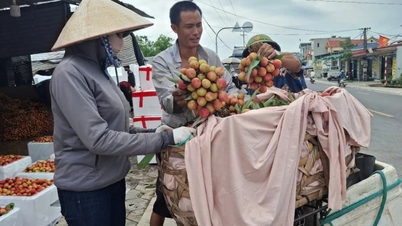
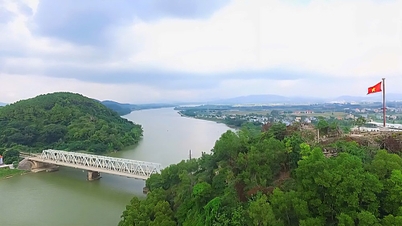
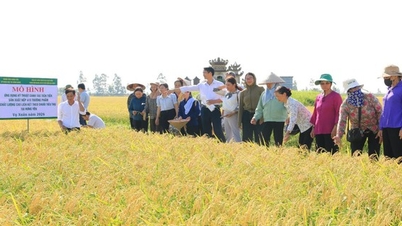
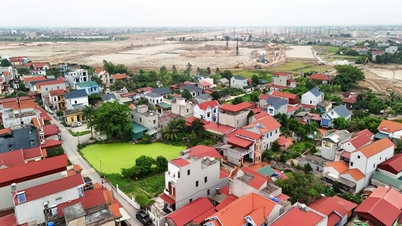
Dai Lan is an ancient village formed by the diligent hands of its people and the alluvial soil of the Mother River. Each harvest season, the fields along the river are ablaze with the golden color of mustard flowers or the endless green of corn and beans. The villagers are accustomed to helping each other through thick and thin, familiar with the calls and shouts along the Front and Back roads, and accustomed to the afternoon market at the beginning of Thua Muoi road, selling a few bunches of vegetables and fruits.
For generations, the village's customary rules have not only been written on paper but have been ingrained in the behavior of each individual: respecting elders and being considerate to juniors, the whole village helping out when someone has a problem, the whole village attending a funeral, and helping each other harvest agricultural products during the flood season…
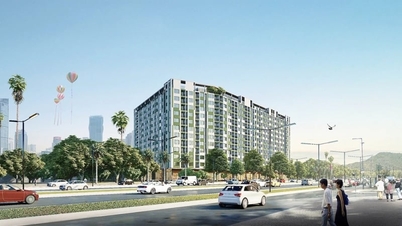
Soon, all of this will only remain in memory. The village communal house, dedicated to four guardian deities since the 17th century, where rituals were performed to pray for a bountiful harvest every spring, and the moss-covered pagoda with its evening bells echoing over the river, will all fade into the background behind towering concrete buildings.
One can build a more beautiful new neighborhood, open a more spacious road, but how can one restore the soul of a village that has existed for hundreds of years?

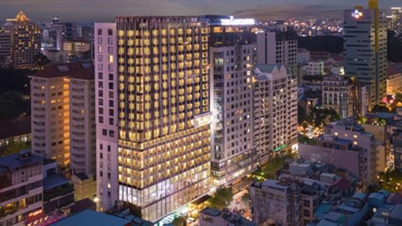
What will the farmers in my hometown live on when they no longer have their fields? Those hands, accustomed to planting corn, beans, and tomatoes, are now struggling to adapt to city life. The compensation money will eventually run out, but the lost land is gone forever. Many elderly people say they never imagined they would have to leave this place and live on the twentieth or thirtieth floor, looking down at the ground below as if it were a strange, desolate place.
My aunt said, "I've lived in this village for almost 70 years, growing up surrounded by rice and potatoes. Life as a farmer means no pension, but thanks to this small plot of land, I can sell some vegetables today and some cabbage tomorrow, so I have some money coming in. I haven't been a burden to my children and grandchildren. If I had to leave this place, I don't know what I would do..."
Ms. Hang Nga, a villager from my area, lamented on Facebook: “This place holds the graves of our ancestors for countless generations. There is the familiar school where our children and grandchildren are studying. There are houses that have been our home for a lifetime, places to return to after each day of earning a living. There are rice fields, riverbanks, village roads – all of which have become the very blood and flesh of the people living along the river for generations.”
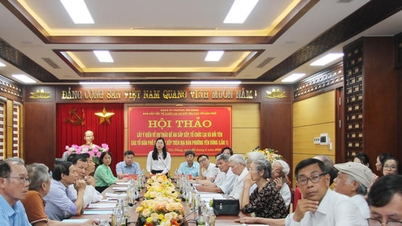
We understand and support the policy of urban development and renovation to make the country more civilized and modern. However, we hope that during the planning process, leaders at all levels will listen to and understand the lives of the people here.”
The most beautiful girls are from Tranh village/The most sassy girls are from Nhot village...
Next to my village is Tranh Khuc village – a village with a traditional craft that's several hundred years old. Countless generations have been born amidst the fragrant scent of banana leaves, the crackling of fire, and the bubbling of water in pots of sticky rice cakes simmering over the fire all night. In Tranh Khuc, making sticky rice cakes is not just a means of livelihood; it's the village's tradition. The elders say this craft is a blessing from King Hung, passed down to his descendants. Thanks to those square green cakes, generations of villagers have grown up, married, and educated their children.
Every year-end, the entire village stays up all night. Some wash leaves, others rinse rice, some chop meat, and others light the stoves. The smoke from the stoves, mingled with the village's aroma, creates a unique scent found nowhere else. Tens of thousands of sticky rice cakes from Tranh Khuc are transported by truck to markets throughout Hanoi , and from there they appear on ancestral altars and in the reunion meals of countless Vietnamese families. People eat sticky rice cakes not only to satisfy their hunger, but also to remember that they are descendants of Lac and Rong.
In 2011, the village was recognized as a Traditional Craft Village of Hanoi. In 2019, the craft of making Tranh Khuc sticky rice cakes was inscribed as a National Intangible Cultural Heritage. We were once so proud. But now, facing the large-scale project of a city along the Red River, many people in the village feel a sense of emptiness.
Because sticky rice cakes (bánh chưng) cannot be produced on cold conveyor belts. They need a spacious area to dry the leaves and strings. They need open spaces for the glutinous rice grains to absorb the essence of heaven and earth. And most importantly, they need the spirit of community – where everyone shares bundles of leaves and strings.

Behind the changes...
What worries us most isn't losing our old house, but losing our livelihood. Farmers, accustomed to wrapping rice cakes and tending the fire their whole lives, will they be able to become factory workers or street vendors in the city? Without the village square and communal living space, the craft of making rice cakes will be relegated to a mass-produced, soulless, and bland commodity.
Perhaps a beautiful city will rise alongside the Red River. But if one day, Tranh Khuc sticky rice cakes are merely a name in memory, it will not only be the sadness of one village. It will be the loss of a part of the Vietnamese soul that has been preserved through generations of fiery battles.
When people move to apartment buildings in the future, where will they put those giant pots of bánh chưng (traditional Vietnamese rice cakes)? Will the children born in high-rise apartments still know the feeling of toddling around in the courtyard on New Year's Eve, smelling the fragrant aroma of freshly baked bánh chưng in the cold wind, or sleeping soundly in their mother's warm embrace, listening to her stories from years past?
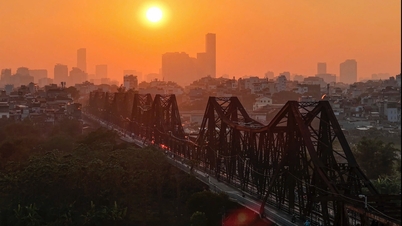
The riverside city will rise, modern and magnificent. Wide roads will replace the narrow village lanes. But amidst the city lights, perhaps there will still be people from Dai Lan who stay awake all night, remembering the smell of freshly harvested corn, the sound of frogs calling in the fields, the afternoon market held at the crossroads at the edge of the village...
The village becoming a city is a step in the course of the times.
But behind these changes, a part of the village culture, the soul of the traditional villages in the Northern Delta, will also quietly disappear.
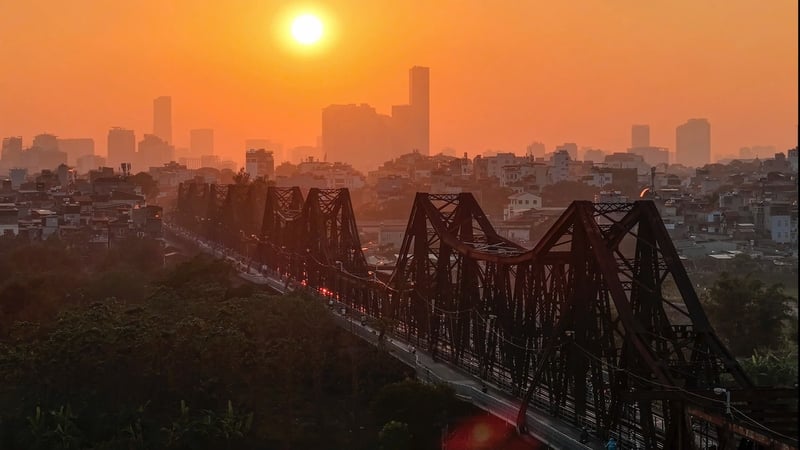
Hopefully, in the future, when the Red River landscape axis mega-project is implemented and completed, alongside the beautiful, lush green parks, the magnificent high-rise apartment buildings, and even the golf courses and multi-purpose sports fields, people will still be able to catch glimpses of the soul and spirit of the traditional Northern Vietnamese countryside in the modern architecture, reminding our descendants of a thousand-year history of village gates, village wells, village communal houses, and bamboo groves...
Source: https://danviet.vn/tu-bo-xoi-ruong-mat-den-nhung-cao-oc-choc-troi-d1428641.html

![[Photo] General Secretary and President To Lam presides over the meeting to approve the draft report on the results of the second inspection by the Politburo of the Standing Committee of the Hanoi City Party Committee.](https://vphoto.vietnam.vn/thumb/1200x675/vietnam/resource/IMAGE/2026/05/26/1779789811432_a2-bnd-4430-9620-jpg.webp)


























































Comment (0)