

Using Google Maps to assess dengue fever outbreaks.
The initiative "Applying Google Maps to delineate and preliminarily assess dengue fever outbreak trends in Hanoi" not only brings practical effectiveness in disease prevention and control but also clearly demonstrates the determination to innovate and promote digital transformation of the Capital's Preventive Health sector.
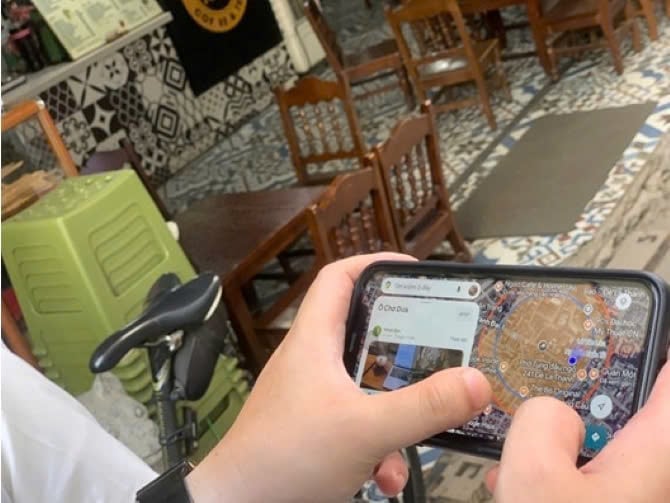
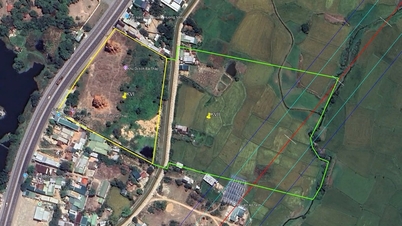
Using Google Maps to pinpoint and preliminarily assess dengue fever outbreak trends in Hanoi . Photo: Department of Health.
According to Mr. Bui Van Hao, Director of the Hanoi Center for Disease Control (CDC), in the context of infectious diseases always posing a potential risk of outbreaks, especially dengue fever, early detection, containment, and timely handling of outbreaks play a decisive role in protecting public health.
However, in reality, in many localities, epidemiological surveillance previously relied mainly on manual methods such as record-keeping, using paper maps, or delineating areas based on field experience. This not only wasted time but also carried the risk of errors, making it difficult to accurately assess the level of risk and the spread of the disease.
Stemming from this practical need, a team of experts from the Hanoi CDC researched and developed the initiative "Applying Google Maps in zoning and preliminary assessment of dengue fever outbreak trends in Hanoi".
The solution will be piloted from July 2025 in a number of communes and wards in the city, aiming to improve the capacity of grassroots health facilities to respond to epidemic prevention and control within the two-tiered local government structure, while also promoting the application of information technology in professional activities.
According to Mr. Bui Van Hao, the highlight of the initiative is its utilization of free, popular, and easy-to-use technology platforms such as Google Maps, Google My Maps, and Google Sheets to build a complete epidemiological management process.
Instead of having to use expensive, technically complex specialized GIS software or separate GPS devices, healthcare workers now only need a smartphone with an internet connection to perform all tasks, from collecting case coordinates, updating data, building case distribution maps, identifying outbreak areas, to monitoring the disease's progression in the area.
According to MSc. Dr. Nguyen Viet Anh - Department of Infectious Disease Prevention and Control, CDC Hanoi, accessing and mastering digital technology platforms is an essential requirement in the context of modern healthcare. Digital transformation not only helps reduce administrative pressure on primary healthcare but also contributes to improving management efficiency, quality of care, and protection of people's health.
The Hanoi CDC organized training sessions for staff at the Long Bien Ward Health Station. During these sessions, health workers received detailed instructions on creating and managing epidemiological map data, updating case locations, identifying risk areas, classifying outbreaks using visual color coding, monitoring case distribution density, and extracting data for surveillance purposes. Simultaneously, map data can be quickly shared between specialized departments, facilitating coordinated disease control efforts.
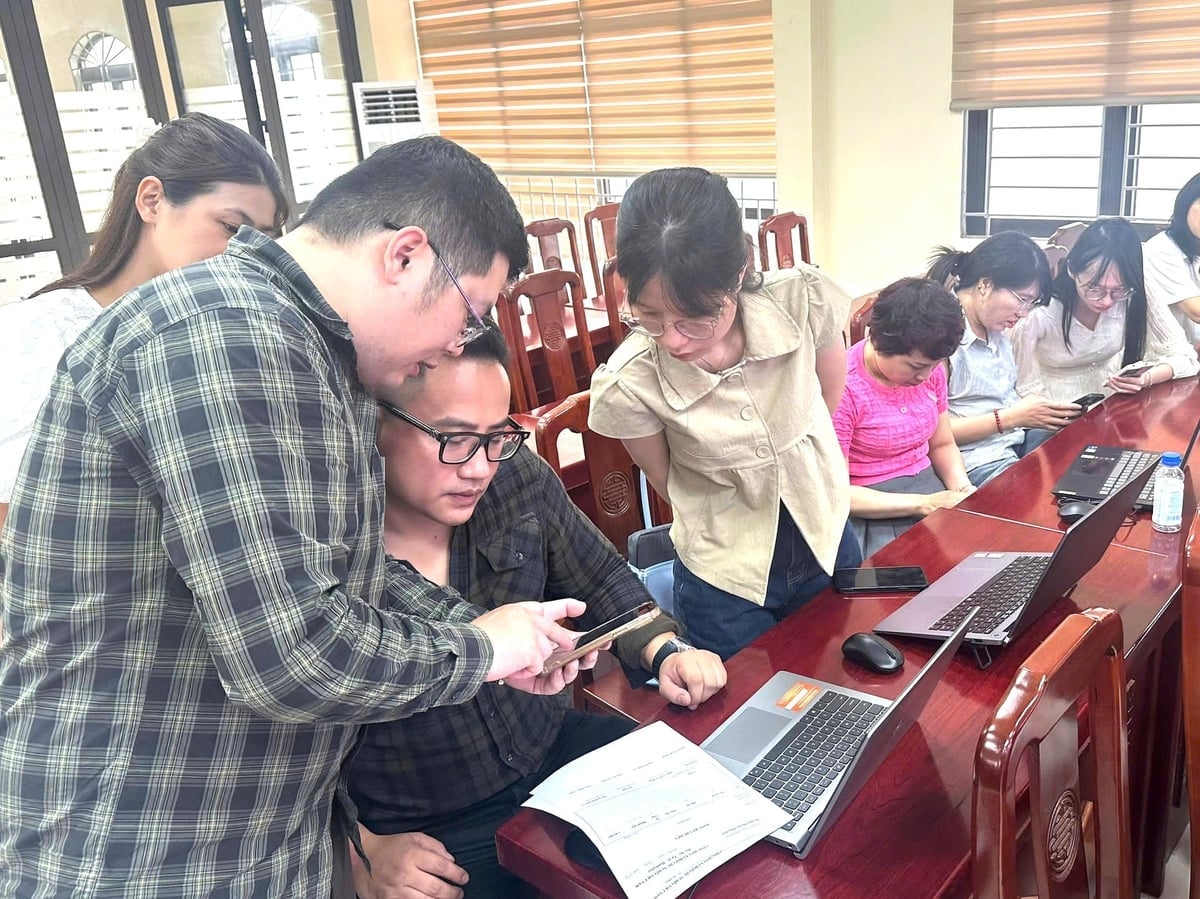
Digital mapping applications have been deployed to the grassroots level. Photo: SYT.
Practical implementation at the local level has shown that the application of digital maps has brought about significant changes in epidemiological surveillance.
At Long Bien Ward Health Station, along with the implementation of electronic health records, medical examination and treatment management software, the use of chip-embedded citizen identification cards and many other digital platforms, the unit has proactively adopted and applied the technique of epidemic containment using Google Maps to its professional activities.
According to MSc. Dr. Nguyen Viet Anh, while previously it could take 2-4 hours, or even longer depending on the terrain and complexity of the area, with the new solution, the time required is reduced to only about 10-15 minutes. The visual satellite map helps health officials easily identify households, residential areas, roads, and related risk factors, thereby improving the accuracy in determining the extent of the outbreak.
One of the application's outstanding advantages is its ability to provide a preliminary assessment of disease trends in real time. With case data continuously updated on the digital map system, healthcare workers can quickly identify areas at risk of outbreaks, monitor the increasing or decreasing trend of cases, and proactively implement measures such as epidemiological investigations, mosquito larva eradication, environmental sanitation, mosquito control spraying, and enhanced health education and communication for the public.
Furthermore, to share experiences and replicate digital transformation solutions in the field of preventive medicine, the Hanoi CDC organized training and technology transfer on the application of Google Maps in epidemiological surveillance for professional staff of the Cao Bang Provincial CDC. The implementation of this model not only affirms the practicality and effectiveness of the initiative but also contributes to promoting digital transformation in disease prevention and control, aiming to build a synchronized and modern epidemiological surveillance system on a wider scale.
Expanding the scope of application to include many other disease groups.
The initiative not only brings professional benefits but also generates significant economic value.
Utilizing existing equipment from healthcare workers along with free platforms significantly reduces the cost of investing in specialized software and technical equipment. All data is digitized, making it easy to store, retrieve, share, and use long-term, contributing to the development of a synchronized epidemiological data system across the city.
According to Bui Van Hao, Director of the Hanoi CDC, the initiative has proven highly feasible and scalable through trials at 16 commune and ward health stations. The simple, intuitive interface and detailed, hands-on guidance process make it easy for grassroots health workers to access and master the technology. This is particularly important in the context of the health sector's efforts to decentralize and strengthen the capacity of the grassroots level to better meet the needs of healthcare and public health protection.
From a familiar navigation tool, Google Maps has been creatively developed by preventive health workers into a useful solution for epidemiological surveillance. The success of this initiative not only contributes to improving the effectiveness of disease prevention and control in the capital city but also affirms the proactive and creative spirit of the Hanoi CDC staff in building a modern digital healthcare system that puts the people at the center of service.
Furthermore, the success of this initiative also demonstrates the increasingly important role of digital transformation in preventive healthcare. Instead of relying entirely on traditional management methods, digital tools are contributing to a change in management thinking, supporting data-driven decision-making, and improving the ability to predict disease risks. This is a crucial foundation for building a smarter, more modern, and more effective epidemiological surveillance system in the future.
With the results achieved, the technical initiative "Applying Google Maps in zoning and preliminary assessment of dengue fever outbreak trends in Hanoi" won second prize at the 31st Hanoi Regional Youth Innovation and Technology Competition in the Health Sector in 2025.
In the coming period, the Hanoi CDC will continue to improve and expand the application of digital maps in disease surveillance. By 2026, the Center aims to replicate this model in 126 commune and ward health stations, ensuring a unified data collection process, standardized reporting procedures, and the development of a synchronized digital map system from the grassroots level to the city level, thereby improving the quality of surveillance and early warning in real time.
In addition, the Hanoi CDC also aims to expand the scope of application to many other disease groups such as hand, foot and mouth disease, measles, and non-communicable diseases. This is expected to be an important foundation for building a smart and modern epidemiological surveillance system.

The Hanoi CDC organized training and technology transfer on the application of Google Maps. Photo: Department of Health.
According to Bui Van Hao, Director of the Hanoi CDC, the Center will strengthen the application of information technology, big data, and artificial intelligence in the fields of public health management, disease surveillance, electronic health record management, and medical data analysis. At the same time, it will continue to encourage technical innovation initiatives stemming from practical experience at the grassroots level, using the effectiveness of serving the people as a measure for innovative activities.
The Hanoi CDC leadership has determined that developing technological solutions that are suitable for local conditions, low-cost, easy to implement, and highly effective will be a sustainable direction in implementing the policies of the Central Government and Hanoi City on science and technology development, innovation, and digital transformation. In this context, primary healthcare continues to play a crucial role as a key link, directly implementing technological applications to improve the quality of disease prevention, primary healthcare, and public health protection in the new situation.
Resolution No. 57-NQ/TW of the Politburo has identified the development of science, technology, innovation, and national digital transformation as a top priority breakthrough, creating new momentum for the country's development in the current period.
In the healthcare sector, the spirit of the Resolution is being gradually concretized through many practical solutions, using digital data and digital technology as a foundation to improve the efficiency of disease management, forecasting, surveillance, and public health care.
Source: https://nongnghiepmoitruong.vn/tu-cong-cu-do-duong-google-maps-thanh-giai-phap-giam-sat-dich-te-d814471.html
![[Photo] Delegation attending the 14th Congress of the Vietnam Trade Union visits the Mausoleum of President Ho Chi Minh.](https://vphoto.vietnam.vn/thumb/1200x675/vietnam/resource/IMAGE/2026/06/03/1780451842301_ndo_br_img-3824-jpg.webp)



































































































Comment (0)