

Instead of pursuing grandiose projects, this locality is choosing a different path: developing community-based tourism that prioritizes the well-being of the local people, preserves their culture, and fosters long-term collaboration with international organizations.

Throughout this journey, collaborative projects with Switzerland through Helvetas or sustainable development initiatives of the United Nations Tourism Organization (UN Tourism) have not only provided technical resources. More importantly, they have contributed to changing the mindset of development, empowering local people to become active participants in the destination.
In Tuyen Quang province, the "Swiss Tourism for Sustainable Development in Vietnam" (ST4SD) project, implemented by Helvetas Vietnam, has supported the local community in developing sustainable community tourism models, enhancing destination governance capacity, training local people in relevant skills, and supporting the building of a tourism brand.
The project doesn't opt for short-term support through tangible infrastructure, but instead focuses on capacity building and creating sustainable livelihoods for the local people. They learn from the smallest things, from cleaning rooms and communicating with international guests to sharing stories about their ethnic culture, managing community funds, and developing responsible tourism products.
In Khun village, Bang Lang commune, a sustainable community tourism model has been established with the participation of 20 households, including those operating homestays, developing medicinal plants, and preserving traditional culture. The project provides funding for infrastructure and equipment renovation and training in tourism skills for the community. But perhaps the greatest value lies not in the hundreds of millions of dong in support. The more profound change is the community's awareness of preserving culture as a living asset.
The concept of "happy tourism villages" is gradually being mentioned more often in community-based tourism development models here. These aren't just beautifully decorated villages for tourists to take photos in, but places where people feel proud that their culture is respected and that they can live better lives in their own homeland.
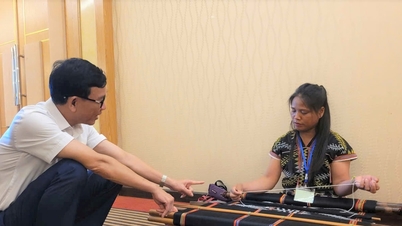
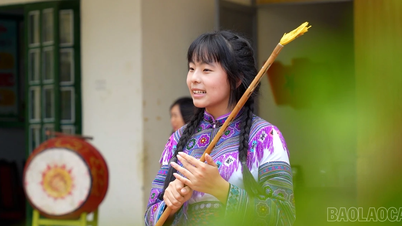
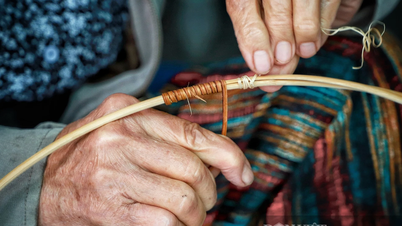
The Tay and Nung people in Khun village don't choose to develop tourism by abandoning their old way of life, but instead transform their traditional cultural values into the attractions of the destination. Handicraft weaving, Then melodies, the sound of the Tinh lute, and the community living spaces thus become the soul of the tourism experience. This approach is opening up a different direction from the mindset of mass tourism exploitation. The people are not excluded from the game, nor are they turned into "actors" for tourists, but instead become storytellers of their own community's culture.
If we were to mention another exemplary model for this approach, we couldn't fail to talk about Lo Lo Chai village in Lung Cu commune. From a small village at the northernmost point of the country, Lo Lo Chai has been recognized by UN Tourism as the "Best Tourist Village of 2025". Behind that title lies not only beautiful scenery or the characteristic rammed-earth houses of the Lo Lo people.
What has earned the international community's appreciation is the project's ability to preserve culture alongside sustainable livelihood development. The Helvetas project has supported the development of destination branding, provided guidance on destination management according to international standards, and assisted communities in building applications for international design awards.
A notable aspect of current international cooperation projects is the shift from infrastructure support to governance support. In Tuyen Quang, Helvetas supported the establishment of a Community Tourism Coordination Management Board in Khun village, developed operating regulations, and formed a community tourism development fund. This is a crucial detail, as one of the biggest limitations of community tourism in Vietnam has long been the lack of a sustainable operating mechanism.
International organizations are striving to help localities develop self-reliance capabilities instead of depending on external support. This includes skills in destination management, digital marketing, service quality management, and building monitoring systems according to international standards. This is also in line with current global tourism trends, as tourists are increasingly interested in authentic experiences and responsible behavior towards the environment and local communities.
In a context where many destinations around the world are facing the consequences of overtourism, the "happy village" models here offer a thought-provoking direction. In these villages, tourism development does not mean sacrificing cultural identity. A village can welcome international tourists while still preserving its traditional flute music, folk songs, traditional houses, and community life.
Source: https://baovanhoa.vn/du-lich/tu-du-lich-cong-dong-den-quan-tri-cong-dong-o-tuyen-quang-230407.html
![[Photo] Reception to welcome General Secretary and President To Lam and his wife on their State visit to the Philippines](https://vphoto.vietnam.vn/thumb/1200x675/vietnam/resource/IMAGE/2026/06/01/1780295488620_vna-potal-chieu-dai-chao-mung-tong-bi-thu-chu-tich-nuoc-to-lam-va-phu-nhan-tham-cap-nha-nuoc-toi-philippines-8798060-7855-jpg.webp)


![[Photo] General Secretary and President To Lam and the President of the Philippines hold talks.](https://vphoto.vietnam.vn/thumb/1200x675/vietnam/resource/IMAGE/2026/06/01/1780286997787_anh-man-hinh-2026-06-01-luc-11-09-43.png)
























































Comment (0)