

SGGP
According to a report recently published by the United Nations Environment Programme (UNEP), humans extract 4-8 billion tons of sand from the world's seas and oceans each year, averaging 6 billion tons – equivalent to a 10-meter-high, 10-meter-thick wall encircling the Earth, far exceeding the rate at which it is replenished by rivers.
The report was released to mark the launch of Marine Sand Watch, the first global data platform on marine sediment extraction, which uses artificial intelligence (AI) to track and monitor dredging activities of sand, clay, mud, gravel, and rock in marine environments worldwide.
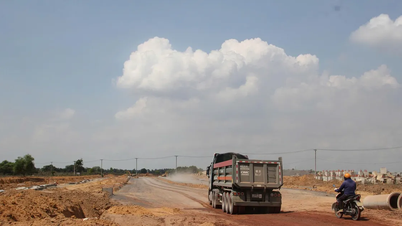
According to UNEP, dredging – especially at the current rate equivalent to about 1 million trucks per day – disturbs marine sediments, pollutes seawater, and could ultimately contaminate drinking water due to coastal or nearshore exploitation, affecting the salinization of aquifers. This exploitation will severely damage seabed biodiversity and coastal communities, hindering economic activities such as fishing.
Sand, a valuable resource for industries such as construction, is the world's most exploited natural resource after water. It is also crucial for coastal communities facing rising sea levels and extreme weather events like storms and hurricanes. Current sand dredging hotspots include the North Sea, the US East Coast, and Southeast Asia. Last year's UNEP report on sand and sustainability called for increased monitoring of sand extraction, sourcing, use, and management, much of which remains unregulated in many parts of the world. However, current international practices and legal frameworks for sand extraction vary widely. Some countries, such as Indonesia, Thailand, Malaysia, Vietnam, and Cambodia, have banned the export of sea sand for the past 20 years, while others lack effective laws or monitoring programs.
Source
![[Photo] General Secretary and President To Lam presides over a working session with the Central Policy and Strategy Committee on the development of the materials industry.](https://vphoto.vietnam.vn/thumb/1200x675/vietnam/resource/IMAGE/2026/05/21/1779359935432_a3-bnd-3129-1412-jpg.webp)
![[Photo] National Assembly Chairman Tran Thanh Man working with the Standing Committee of the Law and Justice Committee](https://vphoto.vietnam.vn/thumb/1200x675/vietnam/resource/IMAGE/2026/05/21/1779378929214_ndo_br_1-4610-jpg.webp)

















































































Comment (0)