

Lawyer Nguyen Thi Bich Loan (Ho Chi Minh City Bar Association) made the above comment when speaking about a "generous Saigon". This is also the opinion of many people in our survey after Ho Chi Minh City took the top position as the place most people want to live.
The "Promised Land" is inclusive.
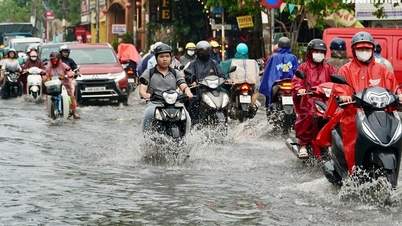
The recently published report, "Vietnam's Provincial Public Administration and Governance Performance Index: Measuring from Citizens' Practical Experiences, 2023," reveals that Ho Chi Minh City is the most sought-after destination for people from other provinces and cities seeking to migrate to, followed by Hanoi , Da Nang, Can Tho, and Lam Dong. Why is Ho Chi Minh City, with its traffic congestion, flooding, and gridlock, the preferred choice for many people from other provinces?
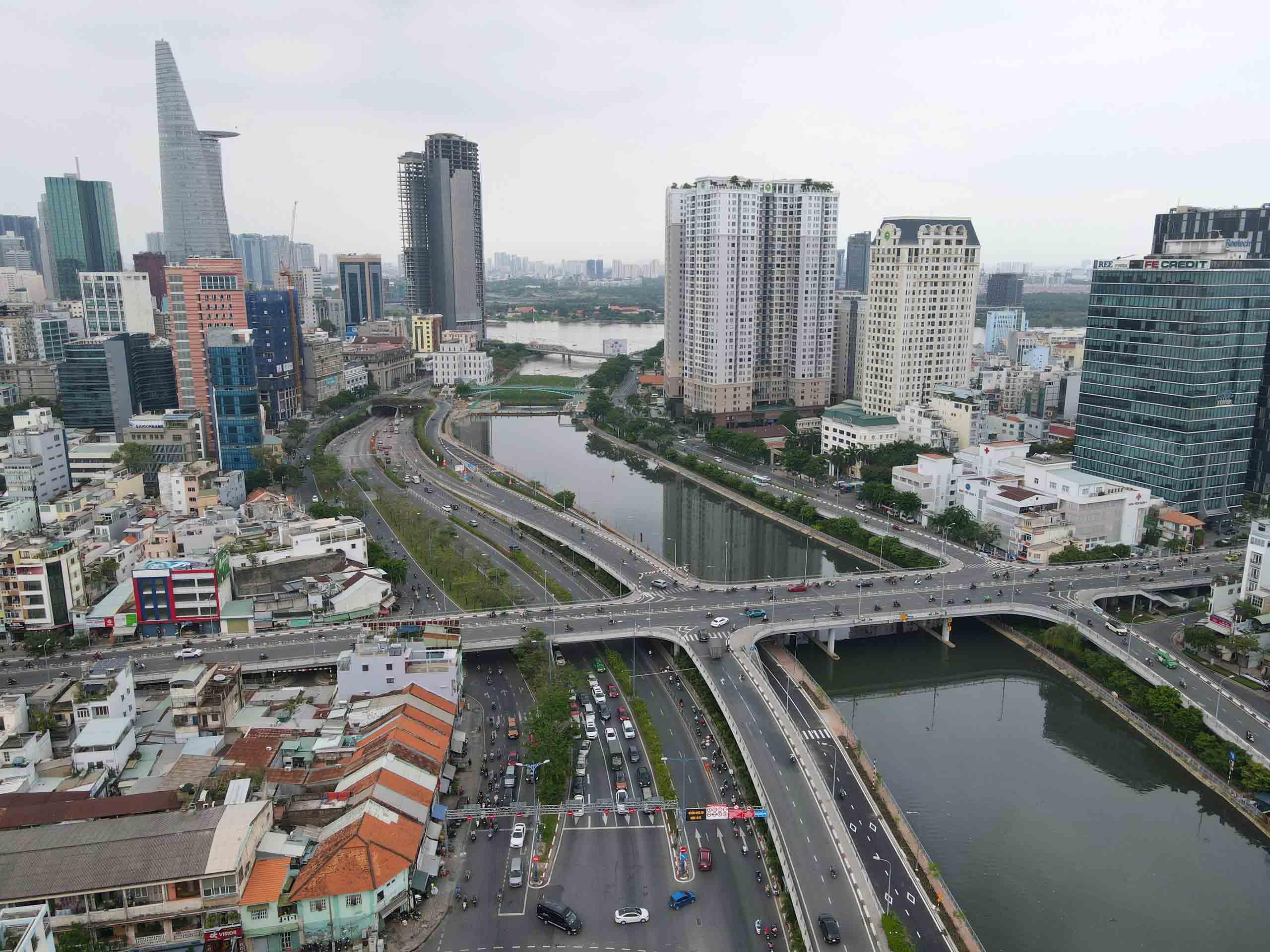
Ho Chi Minh City needs to accelerate infrastructure development to become a megacity.
When asked this question, Nguyen Thanh Sang, originally from Can Tho , who came to Ho Chi Minh City to study mechanical engineering and is now working there, simply said: Ho Chi Minh City provides him with a job and enough income to support himself and send money back to his family. Sang recounted: "I've been in Ho Chi Minh City for almost five years, but two of those years were precarious, with many months of unemployment due to the Covid-19 pandemic. After the pandemic, I considered returning to my hometown and looking for work in the Tra Noc Industrial Zone (Can Tho), but it wasn't stable. The income was lower, and I still had to pay rent, so I packed my bags and returned to Ho Chi Minh City. Here, I have a stable job, and although I live in rented accommodation, I manage to save money occasionally to help my mother support my younger siblings' education."
Ms. Van Thi Suu (Tan Phu District, Ho Chi Minh City), originally from Ha Tinh province, moved to Ho Chi Minh City in 1999, before Tan Phu District was established. She worked as a factory worker at the Bita's shoe factory on Au Co Street for three years. After the factory moved to Huong Lo 2, Binh Tan District, she quit because the commute was too far and started selling coffee on Doc Lap Street (Tan Phu District) to make a living. She later got married, had two children, and still lives in rented accommodation in Tan Phu District, working as a part-time housekeeper for several families in the district. "I didn't get an education, life in my hometown was too difficult. Back then, when I came to Ho Chi Minh City, I thought I could do anything as long as I could make ends meet. After having children, I considered returning to my hometown a couple of times because there's a house and a garden there, but back then, there's only a house to live in, and how would I support my children's education? So I stayed in Ho Chi Minh City, and to this day, I don't think I'll leave. Even though I'm renting a place in Ho Chi Minh City, I find it easy to live there, and my children don't have to drop out of school...", Ms. Suu confided.
Unlike the two cases above, Nguyen Chanh Tue (District 7, Ho Chi Minh City) studied marketing at an international university in Ho Chi Minh City. Opportunities for studying abroad weren't too difficult for Tue, as he had previously received scholarships from two universities in the US. However, due to the pandemic, he was forced to change direction, deciding to leave Da Nang and move to Ho Chi Minh City to study and work. Nguyen Chanh Tue has a clear perspective: "This city offers many opportunities suitable for young people to pursue their chosen professions. It's also a dynamic and constantly changing environment, adapting to the trends of the times and suitable for economic development. I like this city because of its dynamism, modernity, and youthfulness." Currently, Nguyen Chanh Tue works at an American university located in Ho Chi Minh City and says he is quite satisfied with his work and life there.
People from outside the city make a significant contribution to the city.
In reality, Ho Chi Minh City is not just a place that "shelters" those who come here to start a career, live, and earn a living; even those who have established stable lives, settled in this city for more than half their lives, and have many opportunities to change their living environment, still choose to stay.
Ms. Nguyen Thi Quoc Khanh, who works in the logistics industry with an office in District 1, briefly commented: "This city makes it easy to find a job, and opportunities to get rich are not uncommon. The city provides jobs for all types of workers, from manual laborers to high-level management positions in foreign corporations. In general, a place with many job opportunities can make you richer, more comfortable, and help you build a more sustainable life."
"In particular, services in Ho Chi Minh City, from entertainment and recreation to education and healthcare, are all better. Besides, the weather in Ho Chi Minh City isn't as harsh as in Central or Northern Vietnam. Ho Chi Minh City doesn't have a bitterly cold season, nor does it have unpleasant humidity. That's a plus point that appeals not only to locals but also to many young foreigners who enjoy living in this city," Ms. Quoc Khanh shared, adding that in her apartment building, she has "absolutely wonderful" neighbors: "They are both native Saigonese and people from all over who have bought homes here, but the common thread is that we've created a warm, harmonious, friendly, and trustworthy living environment. That space makes me love the city I live in even more."
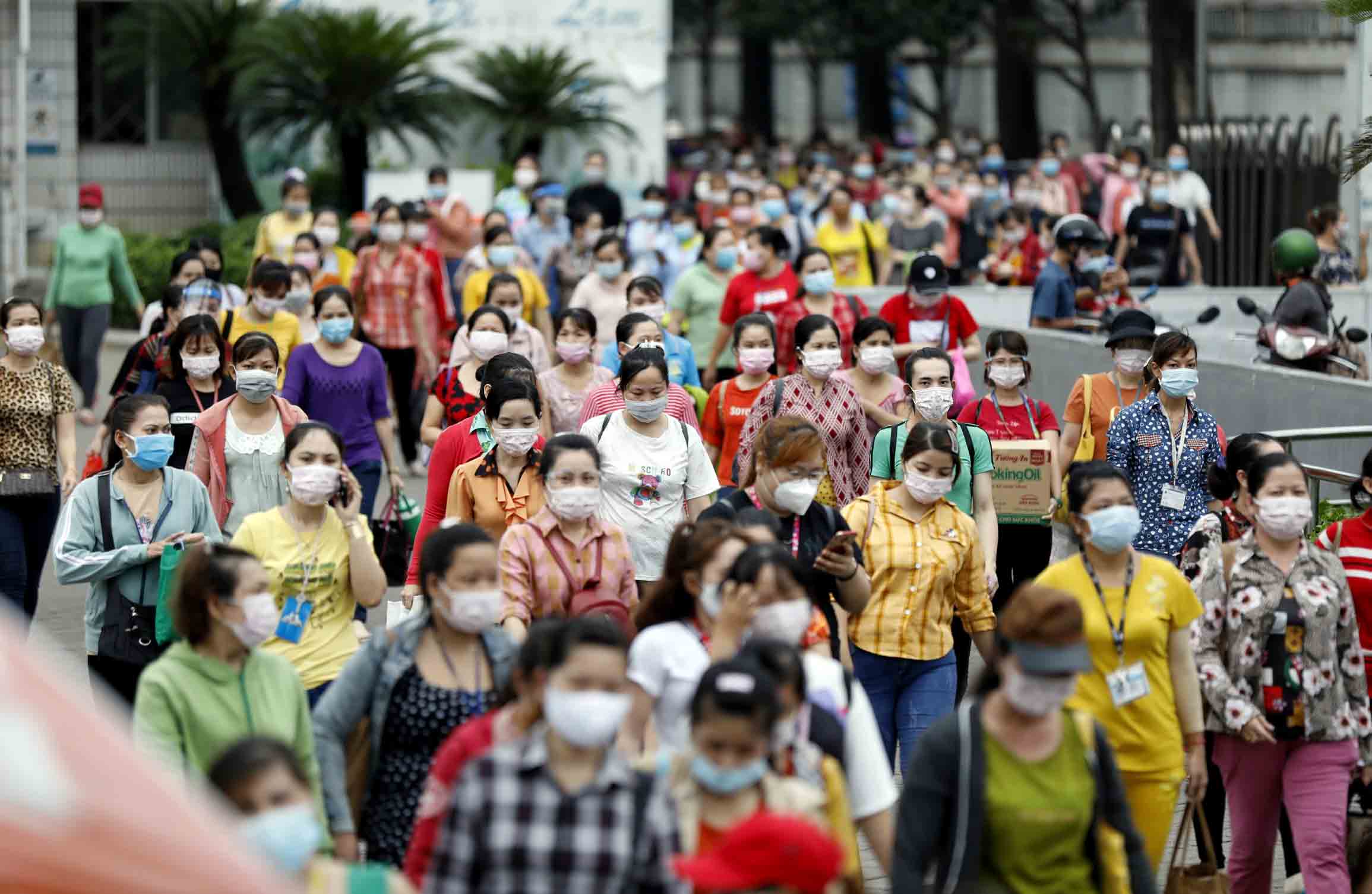
Many people commented that Ho Chi Minh City's numerous job opportunities and dynamic atmosphere attracted them.
Associate Professor Phan An observed that a city considered the economic engine of the nation must certainly possess the elements of "favorable timing, geographical advantage, and harmonious human factors." Ho Chi Minh City completely has all of these elements. Having lived in the city for nearly 50 years, he has followed its transformations in each stage, from street corners to roadside trees. "Because this is the place that gives people hope for the future, work, life, education… that's why over the past few decades, there have been many migrations from rural areas to cities, from small cities to large cities. Not only domestic residents, but even many foreigners like living here," he remarked.
However, precisely because it is a "promised land" for many, air quality, environmental issues, traffic congestion, etc., are unavoidable. These are problems that the city must quickly and systematically improve in order to maintain its attractiveness.
"People from other places want to migrate here not only to earn a living but also to contribute to the city's development. The city's attractiveness to investors also partly lies in its workforce from other areas, including high-level personnel. Without garment workers, businesses wouldn't have goods to export, wouldn't pay taxes to the city, and the city wouldn't be able to collect revenue from logistics services, housing taxes, etc. To maintain its position as a promising land for investors and people from many places, the city needs a long-term vision in its planning. It must strongly develop infrastructure and transportation projects. Observations show that the city's face has changed a lot, but it seems to have stagnated in recent years, partly due to the impact of the pandemic. The city needs projects that bring novelty and modernity, both in form and content," Associate Professor Phan An recommended.
Ho Chi Minh City is still very young compared to major cities around the world, and its development potential is enormous. Therefore, we must aim to build a megacity, with smaller cities within a larger one. If development continues naturally, it will lead to overcrowding and even a chaotic state of the city, making corrections very difficult later on. The policy should focus on population decentralization by investing in infrastructure and developing urban culture in smaller cities. These smaller cities should not only have high-rise buildings, industrial zones, and digital administrative centers, but also museums, theaters, etc. We must create truly meaningful living spaces for future generations. Achieving these goals will only benefit the city and lead to a more civilized and significant megacity.
Associate Professor Phan An
Source link
![[Photo] Ba Lang An Lighthouse - the "eye of the sea" amidst the "rock museum" of Quang Ngai province.](https://vphoto.vietnam.vn/thumb/1200x675/vietnam/resource/IMAGE/2026/05/29/1780038698840_anh-man-hinh-2026-05-29-luc-14-10-42.png)
![[Image] Pleasant weather helps students enter the 10th grade entrance exam with confidence.](https://vphoto.vietnam.vn/thumb/1200x675/vietnam/resource/IMAGE/2026/05/29/1780034401612_ngay-1-thi-lop-10-minh-duy-8-5009-jpg.webp)
















































































Comment (0)