

March 24, 1975, went down in history, marking a milestone of peace and freedom for Dak Lak. However, after liberation, Dak Lak province suffered the severe consequences of the war. Socio-economic infrastructure was almost completely destroyed. The economy was characterized by a backward, self-sufficient agricultural system. Industry and trade were virtually non-existent. Healthcare and education were severely lacking, while the material and spiritual lives of the people were extremely difficult, especially for ethnic minorities.
Faced with formidable challenges, the Party Committee, government, and people of all ethnic groups in the province have demonstrated a spirit of unity and self-reliance, gradually overcoming difficulties and achieving great successes in all fields.
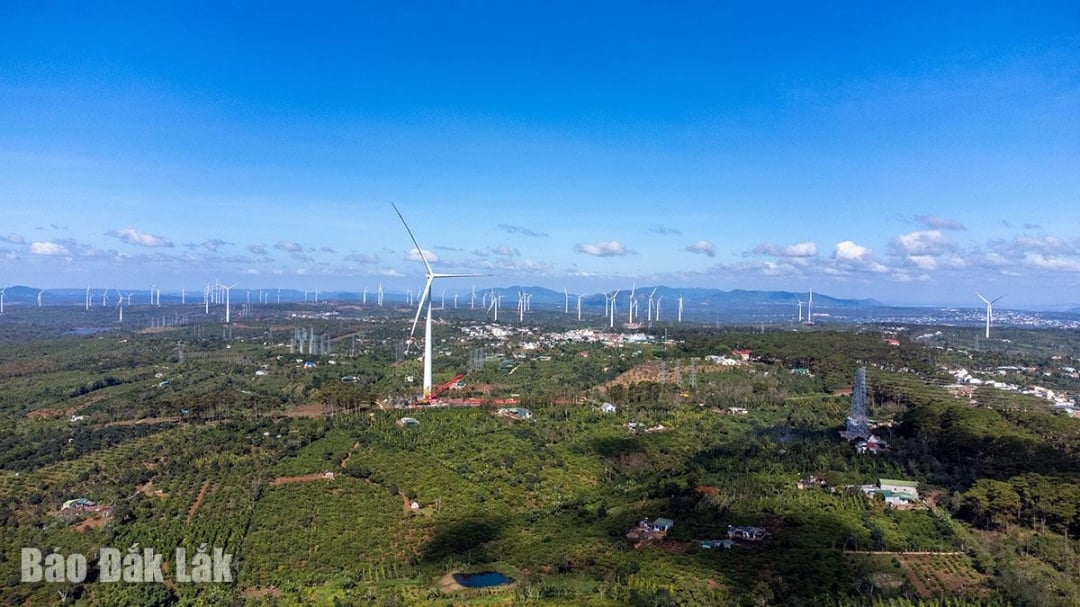 |
| Wind farm in Ea Nam commune (Ea H'leo district). Photo: Nguyen Gia |
The province's economy has undergone significant transformation. The economic structure has shifted in a positive direction, gradually reducing the proportion of traditional agriculture and strengthening the development of industry, construction, and services. The province has successfully oriented regional and inter-regional economic development, forming concentrated industrial zones and clusters, and key economic sectors.
The clearest evidence of this momentum is that in 2024, Dak Lak's economy reached VND 141,326 billion, leading the Central Highlands region. The province's per capita GRDP reached VND 72.8 million. Total export turnover reached an impressive USD 1,650 million, the highest in the Central Highlands region. These figures not only demonstrate production capacity but also affirm the province's ability to integrate internationally. Coffee remains a source of pride and a key economic driver, with Buon Ma Thuot becoming an important center for coffee production, processing, and culture. Between 2015 and 2024, Dak Lak attracted over 400 projects with a total investment of approximately VND 98,000 billion, demonstrating its attractiveness and increasingly improved investment environment. The development of large-scale renewable energy, modern trade and services, and a focus on high-tech, sustainable agriculture are opening up new prospects for the province's economy.
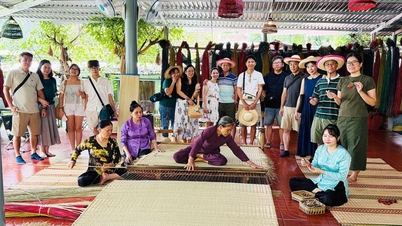
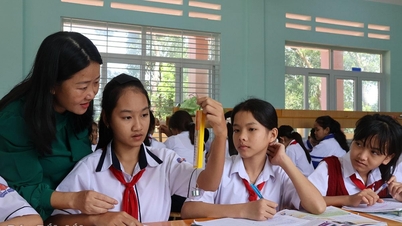
Along with economic growth, in the socio-cultural field, the healthcare and education systems have been invested in and improved, enhancing the quality of life. Urban and rural infrastructure has changed significantly. The preservation and promotion of traditional cultural values, linking economic development with culture and tourism, has always been emphasized. Poverty reduction efforts have yielded positive results, especially in ethnic minority areas and remote regions. The province also aims to eliminate temporary and dilapidated housing for poor households and policy beneficiaries by 2025.
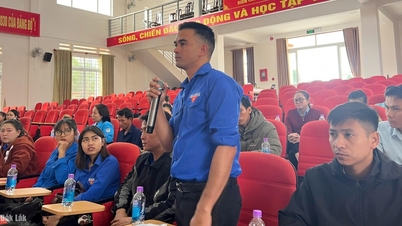
Alongside socio-economic development, the work of Party building and strengthening the political system has always been given special attention. National defense and security have been maintained, creating a stable and safe environment for development. Administrative reform and digital transformation have been implemented decisively, aiming to build a digital government and digital citizens, improving the efficiency of state management and the quality of public services for citizens and businesses.
According to the Dak Lak Provincial Planning for the period 2021-2030, with a vision to 2050, approved by the Prime Minister, Dak Lak aims to become a province with a unique ecological space, distinctive identity, and creative connectivity, a favorite and livable destination; rising to the top 25 most prosperous provinces nationwide. Accordingly, the strategic development pillars include restructuring modern agriculture, developing tourism linked to unique culture and agriculture, and promoting the service and industrial sectors.
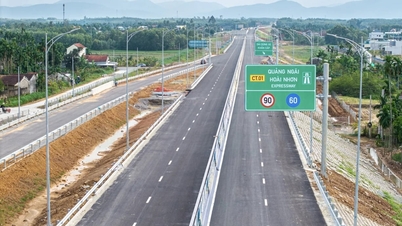
Key infrastructure projects, notably the Khanh Hoa - Buon Ma Thuot expressway, are underway, promising breakthroughs in connectivity, trade, and investment attraction, further strengthening the province's central position. Alongside this, the province's efforts to reform administration, improve the investment environment, and accelerate digital transformation are key factors in realizing its aspiration for a "prosperous, beautiful, civilized, and distinctive" future.
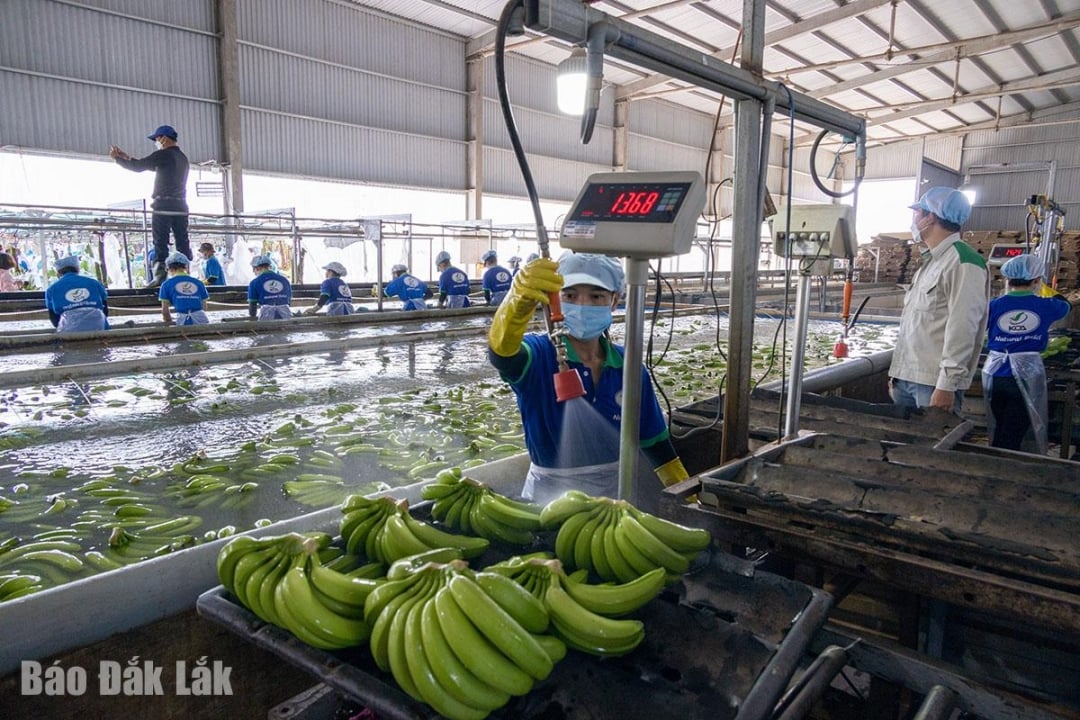 |
| Processing bananas for export in Vu Bon commune, Krong Pac district. Photo: Nguyen Gia |
The policy of merging Dak Lak and Phu Yen provinces into a new Dak Lak province with an area of over 18,000 km2 and a population of over 3.3 million people, with its "forest-sea" linkages and many potential advantages for developing agriculture, industry, marine tourism, marine economy, and seaports, will create a strong impetus in attracting investment and developing the province's socio-economic development in a green and sustainable direction.
Member of the Central Committee of the Party, Secretary of the Provincial Party Committee Nguyen Dinh Trung affirmed: "On its journey forward, Dak Lak province focuses on linking economic growth with preserving the unique cultural identity of ethnic groups and continuously caring for and improving the lives of the people, especially ethnic minorities who still face many difficulties. Along with that, Dak Lak focuses on building a clean and strong Party and political system, streamlining the organizational structure and administrative units for efficiency and effectiveness, while simultaneously building a team of cadres with sufficient qualities and capabilities to meet the tasks at hand."
Source: https://baodaklak.vn/tin-noi-bat/202505/vi-the-dak-lak-tren-hanh-trinh-nua-the-ky-60d0aa7/

![[Live] 2025 Community Action Awards Gala](/_next/image?url=https%3A%2F%2Fvphoto.vietnam.vn%2Fthumb%2F1200x675%2Fvietnam%2Fresource%2FIMAGE%2F2025%2F12%2F16%2F1765899631650_ndo_tr_z7334013144784-9f9fe10a6d63584c85aff40f2957c250-jpg.webp&w=3840&q=75)


![[Photo] Prime Minister Pham Minh Chinh receives the Governor of Tochigi Province (Japan)](/_next/image?url=https%3A%2F%2Fvphoto.vietnam.vn%2Fthumb%2F1200x675%2Fvietnam%2Fresource%2FIMAGE%2F2025%2F12%2F16%2F1765892133176_dsc-8082-6425-jpg.webp&w=3840&q=75)
![[Image] The tenacious fighting spirit of Vietnamese women's football](/_next/image?url=https%3A%2F%2Fvphoto.vietnam.vn%2Fthumb%2F1200x675%2Fvietnam%2Fresource%2FIMAGE%2F2025%2F12%2F17%2F1765990260956_ndo_br_4224760955870434771-copy-jpg.webp&w=3840&q=75)



















































Comment (0)