


Lai Châu is a mountainous province in Northwest Vietnam, located between 21°41' and 22°50' North latitude and 102°19' and 103°59' East longitude. It borders Yunnan Province (China) and Lao Cai Province to the north; Lao Cai and Yen Bai Provinces to the east; Dien Bien Province to the west; and Dien Bien and Son La Provinces to the south. The province has a natural area of 9,068.78 km², ranking 10th among the 63 provinces and cities nationwide.

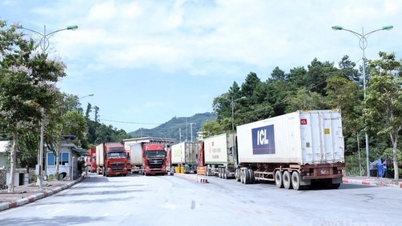
Lai Châu province shares a 265.165km border with China, including the Ma Lù Thàng national border gate and numerous other border crossings that directly connect it with the vast southwestern mainland of China. It is also linked to the Hanoi-Hai Phong-Quang Ninh growth triangle via National Highways 4D, 70, and 32, and the Da River waterway, offering significant potential for the development of services, trade, import-export, and tourism. Furthermore, Lai Châu holds a strategically important position in terms of national defense, security, and border sovereignty protection. As a large headwater region and a particularly crucial protected area of the Da River, and home to numerous ethnic minority communities, Lai Châu plays a vital role in ensuring the sustainable development of the nation, particularly in relation to major hydroelectric projects on the Da River and the Red River Delta.
According to Resolution No. 22/2003/QH11, adopted on November 26, 2003, at the 4th session of the 11th National Assembly, the (new) Lai Chau province was established by separating several districts from the (old) Lai Chau province and merging Than Uyen district from Lao Cai province. The new provincial capital was located in Tam Duong town (formerly Phong Tho town), and was renamed Lai Chau town (now Lai Chau city).
Currently, Lai Chau has 8 subordinate administrative units including Lai Chau city and the districts of Muong Te, Sin Ho, Nam Nhun, Tam Duong, Phong Tho, Tan Uyen, and Than Uyen; and 106 commune-level administrative units (94 communes, 5 wards, and 7 towns). The province's population comprises 20 ethnic groups.
Lai Chau's geographical location holds significant importance in terms of its natural environment, economy, culture, society, and national security and defense; creating numerous opportunities for socio-economic development and posing crucial tasks in ensuring national security, defense, and border sovereignty in the process of building and protecting the socialist Vietnamese Fatherland.
Provincial e-Government Portal
![[Photo] General Secretary To Lam presides over a meeting with the Editorial Teams to summarize 100 years of the Party's leadership of the Vietnamese revolution and 40 years of implementing the National Construction Program.](https://vphoto.vietnam.vn/thumb/1200x675/vietnam/resource/IMAGE/2026/03/04/1772601288977_a1-bnd-8134-7576-jpg.webp)






























































Comment (0)