

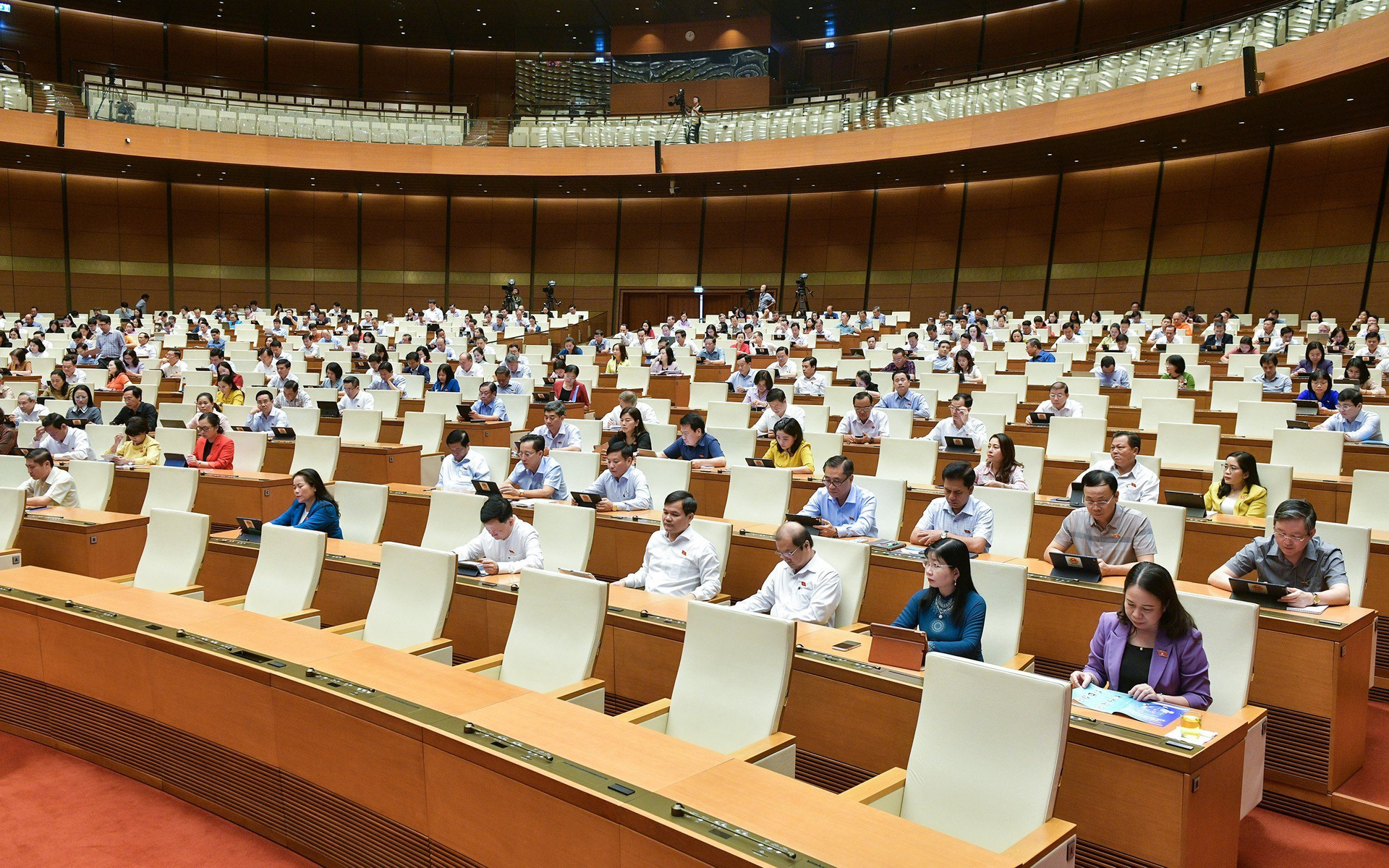
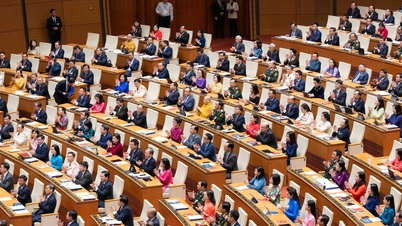
On May 25th, the National Assembly held a plenary session to discuss the Report of the Supervisory Delegation and the draft Resolution of the National Assembly on the results of the thematic supervision of the implementation of Resolution No. 43/2022 of the National Assembly on fiscal and monetary policies supporting the socio -economic recovery and development program and the resolutions of the National Assembly on a number of important national projects until the end of 2023.
The issuance of documents is still slow.
Speaking in the assembly hall, many delegates generally agreed that the issuance of fiscal and monetary policies to support the socio-economic recovery and development program under Resolution No. 43 was a correct, timely, and innovative decision. The resolution allowed for the use of a very large amount of resources with many unprecedented policies that have proven effective, making a significant contribution to ensuring social security, maintaining macroeconomic stability, and supporting people and businesses to overcome difficulties and recover and develop socio-economic activities after the pandemic.
However, alongside its advantages, the implementation of Resolution No. 43 has also revealed many shortcomings and limitations, affecting the achievement of the Resolution's objectives, most notably the slow pace of drafting and promulgating legal documents.
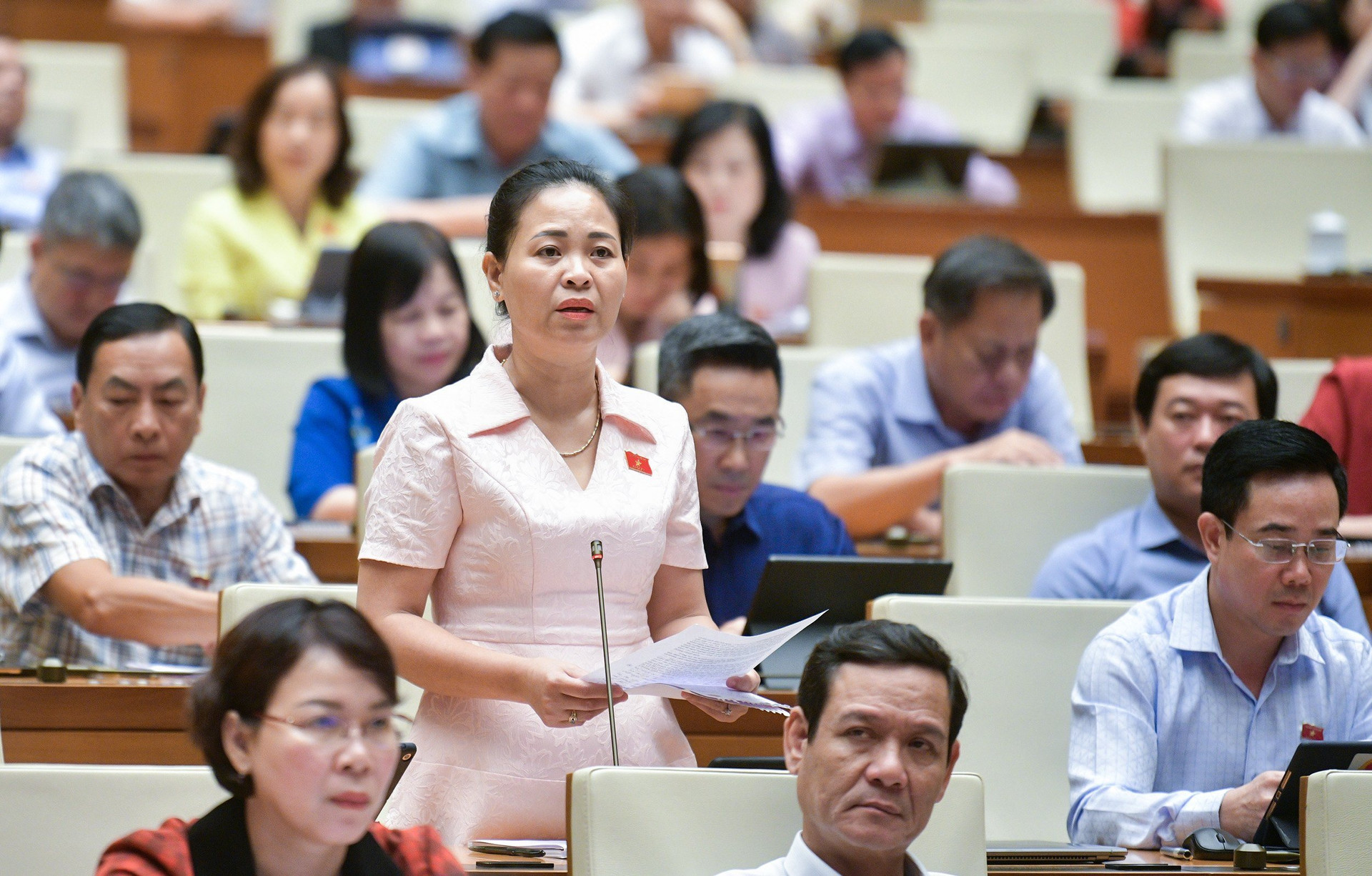
Representative Nguyen Thi Thu Dung from Thai Binh province cited the example of the housing allowance policy for workers in industrial zones, export processing zones, and key economic zones. Decision No. 08/2022 of the Prime Minister , issued on March 28, 2022, stipulated that the policy would be implemented until August 15, 2022. With only 4.5 months for implementation, this was very rushed and presented many difficulties. Meanwhile, in some localities, the number of beneficiaries reached hundreds of thousands, requiring time for receiving applications, appraisal, approval, and processing. As a result, many eligible workers were unable to receive the allowance due to the expiration of the policy period.
In addition, according to delegate Nguyen Thi Thu Dung, some localities have added more eligibility conditions and lists of required documents for applying for benefits, creating additional administrative procedures, causing difficulties for workers, and discouraging them from applying for benefits.
Another issue is the lack of clarity and consistency in the specific guidance documents for some policies, leading to delays, low disbursement rates, and failure to achieve the set objectives for some policies. Specifically, according to Appendix 1 on the issuance of legal documents related to the implementation of the resolution, out of 21 legal documents, only 7 were issued and on schedule, while the remaining 14 were delayed. Some documents were issued up to 7 months behind schedule, such as the circular guiding tax obligations when enterprises establish and use the enterprise's science and technology development fund, and the circular on the list of quality standards for public telecommunications services and guidance on implementing the program to provide public telecommunications services until 2025…
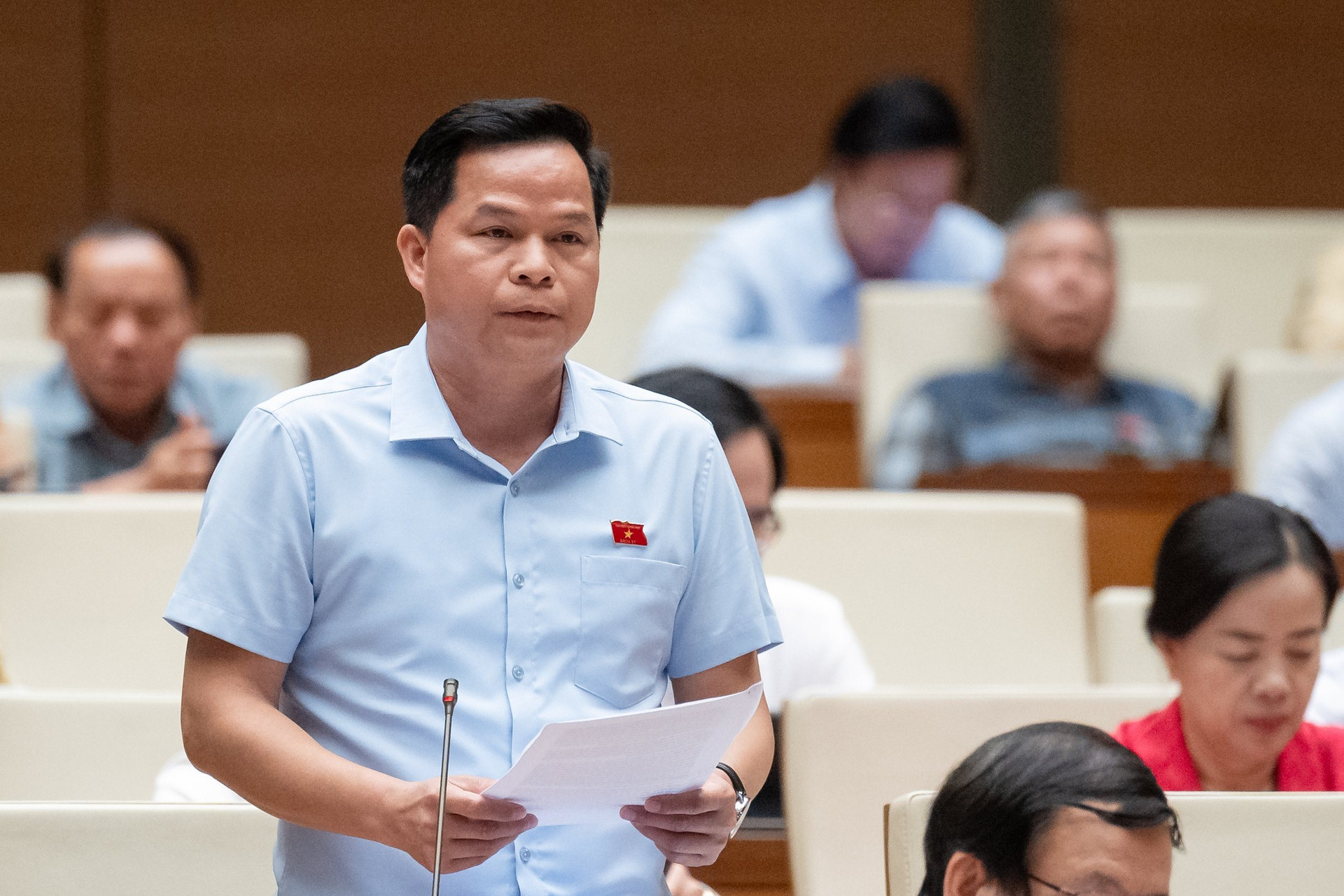
Also related to policy issuance, delegate Be Minh Duc from Cao Bang province stated that the National Assembly's issuance of Resolution No. 43 is appropriate to the reality in the special context and has very positive impacts, making an important contribution to effectively implementing the Party's, the National Assembly's, and the Government's guidelines and policies in the prevention and control of COVID-19, gradually controlling and ending the COVID-19 pandemic, bringing social life back to normal, and promoting the economy to overcome difficulties, recover, and grow.
However, to ensure effective, coordinated, and smooth implementation, delegates suggested that the Government and central ministries and agencies, when issuing policies, should ensure clarity and feasibility, avoiding overlaps that lead to multiple ministries, agencies, and localities having to seek guidance or incur unnecessary time and financial costs for businesses.
Representative Bế Minh Đức cited the implementation of Decree No. 31/2022 on interest rate support from the state budget for loans of enterprises, cooperatives, and business households. He noted that when determining eligibility for interest rate support in cases where customers engage in multi-sector production and business activities, it becomes difficult to separate the sectors eligible for interest rate support, as well as to obtain documentation proving that the loan capital was used for the sectors eligible for interest rate support.
"Regarding the principle of interest rate support, the provision that 'customers have the ability to repay debt and the ability to recover,' based on the internal assessment of commercial banks, is still vague and subjective from the bank's perspective. These limitations have been confirmed in the supervisory report on page 27. These are issues that need careful evaluation and lessons learned in research, forecasting, policy proposals, and policy implementation," emphasized representative Be Minh Duc.
Participating in the discussion, delegate Vu Thi Luu Mai – from the Hanoi delegation – emphasized that the selection of policies and their feasibility are also major lessons learned from the implementation of Resolution 43. The delegate argued that, alongside many reasonable policies, there are also policies that have not yet truly been implemented, such as support policies through commercial banks, capital support policies from the Tourism Development Fund, or the use of the Public Telecommunications Fund.
"If I could do it again, I personally believe it's crucial to have a clear focus and priorities. We don't need many policies, but we need to improve their feasibility and, most importantly, we need to approach things from the people's perspective to better understand what the people truly need and what businesses truly want," emphasized delegate Vu Thi Luu Mai.
Improve the process of policy formulation and implementation.
Participating in the explanatory remarks and clarifying some issues raised by delegates, Minister of Planning and Investment Nguyen Chi Dung thanked the National Assembly delegates for their frank and insightful opinions, which will be valuable lessons for the process of formulating and implementing policies in the future. The Minister stated that Resolution No. 43 was developed under particularly difficult circumstances, when economic growth slowed sharply, businesses faced many challenges, and global supply chains were disrupted, requiring urgent solutions to support businesses and people in stabilizing their lives and gradually restoring socio-economic conditions.
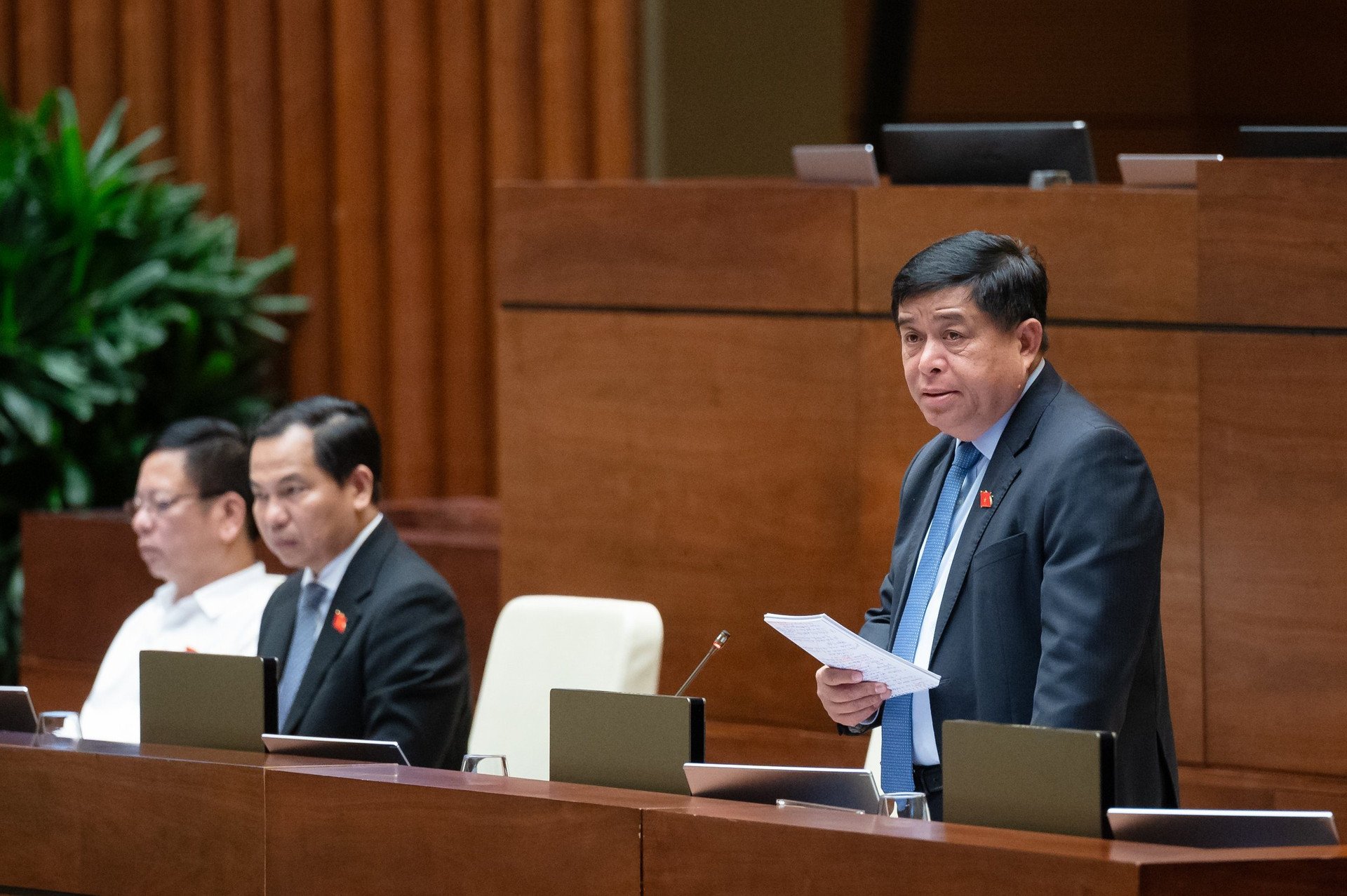
According to the Minister of Planning and Investment, the time allocated for the program's development and implementation was very short, the program was large-scale and broad-ranging, involving many fields, organizations, and stakeholders; however, experience and capacity were limited, coordination in the implementation of some projects was not good, and a fear of making mistakes and taking responsibility arose among some officials, which is why some results were not as expected.
The Minister of Planning and Investment stated that, regarding implementation, the Prime Minister, the Government, and various ministries and agencies have been extremely proactive, issuing numerous legal documents and guidelines, and establishing many working groups and delegations to expedite implementation. All members of the Government have visited many localities to resolve bottlenecks and obstacles in each public investment project under the socio-economic recovery and development program. The Minister of Planning and Investment said that they will incorporate the heartfelt opinions of National Assembly deputies, improve processes, and develop and implement policies so that they can be quickly put into practice.
From the process of organizing and implementing Resolution 43, Minister Nguyen Chi Dung believes that several valuable lessons can be learned. One lesson is the choice of support methods. In other countries, support is provided through direct cash assistance to the people, injecting resources directly into the economy and stimulating consumption. In contrast, we are providing support through policies, which require implementing guidelines and procedures. By the time these steps are completed, the support package may no longer be relevant, and its effectiveness may have decreased. The delay in issuing these documents, as analyzed by the delegates above, is due to our current support implementation methods.
Concluding the discussion session, Vice Chairman of the National Assembly Nguyen Duc Hai stated that after nearly a day of urgent and serious work, 29 delegates had spoken, one delegate had participated in a debate, and the Governor of the State Bank of Vietnam and the Minister of Planning and Investment had spoken to clarify issues of concern to the delegates.
According to Deputy Speaker of the National Assembly Nguyen Duc Hai, the opinions focused on analyzing the achievements, shortcomings, limitations, causes, and responsibilities in the implementation of the resolution; contributing many solutions to ensure more effective results when issuing policies in urgent situations or when there are unexpected socio-economic changes due to objective factors. The opinions of the National Assembly deputies were fully recorded and documented. The Standing Committee of the National Assembly will direct the Supervisory Delegation and relevant agencies to study and incorporate them to finalize the draft Supervisory Resolution, which will be submitted to the National Assembly for approval.
Source: https://baotainguyenmoitruong.vn/nghi-quyet-so-43-viec-xay-dung-ban-hanh-van-ban-quy-pham-phap-luat-con-cham-374634.html
![[Photo] Admire the coral "masterpiece" amidst the million-year-old heritage of Dak Lak province.](https://vphoto.vietnam.vn/thumb/1200x675/vietnam/resource/IMAGE/2026/05/30/1780107638639_y25-jpg.webp)




































































































Comment (0)