

|
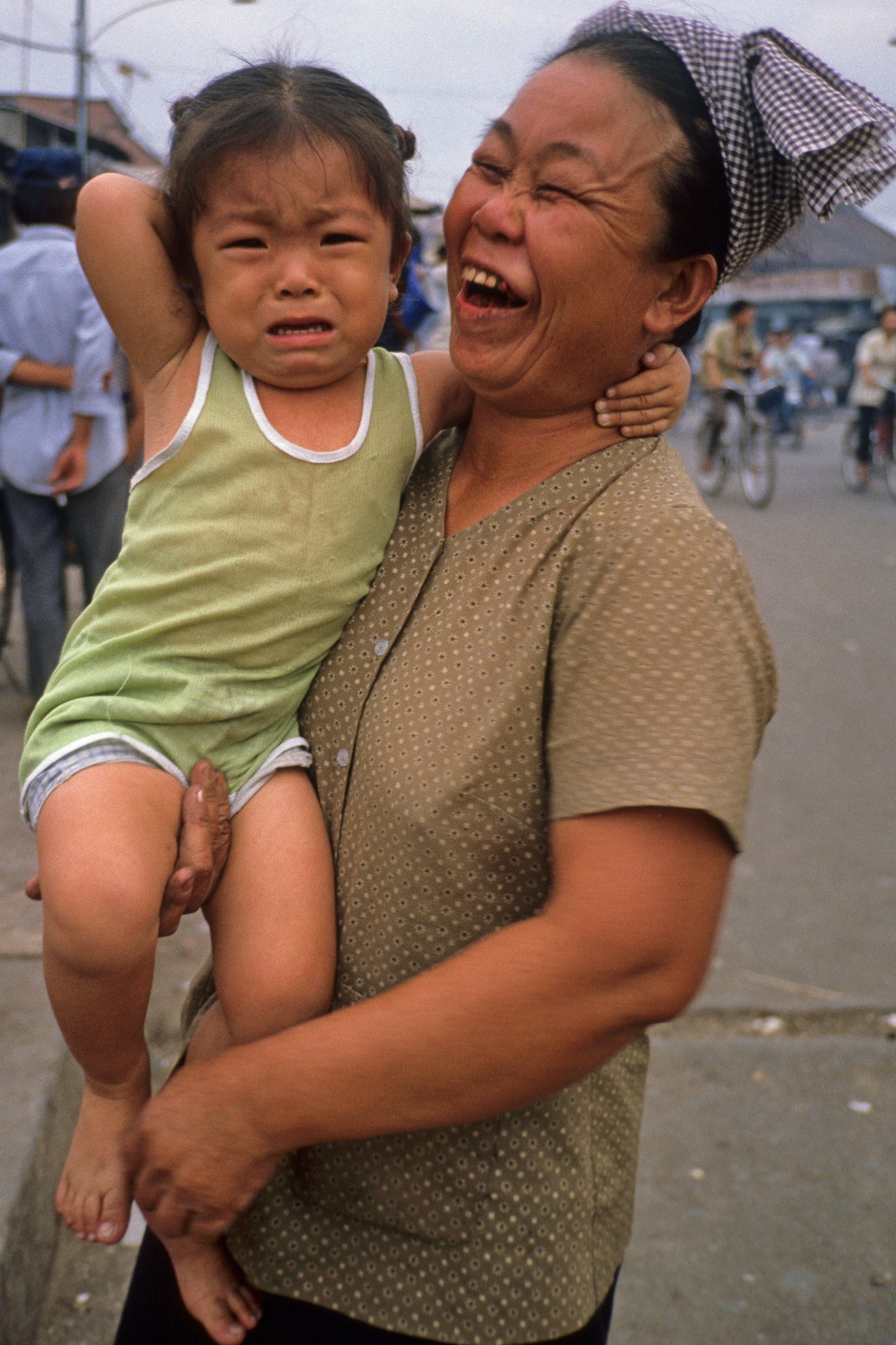
During his trip to Vietnam in the late 1980s, Stefan Hajdu, a tourist from Germany, documented his journey across the country – from Ho Chi Minh City, Nha Trang, Da Nang, Hue, Quang Tri to Hanoi. Through his lens, the daily life and portraits of the Vietnamese people appear simple and authentic, vividly depicting the spirit of a period of transformation. |

|
City dwellers ride Honda Cubs and Vespas spontaneously in front of Ben Thanh Market. Built in 1914 on the site of an old market on the banks of the Ben Nghe River, this market quickly became a bustling commercial and residential center, a symbol of the city's tourism. |

|
From the Majestic Hotel Saigon, guests can enjoy panoramic views of Bach Dang Wharf and the Saigon Floating Hotel – also known as the Haegumgang Hotel. This five-star floating hotel, originally from Queensland (Australia), was towed to Ho Chi Minh City in 1989, becoming a unique and intriguing symbol of the city during its period of opening up. |

|
Back then, bicycles were still the primary mode of transportation for the vast majority of city dwellers. Doan Van Bo Street (Vinh Hoi Ward, Ho Chi Minh City) – a bustling one-way street today – was then still a dirt road with two-way traffic. During this trip, Stefan Hajdu also visited Vinh Nghiem Pagoda – one of the representative pagodas of Ho Chi Minh City – showcasing a blend of traditional and modern Northern Buddhist architecture. |


|
The portraits of city dwellers are captured in a close and natural way, through smiles, direct glances, and everyday activities. |


|
During this trip, he chose the North-South Reunification Express train as his main mode of transportation in order to fully observe the scenery and life along the railway line. |

|
While visiting Nha Trang ( Khanh Hoa ), he was impressed by the sight of a horse-drawn cart carrying nearly a dozen people along with their loads of goods – a vibrant, rustic scene reflecting the working life of the people at that time. |

|
The intercity bus between Hue and Da Nang stops for a rest on Hai Van Pass. In the distance, fluffy white clouds embrace the Bach Ma mountain range, creating a scene that is both majestic and poetic. It wasn't until 2005 that the Hai Van road tunnel was officially opened, bringing to an end a time when journeys across this treacherous mountain pass were difficult. |

|
The scenery is breathtaking from the North-South Reunification Express train. In 2025, this train route was voted by Euronews as one of the top 9 most beautiful and worthwhile train journeys in the world, thanks to the continuous views of mountains, seas, and rural landscapes unfolding outside the windows. |

|
In the late 1980s and 1990s, train seats were mostly hard seats. For long journeys, many passengers brought hammocks, tying them between the benches to lie down, transforming the train compartments into unique "hammock trains." |

|
Hien Nhon Gate, located on the eastern side of the Hue Imperial Citadel, was once an important gateway to the capital city. |

|
The peaceful life in Hue is depicted through everyday details, from boats moored close together along the riverbank to people cycling slowly in the rain in front of the royal tombs – portraying a Hue that is tranquil, quiet, and rich in poetic charm. |


|
People have always been a major attraction for German tourists, from the man selling ducks on his old bicycle to the Hue woman wearing a conical hat, leisurely enjoying a cigarette. |


|
The unexploded ordnance left behind after the war in Hue evokes memories of a painful period in history, a period marked by the devastating impact of war on this land. |

|
A family is on their way back to Quang Tri, with the majestic, unspoiled mountain ranges stretching as far as the eye can see in the distance. |


|
1989 also marked the final year that the old, red trams rolled through the streets of Hanoi, ending a journey that had accompanied the capital's residents for decades. |

|
The Hanoi tram system, built and operated by the French, was the capital's primary mode of transportation for nearly a century. Inside the tram car, viewed from the driver's cabin. |

|
People in Hanoi carried iron cages to sell chickens. Unlike people in Central Vietnam who were accustomed to wearing conical hats, Hanoians at that time often wrapped cloth scarves neatly around their heads, both to keep their ears warm and for convenience when going out to the streets to earn a living. |

Source: https://znews.vn/viet-nam-35-nam-truoc-post1621455.html
![[Image] Hanoi Police officially crowned champions of V-League 2025/2026](https://vphoto.vietnam.vn/thumb/1200x675/vietnam/resource/IMAGE/2026/05/31/1780244769054_ndo_br_039d561b692be875b13a-jpg.webp)

![[Photo] Solemn bathing ceremony and Buddha procession in Hue](https://vphoto.vietnam.vn/thumb/1200x675/vietnam/resource/IMAGE/2026/05/31/1780228263543_1-jpg.webp)
![[Photo] Admire the coral "masterpiece" amidst the million-year-old heritage of Dak Lak province.](https://vphoto.vietnam.vn/thumb/1200x675/vietnam/resource/IMAGE/2026/05/31/1780221235105_anh-man-hinh-2026-05-31-luc-16-53-27.png)
![[Photo] The General Secretary, President and his wife begin their state visit to the Philippines.](https://vphoto.vietnam.vn/thumb/1200x675/vietnam/resource/IMAGE/2026/05/31/1780230559452_anh-man-hinh-2026-05-31-luc-19-28-11.png)







![[Image] Hanoi Police officially crowned champions of V-League 2025/2026](https://vphoto.vietnam.vn/thumb/402x226/vietnam/resource/IMAGE/2026/05/31/1780244769054_ndo_br_039d561b692be875b13a-jpg.webp)








![[Video] Sunset at Lap An Lagoon – Where the sun sets over the fishing nets](https://vphoto.vietnam.vn/thumb/340x192/vietnam/resource/IMAGE/2026/05/31/1780192137701_beach-landscape-sea-water-nature-grass-745871-pxhere-com.jpeg)




























![[Photo] Admire the coral "masterpiece" amidst the million-year-old heritage of Dak Lak province.](https://vphoto.vietnam.vn/thumb/402x226/vietnam/resource/IMAGE/2026/05/31/1780221235105_anh-man-hinh-2026-05-31-luc-16-53-27.png)



























Comment (0)