

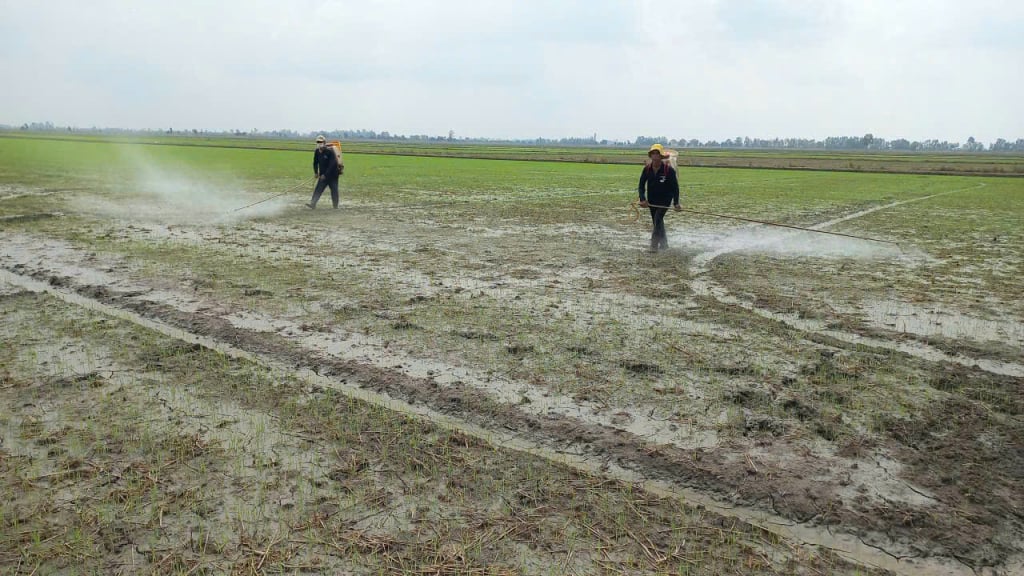
According to data from the Department of Agriculture and Environment, as of now, the entire province has planted nearly 82,000 out of the planned 268,000 hectares of rice for the 2026 Summer-Autumn crop, reaching over 30% of the total area.
In Vinh Hung commune, farmers have completed planting over 7,200 hectares of summer-autumn rice as planned. Currently, the rice crops are developing well, with pests and diseases appearing at a mild level, mainly rats and golden apple snails causing localized damage in some areas.
Mr. Tran Phat Hung (residing in Vinh Hung commune) said: “This season, my family planted 10 hectares of OM18 rice. To date, the rice plants are over 10 days old and developing quite well. From the beginning of the season, my family sowed according to the schedule recommended by the local authorities and agricultural experts, thus minimizing the risk of pests and diseases. However, what worries me and many other farmers is the sharp increase in input costs, especially the price of fertilizers, pesticides, and fuel for production. People hope the government will implement solutions to stabilize prices so that farmers can produce with peace of mind and ensure profitability.”
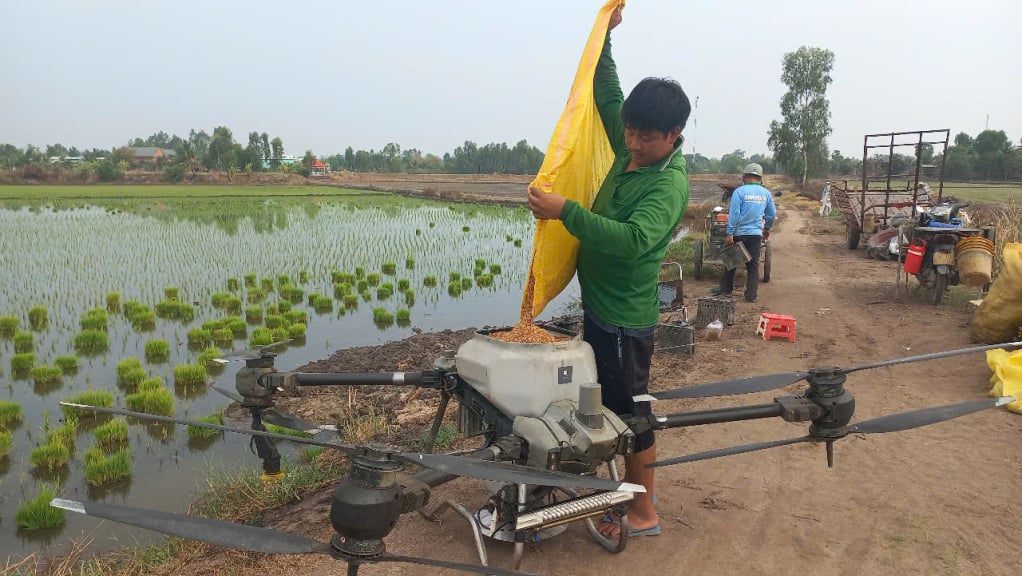
In response to this situation, local authorities implemented various solutions to support farmers in reducing input costs, improving production efficiency, and aiming for a successful harvest.
According to Bui Van Tinh, Vice Chairman of the People's Committee of Vinh Hung commune, the locality advises farmers to use short-day, high-yield rice varieties suitable for the local soil conditions. The amount of seed sown should be reduced to about 80-100 kg/ha to save costs and limit pests and diseases. In using fertilizers, farmers need to apply them in a balanced and rational way, avoiding the overuse of chemical fertilizers to reduce production costs and increase profits per unit area.
In particular, the application of science and technology and mechanization in production has been promoted locally. Many farmers use drones for sowing, spraying pesticides, and spreading fertilizer, contributing to labor savings. Along with that, agricultural cooperatives are strengthening links with businesses to support input supply and guarantee the purchase of output products, allowing farmers to produce with peace of mind.
In Vinh Thanh commune, farmers have also finished planting over 9,200 hectares of summer-autumn rice for 2026. The rice crops are in the stage of 10-30 days old and are being actively cared for by the people. According to the Chairman of the Board of Directors and Director of Hung Tan Agricultural Cooperative, Ngan Van Phi, in the face of pressure from rising prices of agricultural supplies and fuel, the cooperative has implemented many solutions to support farmers.
Accordingly, the cooperative encouraged farmers to sow seeds according to the seasonal schedule, practice sparse sowing to reduce the amount of seeds and fertilizers, and limit pests and diseases; it also coordinated with local authorities to organize training courses on transferring scientific and technical knowledge, guiding farmers to apply advanced techniques to production.
In addition, the cooperative encourages people to use organic fertilizers and microbial fertilizers in combination with chemical fertilizers to improve agricultural land in a sustainable manner.
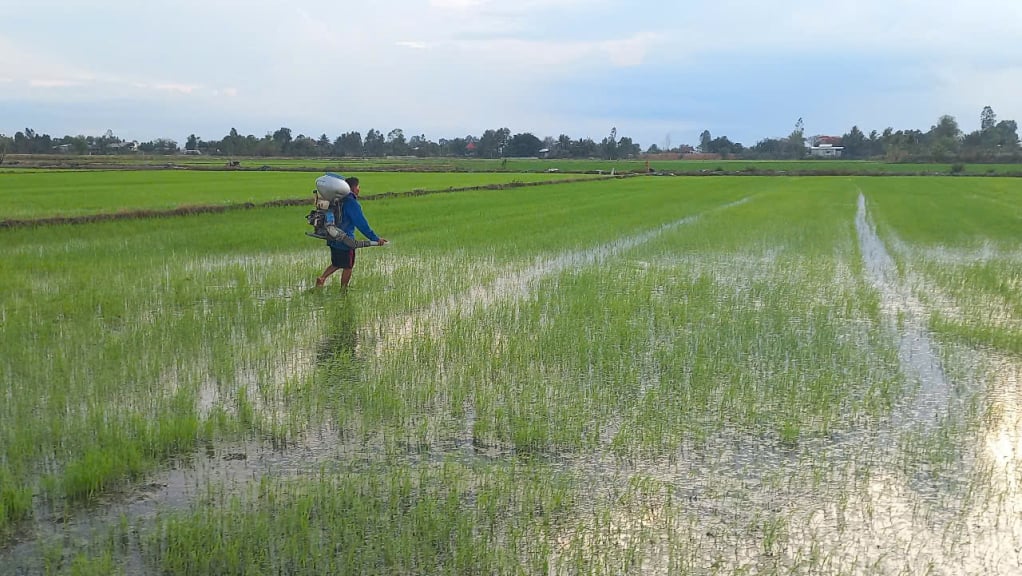
In addition to focusing on reducing input costs, localities are also paying attention to monitoring and controlling pests and diseases to protect rice yields right from the beginning of the season.
According to Pham Thanh Hung, Vice Chairman of the People's Committee of Vinh Thanh commune, the commune directs specialized departments to regularly inspect fields to monitor pests such as rice stem borer, brown planthopper, yellow dwarf disease, and leaf curl disease... in order to promptly guide farmers in applying effective control measures and prevent widespread outbreaks.
Simultaneously, the locality continues to promote and encourage people to apply the "1 must, 5 reductions" program associated with high-quality, low-emission rice production. In practice, this model is proving effective in helping farmers reduce the amount of seeds, fertilizers, pesticides, and irrigation water. As a result, input costs are reduced by 3-5 million VND/ha, while pest and disease control is reduced and economic efficiency is improved.
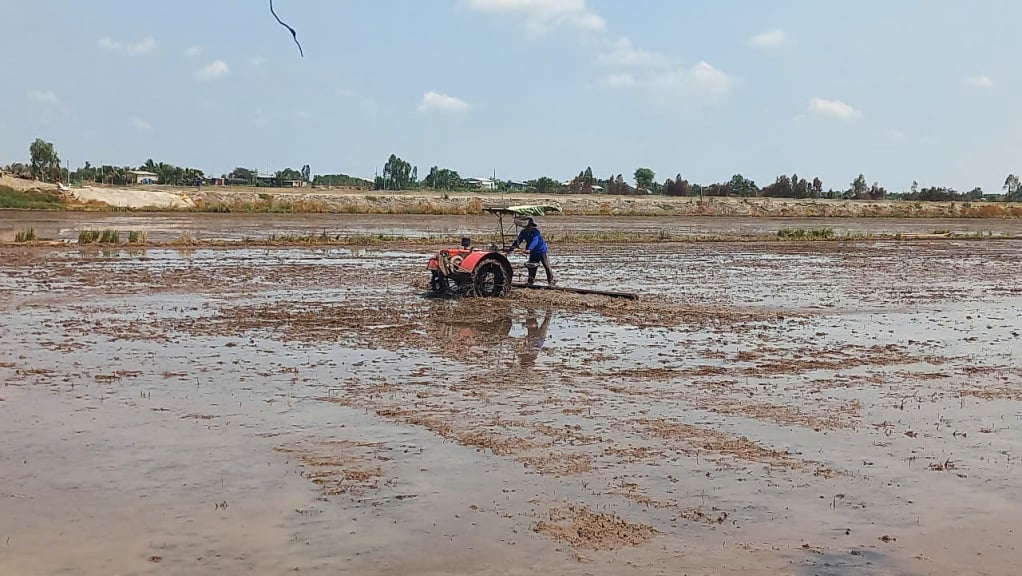
According to the provincial Department of Agriculture, the current pest and disease situation at the beginning of the season is mild and has not significantly affected rice growth. Some pests such as golden apple snails, brown planthoppers, leaf rollers, leaf blight, and rice blast are mainly present during the seedling and tillering stages.
Agricultural experts advise farmers to regularly inspect their fields to promptly detect and treat pests and diseases. For areas that have not yet been planted, farmers should proactively clean their fields and adhere to the recommended planting schedule to minimize pests and diseases and increase yields.
Source: https://baotayninh.vn/de-san-xuat-vu-lua-he-thu-2026-dat-thang-loi-146816.html
![[Photo] First session of the 14th Congress of the Vietnam Trade Union](https://vphoto.vietnam.vn/thumb/1200x675/vietnam/resource/IMAGE/2026/06/03/1780465947883_ndo_br_img-3852-jpg.webp)





































































Comment (0)