

However, behind those brightly lit stages lie many concerns for the team directly operating these public service centers, a new model formed on the basis of reorganizing the former cultural centers.

When one person has to do the work of many people
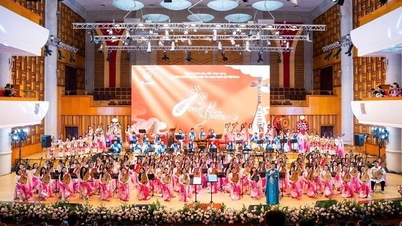
Looking at the activities of these units during recent holidays, many people can clearly sense the proactive approach of local authorities in organizing community events. These centers now not only maintain public cultural performances but also organize competitions, sports activities, and propaganda campaigns… serving a large number of people in the area. However, upon closer examination of the operational process, the pressure on staffing begins to become apparent.
Mr. Giap Duc Hieu, Deputy Director of the An Dong Ward Public Service Supply Center, said that the unit is currently still in the process of adapting to the new model. From a district-level cultural center (formerly District 5) with a relatively complete organizational structure, after the transformation, the personnel were divided among three wards (An Dong, Cho Lon, and Cho Quan).
“The professional staff is divided into three groups, forcing each person to handle many tasks. Previously, each area had its own person in charge, such as costume design, singing, dancing, editing, or directing. Now, the director is responsible for staging, teaching dance, and handling costumes; the person in charge of singing also has to handle editing and directing the actors. If there are supporting actors, it's less strenuous, but otherwise, almost everything falls on one person, from professional work to laundry, costume rentals, etc.,” he shared, adding that despite the increased workload, the units still have to try to maintain regular operations to avoid disrupting the local cultural life.
The shortage of specialized personnel is not unique to An Dong; it's also occurring in many other centers. One unit reported that after being separated and integrated into the ward, limited budgets led to a situation where they had to "tighten their belts." "The number of performers in our shows has to be reduced, for example from 50-60 people to 20-30, which negatively impacts both the scale and quality," the unit lamented.
Mr. Le Duc Phap, Director of the Ho Chi Minh City Cultural and Exhibition Center, said that this is a transitional period, so many units are still in the process of reorganizing their structure and perfecting their operating methods. "Previously, district and county cultural centers had a relatively clear organizational structure. When they were transferred to the ward level, personnel were redistributed, so some places lacked certain specialized areas."
Meanwhile, the current model integrates many fields, so the workload is greater than before,” Mr. Phap said. According to Mr. Phap, many centers currently operate under a comprehensive model, including culture, sports, media, public services, economics , market management, bus station management, etc. However, there is a shortage of personnel specializing in culture and arts. “If the person in charge lacks expertise in culture and sports, activities can easily fall behind or be hampered,” he observed.
Cultural institutions are not uniform .
Besides personnel, infrastructure and cultural facilities are also issues frequently mentioned by many units. It has been observed that localities that still retain cultural spaces from the old district and county systems, such as stages, auditoriums, and community centers, have an advantage in organizing activities. Conversely, some places have to utilize existing facilities or gradually add new ones as they go.
After the ward was divided, the staff of the Cho Quan Ward Public Service Center had to temporarily work at the An Dong Ward Center. Currently, the unit has moved to a temporary headquarters located at the Lam Son swimming pool, while awaiting the completion of its official headquarters, which was renovated from a kindergarten. Mr. Le Duc Phap stated that many centers still lack the complete cultural infrastructure needed for synchronized operation as before. This somewhat affects the scale and quality of their activities.
“Currently, the biggest weakness of public service delivery centers is their organizational structure and infrastructure. According to assessments, more than two-thirds of these units lack the necessary cultural facilities to operate according to standards. The shortage of expertise and infrastructure leads to a decline in the effectiveness and quality of cultural programs. Organizing a large-scale program requires many factors, from human resources and venues to sound and lighting… Under current conditions, these units must be much more flexible to maintain operations,” Mr. Phap lamented.
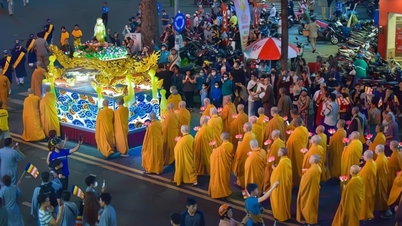
In An Dong ward, despite its advantage of spacious grounds and long-standing connection to the Chinese community's festival activities, the center still needs to carefully consider the scale of its organization to match its available resources. "When resources decrease, the scale and quality of the programs are somewhat affected," Mr. Giap Duc Hieu acknowledged. Furthermore, the current financial mechanism puts pressure on many centers in balancing their regular revenue and expenses. Some units are still in the process of finalizing their leadership structure, meaning that operations will require more time to stabilize. However, according to many local officials, this is a predictable difficulty in the initial stages of the model transition. The important thing is to have additional support mechanisms to help units gradually adapt.
We need more mechanisms . for flexible operation
From the perspective of cultural training and practice, Dr., Meritorious Artist, and director Hoang Duan, Deputy Head of the Faculty of Cultural and Artistic Management (Ho Chi Minh City University of Culture), believes that after transitioning to a public service center model, grassroots cultural activities are exhibiting many shortcomings that need to be thoroughly examined.
According to him, resources for culture and arts are currently significantly dispersed. Many officials who previously specialized only in culture now have to take on additional roles such as environment, health , sports, media, public services, and even market management.
“In some places, cultural officials even have to go directly to collect money from stalls in the market. Resources allocated to cultural and artistic activities have become thin, fragmented, and dispersed, and cultural and artistic activities are no longer as vibrant as before,” he said. In particular, mobile information teams, once very familiar at the grassroots level, have also been divided and their scale reduced as personnel are dispersed to various wards.
According to Dr. Hoang Duan, one of the important issues today is selecting leaders for the centers who meet the professional requirements in culture, art, and media, so that they can effectively organize and operate the centers. Besides the human factor, he believes that it is necessary to invest in a comprehensive range of cultural facilities such as theaters, libraries, mobile propaganda vehicles, sound and lighting systems, and community centers.
Besides the aforementioned shortcomings, according to Dr. Hoang Duan, current community cultural activities have the advantage that local authorities are more proactive in deciding on cultural activity models suitable for their localities, no longer having to wait for multi-tiered procedures as before.
He cited examples of localities proactively reviving traditional festivals and developing community-based tourism linked to local cultural identity. This is a positive sign if there is a suitable operating mechanism. The training of cultural human resources also needs to change to suit the new situation. Previously, the focus was on training cultural management personnel; now, it must shift to training individuals who can both manage culture and provide cultural services. In addition to management knowledge, current cultural personnel need to be equipped with skills in event organization, digital communication, service operation, community engagement, and exploiting cultural values to serve local development.
Many officials admit they are having to "adjust as they go" to adapt to new requirements. However, it is noteworthy that many localities are still striving to maintain the pace of grassroots cultural activities despite limited resources.
Source: https://baovanhoa.vn/van-hoa/vua-chay-vua-xep-hang-230396.html



![[Photo] General Secretary and President To Lam receives Amazon's Senior Vice President David Zapolsky](https://vphoto.vietnam.vn/thumb/1200x675/vietnam/resource/IMAGE/2026/05/22/1779466547770_a1-bnd-3513-6601-jpg.webp)

























































Comment (0)