

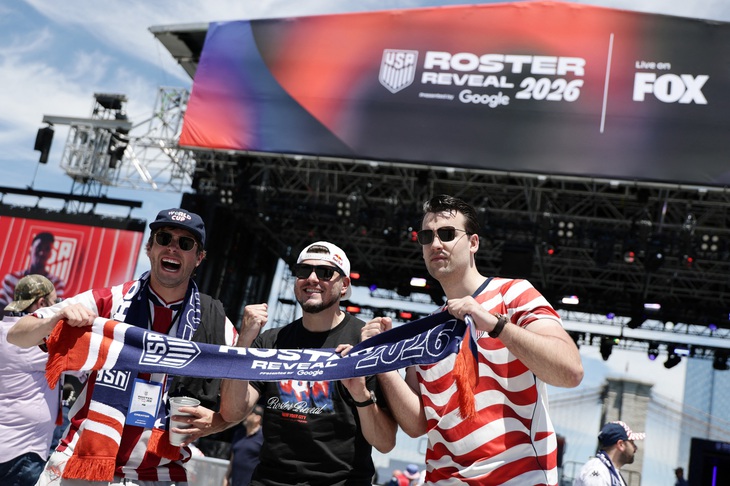
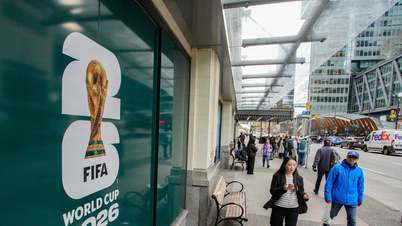
US fans at an event preparing for the 2026 World Cup - Photo: AFP
Declining hotel bookings, lower-than-last-year flight bookings, and soaring service prices are putting the 2026 World Cup at risk of failing to generate the tourism boom it had hoped for.
High cost
Instead of the tourism boom that FIFA had promised, a survey by the American Hotel and Lodging Association (AHLA) of hotels in the 11 host cities recorded lower-than-expected bookings.
In Kansas City, where matches involving Argentina, the Netherlands, and Austria are taking place, 85% of hotels report vacancies. In other major cities like Boston, Seattle, Philadelphia, and San Francisco, around 80% of hotel owners acknowledge that bookings this summer are slower than usual.
One reason cited by AHLA is that FIFA had booked too many rooms in advance specifically for the tournament. This inadvertently created artificial demand and drove up room prices. When guest numbers fell short of expectations, FIFA returned numerous empty rooms, leaving hotels in a difficult position with little time left for preparation.
Furthermore, data from aviation analytics firm Cirium shows that advance flight bookings for July have decreased by approximately 14% compared to the same period last year. Although airfares from Europe to Dallas or Boston remain relatively accessible, overall demand from international travelers has not seen any significant surge.

Mbappe (right) on the training ground with the French national team ahead of the 2022 World Cup - Photo: FRANCEINFO
Ticket prices are sky-high.
The biggest obstacle preventing fans from buying tickets is the exorbitant cost. FIFA is selling "last-minute" tickets for big matches like England vs. Croatia for as much as $2,438 (over 60 million VND).
Even for less-noticed matches like Czech Republic vs. South Africa, the lowest-priced tickets hover around $600. The price for a VIP experience package for the final reached $35,000. This pricing is so high that even US President Donald Trump once stated he wouldn't pay such a large sum just to watch a game.
Another worrying reality is the "displacement effect" on traditional tourists. Many traditional tourists – who typically provide a steady stream of revenue for major cities during the summer – have proactively avoided World Cup host destinations due to fears of overcrowding and inflated prices. The absence of this group, combined with the lower-than-expected number of international fans, is directly impacting the revenue of local retail and service businesses.
Still hope
According to AHLA, approximately 70% of hotel owners surveyed believe that visa delays and political concerns are significantly reducing demand from international travelers. Tighter border checks in the US, along with increased security presence in host cities, are creating a sense of apprehension among foreign tourists.
Despite a somewhat subdued pre-match outlook, the US tourism industry is still hoping for some belated positive signs. The fervent enthusiasm of American fans is expected to fill the stadiums to some extent. Furthermore, the fact that secondary ticket agents are being forced to lower prices to cut losses could stimulate demand from those who decide to travel at the last minute.
Source: https://tuoitre.vn/world-cup-2026-chua-tao-cu-hich-cho-du-lich-my-20260527224624137.htm
![[Photo] The heat at the fireworks display site on the opening night of the Da Nang International Fireworks Festival 2026](https://vphoto.vietnam.vn/thumb/1200x675/vietnam/resource/IMAGE/2026/05/27/1779889741485_ndo_br_z7872039145157-fecaba5112f39e8352544099d7ef4738-5140-jpg.webp)

























































































Comment (0)