

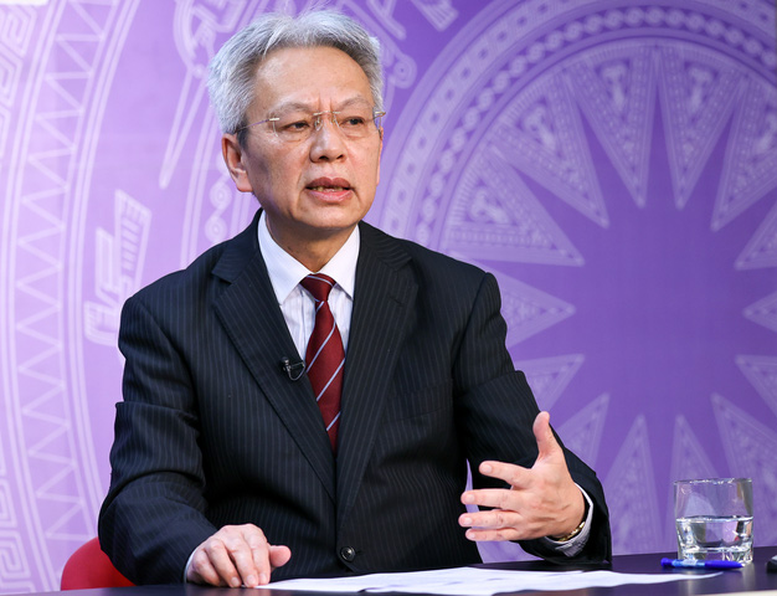
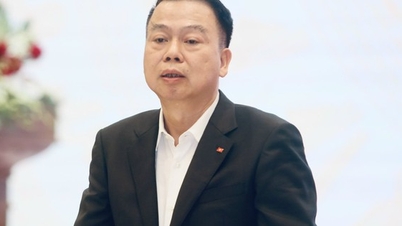
Dr. Nguyen Si Dung: Vietnam is just doing what every ambitious country does: Seriously participating in the global game, with its own labor - Photo: VGP
One such unfortunate misconception or misunderstanding is that people view Vietnam’s large trade surplus with the United States as a sign of unfairness, even trade manipulation. And now, that is being concretized by the announcement of imposing tariffs of up to 46% on goods imported from Vietnam to the United States.
But how should we understand these figures so that they fully and honestly reflect the nature of the economic relationship between the two countries? And if we go down the path of imposing tariffs, who will really be disadvantaged?
No manipulation, just market rules at work
Vietnam did not devalue its currency. Vietnam did not illegally subsidize exports. Instead, Vietnam emerged from deep reforms, opening its markets, attracting investment, and integrating itself into the global supply chain – in a disciplined, patient, and transparent manner.
The fact that Vietnam exports more than 100 billion USD worth of goods to the US each year, and imports only about 10 billion USD, is an inevitable consequence of a development model based on export-oriented industrial production. But that does not mean that Vietnam is benefiting excessively. Because most of those goods are not "created" by Vietnam, but are produced in Vietnam by FDI enterprises - including many American enterprises - and then re-exported to the US.
A smartphone labeled “Made in Vietnam” exported to the US market may be worth $500, but Vietnam only retains $15–20 of added value. The rest goes back to design, development, branding and distribution centers – most of which are located in the US. Thus, the trade balance records a trade surplus for Vietnam, but the value balance is tilted towards the US.
America not only does not lose, but also benefits a lot.
Let's be honest: Who is benefiting most from this economic relationship?
First and foremost, the American consumer. From Nike shoes made in Vietnam, to a wooden chair in the living room, to a cheap laptop – all of these help Americans live more comfortably on their paychecks.
Next are American technology and fashion corporations. They moved their factories to Vietnam not because they were forced to, but because it was a strategic decision, helping to reduce costs, stabilize the supply chain, and cope with geopolitical fluctuations. Vietnam became an ideal alternative destination for some countries in the region, while profits still flowed to Silicon Valley or Wall Street.
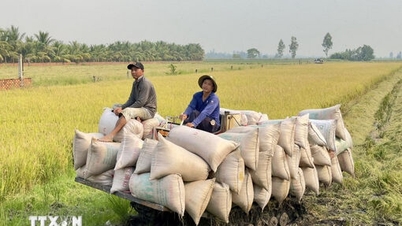
Third is the US agricultural export industry. Vietnam imports billions of dollars worth of cotton, soybeans, machinery, and medical equipment from the US. Meanwhile, Vietnamese farmers are still trying to sell kilos of rice and liters of fish sauce to the US market – but most still face technical barriers.
In other words, if this relationship is a game, it is a win-win game – and America may win more.
Many people look at the trade surplus and think that Vietnam is "getting rich" on the back of the US. But the truth is: Vietnam is doing the work of a skilled craftsman, responsible for processing, assembling, ensuring progress, maintaining quality - but does not own the design, does not decide the selling price, and does not take the majority of the profit.
To maintain that position, Vietnam must make many trade-offs: labor pressure, energy costs… and the risk of becoming a weak point in the supply chain if the international situation worsens.
Vietnam is also not allowed to freely manage trade like the major powers. Every small change in tariffs, every conflict in standards can upset the whole situation. This fragility cannot be called an unfair advantage.
If a 46% tariff is imposed, the first to be hurt will not necessarily be Vietnamese businesses, but: the supply chains of corporations. America, which has taken years to shift from other countries to Vietnam; American consumers, because the price of goods will increase; relations Vietnam-US strategy, which is on the path of positive development with a spirit of mutual respect and trust.
In a volatile world, maintaining fair, transparent and mutually beneficial trade relationships is the foundation of long-term, sustainable stability.
On the other hand, it seems that the US side only takes into account the trade deficit of goods, not taking into account the huge surplus of US service exports.
When policy needs a deeper look than numbers
We cannot build trade policy based on the balance of imports and exports alone. Those numbers do not tell the whole truth. What we need is a deep look into the structure of the value chain, the real benefits and the quality of the cooperation relationship as well as the practical benefits for the people of both countries.
Vietnam has never sought to get rich through illegal means. Vietnam does not manipulate. Vietnam is simply doing what every ambitious nation does: seriously participating in the global game, with its own labor.
And so, Vietnam deserves to be treated fairly.
Dr. Nguyen Si Dung
Source: https://baochinhphu.vn/xuat-sieu-sang-my-viet-nam-xung-dang-duoc-doi-xu-cong-bang-102250406081959758.htm
















































































Comment (0)