


1. Characteristics and uses of black turmeric
Black turmeric is a herbaceous plant, about 1-1.5m tall, with a conical rhizome that has longitudinal grooves. The tubers spread out in a webbed pattern, and the plant is thick and firm. The tuber skin is pale yellow; in addition to the main tubers, there are also secondary tubers with egg-shaped or pear-shaped stalks, white in color. The leaves have sheaths that embrace the stem at the bottom. The flower clusters grow horizontally and usually appear before the leaves.
The tubers are harvested in winter. When harvested, the rootlets are removed, the tubers are steamed until cooked, and then dried. Sometimes they are sliced thinly before drying. Alternatively, black turmeric is soaked in water with vinegar (500g black turmeric + 250ml water and 150ml vinegar), then boiled until the liquid evaporates, sliced thinly, and dried.
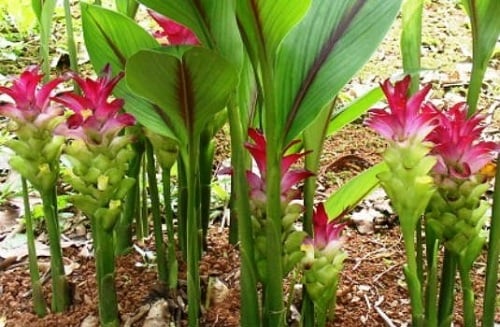
Black turmeric plant is used to make the medicinal herb Curcuma longa.
According to Traditional Chinese Medicine: Black turmeric has a pungent and bitter taste, a warm nature, and enters the liver meridian; it has the effect of dispersing blood stasis, promoting blood circulation, dissolving lumps, clearing blocked menstruation, benefiting the intestines and stomach, and eliminating damp heat; it treats chest and abdominal pain, indigestion, and irregular menstruation.
According to modern medical research: Black turmeric can help reduce pain and inflammation by significantly inhibiting certain inflammatory mediators; it helps heal ulcers, protects the stomach, and significantly reduces stomach pH…
Furthermore, black turmeric is also known to reduce total cholesterol, triglycerides, and LDL-cholesterol. These are the types of cholesterol that cause dyslipidemia, atherosclerosis, coronary artery disease, and stroke... while simultaneously increasing good cholesterol, HDL-cholesterol, inhibiting platelet aggregation, and preventing thrombosis formation.
Black turmeric also has an effect on Staphylococcus aureus, Corynebacterium amycolatum, Escherichia coli (the bacteria that causes diarrhea), Candida albicans, and Aspergillus ochraceus.
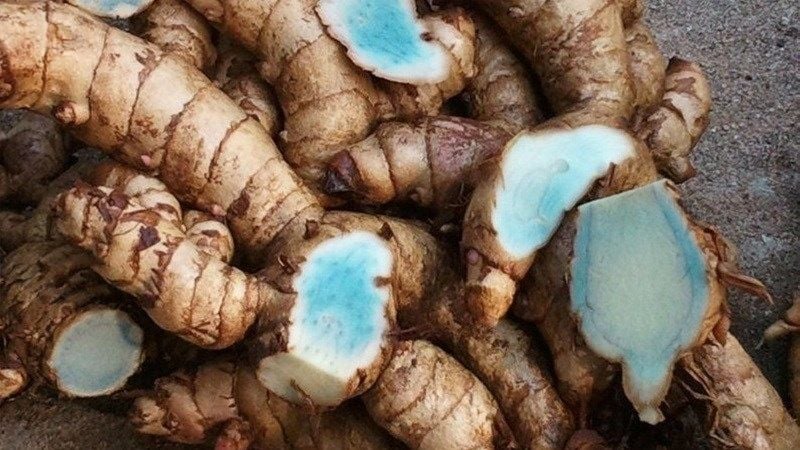
Black turmeric is commonly used to treat abdominal pain caused by cold exposure, indigestion, amenorrhea, and blood stagnation.
2. Medicinal remedies using black turmeric
Prevention and treatment of abdominal pain caused by cold exposure: 100g of black turmeric, 50g of wood incense; grind into a fine powder; take 3g each time with diluted vinegar water.
Prevention and treatment of abdominal pain due to amenorrhea and leucorrhea: 8g black turmeric, 5g Ligusticum chuanxiong, 10g Rehmannia glutinosa, 10g Paeonia lactiflora, 10g Angelica dahurica; all finely powdered and mixed well; take 6g three times a day, washed down with diluted salt water.
Prevention and treatment of menstrual disorders and menorrhagia: 16g of black turmeric, 16g of motherwort; decoct and drink throughout the day.
To support the treatment of tumors, lymph nodes, and accumulations: Black turmeric, Achyranthes root, and Chinese angelica root, 12g each; decoct and drink one dose per day.
To treat malnutrition, loss of appetite, abdominal distension, and frequent bowel movements in children, or stomach pain, constipation, and belching in adults: Use 8g of black turmeric and 6g of Cassia tora seeds; decoct and drink throughout the day.
Contraindications: Not suitable for pregnant women and women with excessive menstruation.
Source



![[Photo] Walking amidst the coffee blossoms in the Central Highlands](https://vphoto.vietnam.vn/thumb/1200x675/vietnam/resource/IMAGE/2026/02/22/1771736214034_ndo_bl_img-3460-8365-jpg.webp)



















































































Comment (0)