It's feasible!
Data from the International Monetary Fund (IMF) shows that in 2025, Vietnam's GDP per capita will reach US$4,740, ranking 6th in Southeast Asia. Thus, within a 5-year period, the target figure will increase by nearly 1.8 times compared to the present.
The IMF also estimates that by 2030, Vietnam's GDP per capita will reach $6,320. It is evident that there is a discrepancy of over $2,000 between the target set and the IMF's calculations.
Is achieving a GDP per capita of $8,500 by 2030 achievable for Vietnam?
“It’s feasible!” Associate Professor Vo Dai Luoc, former Director of the Institute of World Economics and Politics, answered the question posed by VietNamNet above. “However, this is a challenging figure. The government will need to make significant efforts to achieve it,” he added.
Looking at the IMF figures, it's clear that Singapore is dominating the region, with its GDP per capita nearing $100,000, placing it among the top in the world , and projected to exceed $114,000 by 2030.
Meanwhile, Vietnam, Indonesia, and the Philippines are in the middle group, with figures ranging from $6,000 to $7,000 by 2030, only 1/15th of Singapore's.
When discussing the dramatic transformation of the island nation of Singapore and offering lessons for Vietnam to learn from, Mr. Luoc recounted a story from over 30 years ago.

Photo: Nam Khanh
In 1993, he was a member of the Economic Advisory Group of Prime Minister Vo Van Kiet. At that time, Singaporean Prime Minister Lee Kuan Yew (who had since retired) was invited to Vietnam to serve as an advisor to the Group.
During the two to three weeks that Lee Kuan Yew worked in Vietnam, members of the Advisory Team spent a significant amount of time asking questions about Singapore's development formula.
Mr. Luoc remembers two key points shared by the late Prime Minister of Singapore.
Firstly, there's the way people are utilized. Singapore is open to welcoming foreign talent into its government. At one point, the cabinet under Lee Kuan Yew consisted of only two native members. The heads of the remaining ministries were foreign talents hired to run the country.
Furthermore, all ministers receive exceptionally generous salaries, among the highest in the world. With such high salaries, the government aims to attract talented individuals to contribute to national governance and reduce corruption in the public sector.
Secondly, there's the institutional framework. Singapore adopted the legal system from England – considered the best in the world at the time. In other words, Singapore imported almost the entire British institutional system – a country with a leading industrial sector.
"Thanks to these exemplary policies, Singapore was the first country in Asia to overcome the middle-income trap," Mr. Luoc said, affirming that Vietnam's economy is fully capable of achieving breakthrough growth. To do this, the institutions and the people implementing these policies are especially important.
Activate new motivations.
For many years, Vietnam has maintained a GDP growth rate of 6-7% based on exports, foreign direct investment (FDI), and consumption. However, the country is approaching the limits of its labor-intensive production model. The current model is insufficient to achieve the targets set for 2030.
Therefore, according to Dr. Adeel Ahmed, lecturer at the Business School, RMIT University Vietnam, Vietnam needs to shift towards higher-productivity industries, invest in human resources, modernize infrastructure, and upgrade its position in the value chain.
Moving beyond a low-cost labor-based model requires a shift towards higher value-added sectors such as electronics or digital services. By strengthening international integration, Vietnam can also increase value in its supply chain and maintain a sustainable growth trajectory.

Photo: Nam Khanh
Nevertheless, China has previously raised concerns about the risk of "getting old before getting rich," and Vietnam is facing a similar challenge as its population ages rapidly with a low birth rate, increased life expectancy, and a workforce expected to peak in the not-too-distant future.
The United Nations Population Fund in Vietnam forecasts that by 2036, Vietnam will enter a period of population aging, transitioning from an "aging" society to an "aged" society.
Dr. Adeel Ahmed argues that an aging population could reduce the labor supply, put significant pressure on budgets, and diminish economic resilience. If productivity doesn't increase sufficiently, Vietnam risks becoming stuck at middle-income status with a shrinking workforce. This risk can be mitigated by productivity-driven growth, supported by technology, a more skilled workforce, and the development of small and medium-sized enterprises (SMEs).
Therefore, to achieve the goal of raising Vietnam's GDP per capita to US$8,500 by 2030, the Government needs to address structural challenges while shifting from a labor-driven growth model to a productivity-driven one. The top priority should be improving productivity and technology.
Associate Professor Dr. Nguyen Huu Huan from the Ho Chi Minh City University of Economics argues that Vietnam needs an economic strategy that focuses on specialized fields rather than expanding. It should concentrate efforts rather than spread itself too thin.
For example, South Korea is famous for consumer electronics. Taiwan (China) is famous for semiconductors and bubble tea. Vietnam will need to position itself as a nation focused on a particular industry, and then concentrate investment to leapfrog ahead and achieve breakthroughs. Quantum technology is a new and promising direction.
"The success of South Korea's chaebol model is a case in point. Vietnam has Resolution 68, which outlines the development of the private economy. What needs to be done is to create strong private economic groups that are leaders in their respective industries and act as a driving force, guiding other businesses in the country," Mr. Huan shared.
Ms. Nguyen Thi Mai Thanh, Chairwoman of the Board of Directors of Refrigeration and Electrical Engineering Corporation (REE) An increase in GDP per capita means that the income businesses pay to their employees increases. When businesses thrive, individuals also earn better incomes. Therefore, obstacles hindering business progress must be removed quickly, without wasting too much time on administrative procedures. Mr. Nguyen Ba Diep, Co-founder and Vice President of MoMo Financial Technology Group. To achieve the target of a GDP per capita of $8,500, the most important focus is labor productivity. Vietnam needs to accelerate the application of technology, automation, AI, and data analytics in both large and small and medium-sized enterprises. According to numerous international studies, businesses that adopt technology can increase productivity by 2–3 times. This means that GDP growth does not depend on expanding the workforce or capital, but rather on production efficiency, leading to faster and more sustainable growth in per capita GDP. Besides large enterprises and FDI, a crucial but recently emerging component is the small and medium-sized enterprise (SME) sector, including household businesses and small traders, which contribute 40-50% of GDP. This sector is large but has low productivity due to limitations in technology, capital, and market access. If this sector receives strong support in digital transformation, management tools, access to credit, and integration into modern supply chains, its contribution to GDP growth will increase significantly. Dr. Tu Minh Thien, Vice Rector of Hoa Sen University GDP per capita is an important figure. But remember, we need to live well, not just rich. Perhaps at some point, we need to sacrifice a certain rate of growth to achieve sustainable stability. When that happens, the happiness index will improve. |
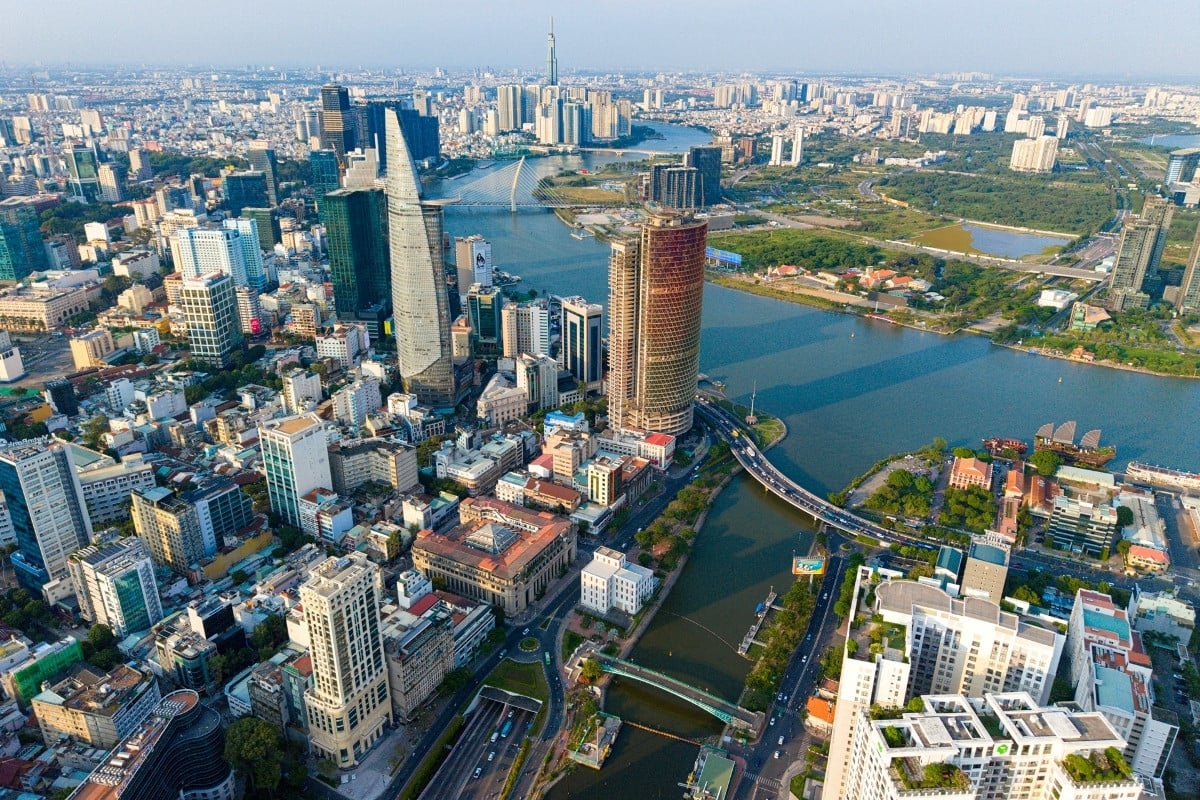
From recovery to breakthrough: Vietnam's economy on the threshold of a new era. A growth target of 10% or more in 2026 is a very ambitious goal, but not impossible, if Vietnam correctly identifies and effectively activates key growth drivers.
Source: https://vietnamnet.vn/5-nam-va-8-500-usd-2489647.html



![[Photo] General Secretary and President To Lam presides over a meeting on assessing national development resources.](https://vphoto.vietnam.vn/thumb/1200x675/vietnam/resource/IMAGE/2026/05/20/1779253785852_a1-bnd-2943-8519-jpg.webp)




















































































Comment (0)