

In the cultural field, effectively implementing the directions set forth in Resolution No. 59 is an urgent requirement, contributing to building an advanced Vietnamese culture rich in national identity, while establishing the position and brand of Vietnamese culture on the world map.
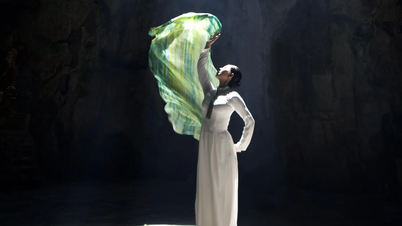
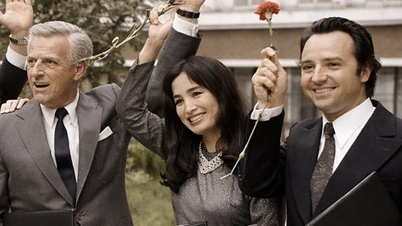
More than half a century ago, at the 1973 Paris Conference aimed at ending the Vietnam War, the ao dai (traditional Vietnamese dress) worn by Nguyen Thi Binh, head of the Provisional Revolutionary Government delegation of South Vietnam, went down in history as a symbol of the nation's resilience, intelligence, and cultural identity. It was a clear testament to the soft power of culture. In the context of a nation's progress, cultural identity needs to constantly innovate, integrating contemporary and international elements to conquer the world.
Demonstrating inner strength
Ms. Phan Bich Thien, President of the Vietnamese Women's Forum in Europe, recounts that at every event of the Vietnamese community in Hungary, where she lives, the local community could easily mistake it for an event from other Asian countries if the traditional ao dai dress were missing. But when everyone wears the ao dai, people immediately recognize them. Many people happily shout, "Vietnam, Vietnam!" She herself has lived in Europe for over 40 years, but at any event, she is always proud to wear the ao dai. Her two daughters, born and raised in Europe, have also enjoyed wearing the ao dai and benefited from the educational and living conditions there. Now, not only women, but many men also confidently wear the ao dai on special occasions.
The Vietnamese Ao Dai Heritage Club in Europe was established in September 2024, as an affirmation of the value of Vietnamese culture. Globalization, especially in the age of information explosion, makes many people easily swept up in international cultural trends. In this context, from individuals to nations, the question remains: Where do we stand in this "flat world"? The answer lies in cultural identity. Many people go abroad to study at a very young age, with limited cultural knowledge, and are therefore often confused when international friends ask about their country.
Driven by personal needs and national pride, many young people are returning to, rediscovering, and spreading the values of their national culture. The authors of the book "Weaving a Dynasty" (Vietnam Center - VNC) - a bilingual book about Vietnamese traditional clothing - are a prime example. Le Ngoc Linh, a member of the group, shared: "When you're in Vietnam, you yourself aren't aware of the value of Vietnamese culture. It's only when you go abroad that the yearning to connect with your roots is formed and becomes the driving force behind proudly spreading Vietnamese culture to international friends."
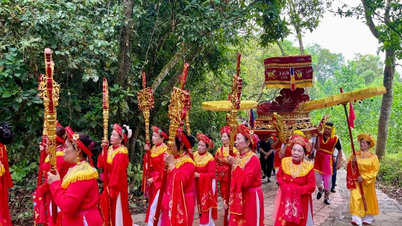
Above all, "cultural identity" is the most valuable asset in international integration. But Vietnamese culture is not just about "áo dài and conical hats." A history spanning thousands of years has left us with an invaluable treasure trove of cultural values. This includes 40,000 historical sites of various kinds, 8,000 festivals, and thousands of intangible cultural heritage items, encompassing many forms: folk knowledge, performing arts, etc. Vietnamese culture is unified in diversity, reflecting the cultural colors of 54 ethnic groups; with diverse cultural forms from the highlands, lowlands, rivers, and coastal regions…
Deeply aware of these values, after a period of opening up and integration, the Party issued Resolution No. 5 of the 8th Central Committee "On building and developing an advanced Vietnamese culture imbued with national identity," laying the foundation for the Party's perspective on culture as Vietnam integrates internationally. The spirit of Resolution No. 5 of the 8th Central Committee has been inherited and further developed in the Party's later views on culture, most notably the view that: Culture is the spiritual foundation of society, both a goal and a driving force for socio-economic development; developing culture and building human beings is both a goal and a driving force of the reform process.
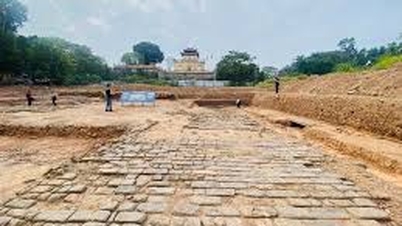
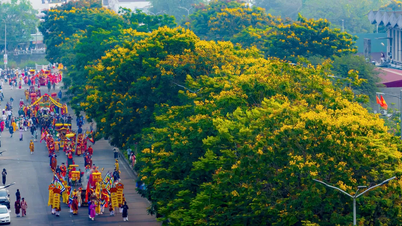
With new, practical perspectives, the preservation and safeguarding of national cultural beauty has been vigorously implemented through concrete solutions. As a result, Vietnamese culture is increasingly affirmed on the world map. Speaking of Vietnam today, one cannot fail to mention the Thang Long Imperial Citadel (Hanoi), a World Heritage site with millennia of historical relics and hidden treasures buried underground. UNESCO experts consider it a model of heritage preservation. Speaking of Vietnam today also means speaking of the sacred and serene atmosphere of the ancient capital of Hue (Hue City), with its moss-covered citadels and ornate palaces preserving centuries of memories of the last monarchical dynasty and the beauty of court culture.
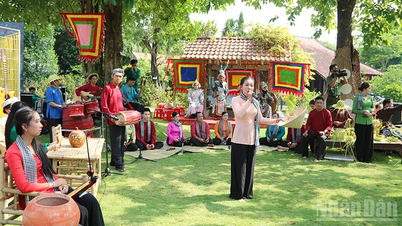
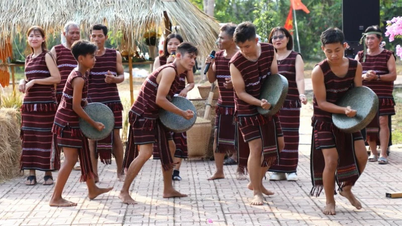
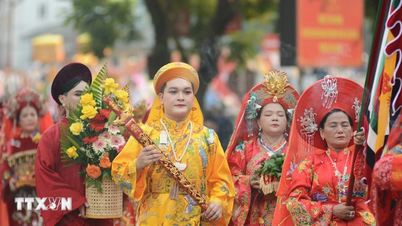
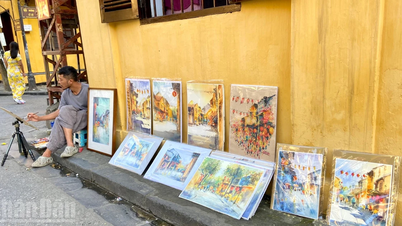
It also includes Hoi An Ancient Town (Quang Nam), a place deeply marked by international exchange hundreds of years ago. It also includes man-made heritage sites harmoniously integrated with natural heritage at the Trang An World Cultural and Natural Heritage Site (Ninh Binh). Along with tangible cultural heritage, Vietnam's intangible cultural heritage, recognized by UNESCO, is also enhancing the brand of Vietnamese culture globally, with the Central Highlands' gong culture, Hue royal court music, Quan Ho folk singing from Bac Ninh, the practice of worshipping the Mother Goddess, Thai Xoe dance… and numerous other cultural heritages. This once again affirms: The more we preserve and protect our cultural heritage, the more we assert our inherent strength. In particular, these heritages are not dormant but are being exploited to develop socio-economic aspects, develop the cultural industry, and simultaneously affirm and spread the cultural values of the country to the world, attracting international friends to Vietnam.
Innovate to spread and conquer.
The country is entering an era of progress, with new demands and challenges. Resolution No. 59-NQ/TW dated January 24, 2025, of the Politburo on international integration has outlined specific requirements and tasks for international integration in the culture and tourism sector. Related sectors and localities need to proactively and actively implement these measures. Besides enhancing the soft power of culture, we must also develop the cultural industry with many products that are internationally competitive. For a time, we preserved cultural values through a "frozen" approach.
This perspective has both positive and negative aspects, but also limitations. Professor Nguyen Chi Ben, former Director of the Vietnam National Institute of Culture and Arts, argues that creativity must be considered a principle in preservation – without creativity, tradition will be broken because it will lose its ability to connect with life. UNESCO's viewpoint in the 2005 Convention on the Protection and Promotion of the Diversity of Cultural Expressions also emphasizes: "The cultural heritage of humanity is expressed, enriched and conveyed through many cultural expressions and is manifested in creative ways of producing, disseminating, distributing and enjoying cultural products and services."
In reality, when combining tradition with contemporary and international values, the soft power of Vietnamese culture is enhanced; it gains international recognition and appreciation for Vietnamese cultural values. We already have thousands of music videos related to Bac Ninh culture. But it can be said that thanks to the release of singer Hoa Minzy's "Bac Bling" music video, the stunning images of Bac Ninh culture, such as Quan Ho folk songs, Dau Pagoda, But Thap Pagoda, Phu Lang pottery village, etc., have spread to the world at such a rapid pace. Currently, the music video has reached 223 million views after three months on YouTube.
Without innovative solutions, telling the story of the cultural life of the people of the Northern Delta in the past—from their daily work and leisure activities to their studies, examinations, and religious and spiritual practices—would be very difficult. However, with the "Essence of Northern Vietnam" live performance (Tuan Chau Company - Hanoi), all those stories are "encapsulated" in a 75-minute show. Similarly, the "Memories of Hoi An" show, using live performances, recounts the layers of culture in the ancient city of Hoi An. Both live performances have received high praise from international audiences. Creative approaches based on heritage are also becoming increasingly rich and diverse: integrating creativity into a heritage platform; exploiting heritage values to create new products; drawing inspiration from heritage to form products; integrating tradition with the contemporary…
In particular, there are integrated solutions combining traditional and modern multidisciplinary approaches. A prime example is director Nguyen Quoc Hoang Anh – the founder of the cultural organization "Len Ngan" – and his colleagues, who have created numerous multidisciplinary theatrical performances: works that draw inspiration from traditional Vietnamese opera (tuong, cheo, chau van) combined with various contemporary art forms such as jazz, hip hop, and electronic music. This fusion of tradition and modernity has captivated not only young people but also international audiences.
Along with Resolution No. 59-NQ/TW, the Politburo issued Resolution No. 68-NQ/TW on May 4, 2025, on the development of the private economy; and Resolution No. 57-NQ/TW on breakthroughs in science and technology development, innovation, and national digital transformation. These resolutions create a "foundation" for the cultural industry, attract investment, and inspire creativity among artists, artisans, and innovators... so that Vietnamese culture can continuously develop its value and position itself on the world map.
(To be continued)
Source: https://nhandan.vn/bai-1-chia-khoa-ban-sac-van-hoa-post889331.html












































Comment (0)