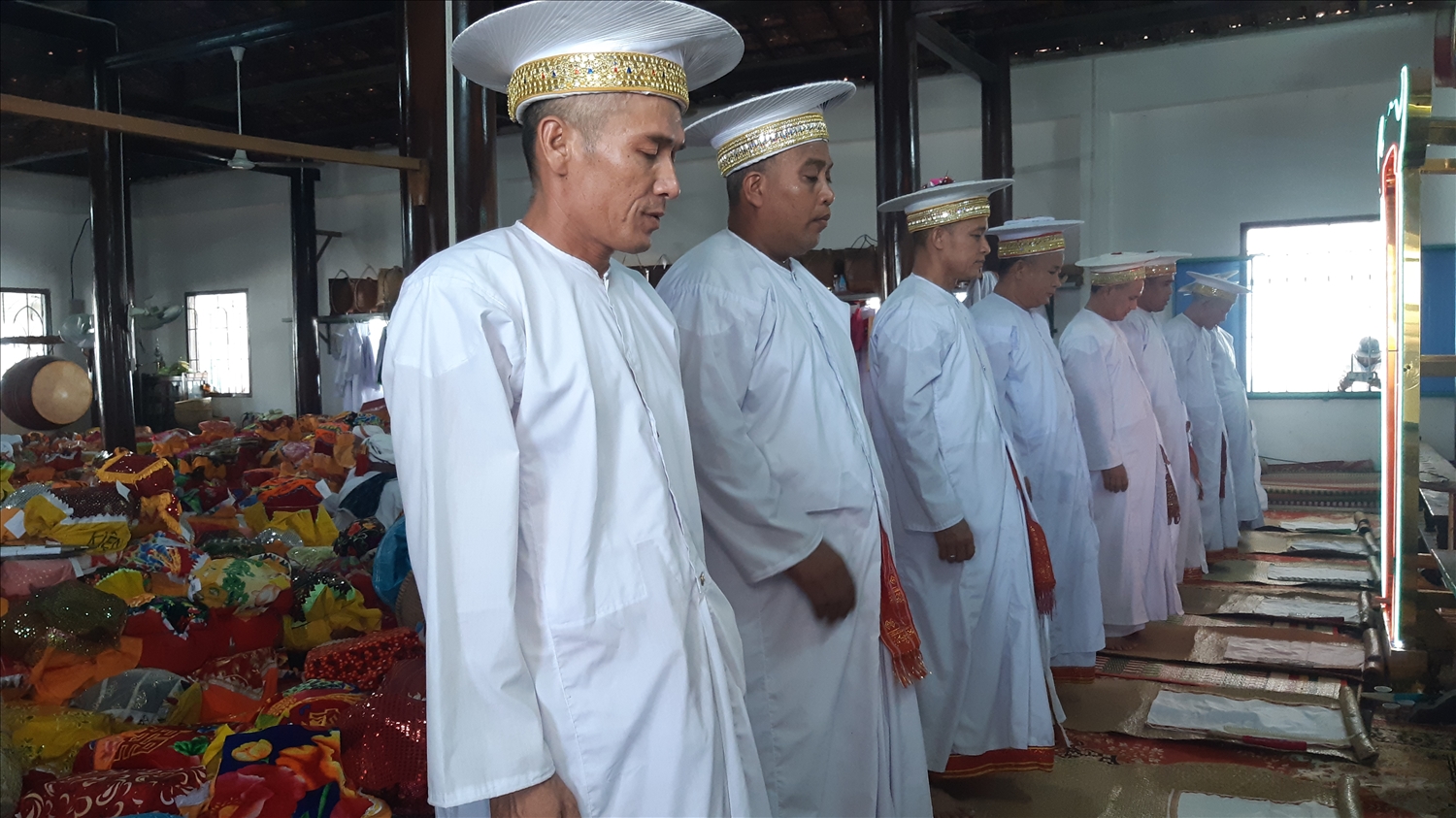
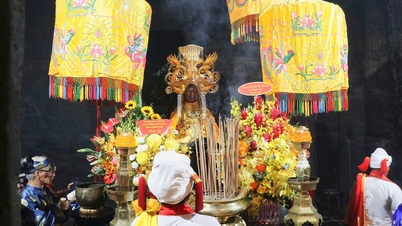
The Po Acar religious leader performs a ceremony at the temple in Van Lam village, Phuoc Nam commune, Thuan Nam district, Ninh Thuan province.
Festival at the temple
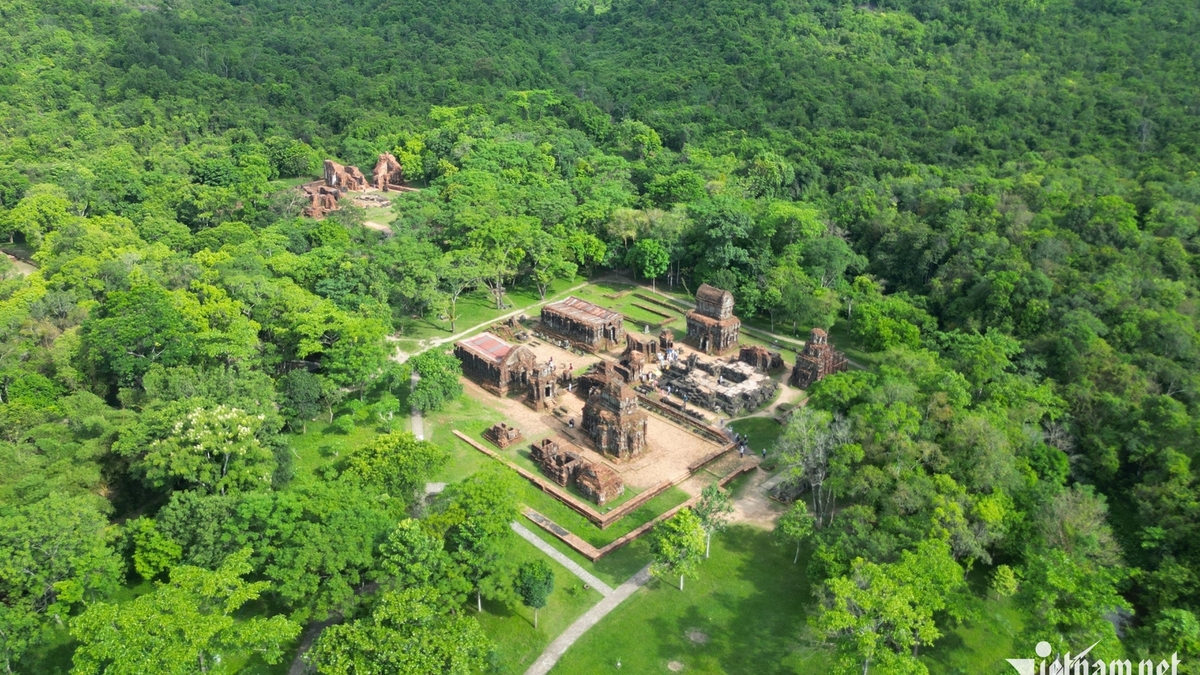
At the Champa temples in the South Central region, the Cham people organize the Yuer Yang, Katê, Cambur, and Peh Ba-mbeng Yang festivals. These festivals, held at the towers, showcase the intangible cultural values of the Cham people.
The festival process begins with rituals such as opening the tower, bathing the statue of the god, dressing the god in ceremonial robes, and offering sacrifices. Those performing the rituals include the Po Adhia, Kadhar, Pajau, Camanei, and a large number of local people who bring local produce they have grown and prepared into delicious dishes to offer to the deities.
The sacred atmosphere of the temple festivals, combined with the festive spirit, creates a captivating and alluring experience for visitors every time they ascend the towers. Specifically at the Po Dam temple in Binh Thuan province, the Yuer Yang Festival is held, along with other festivals such as Rija Nagar, Rija Harei, and Rija Praong, offering a sacred musical celebration.
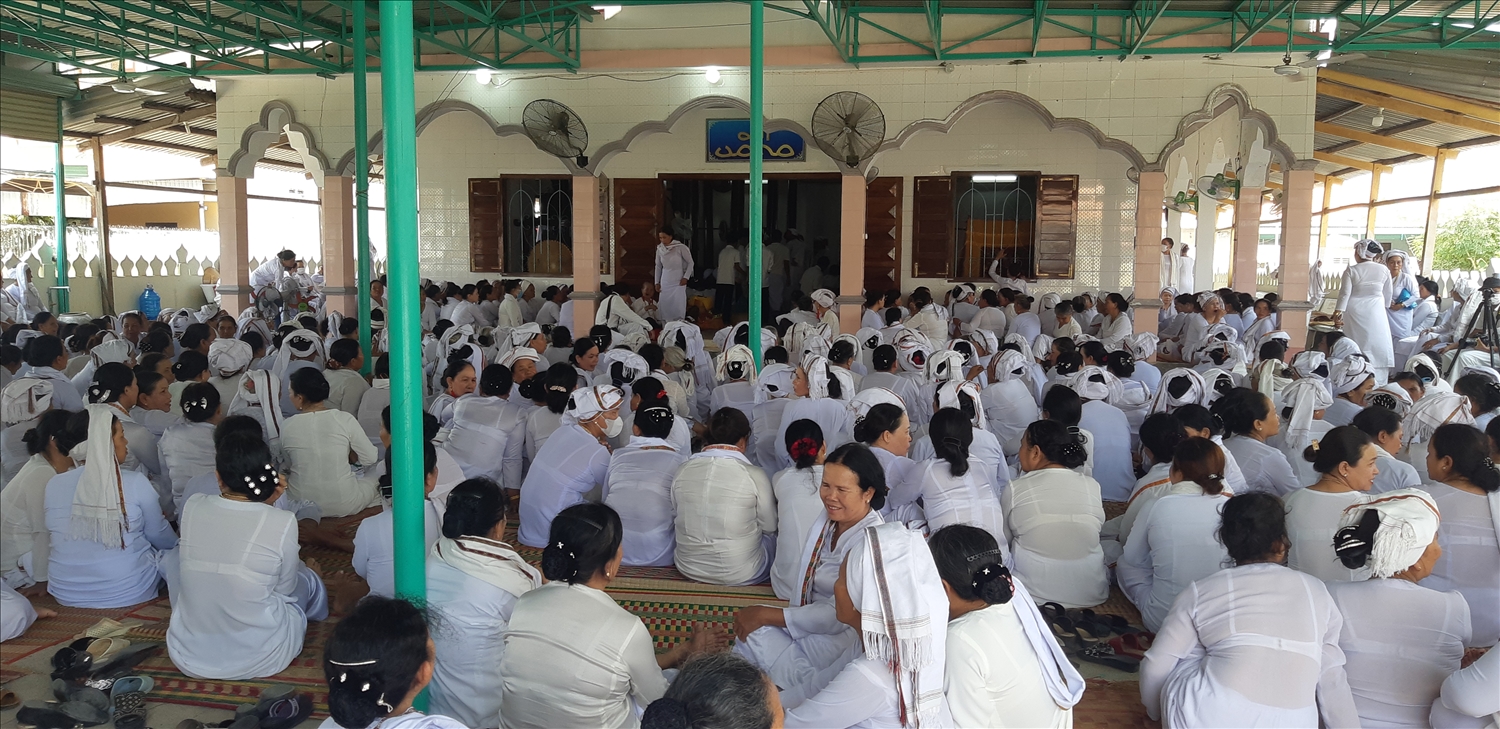
The religious atmosphere of the Cham Bini community at the mosque.
Festival at the mosque (Sang magik/Masjid)
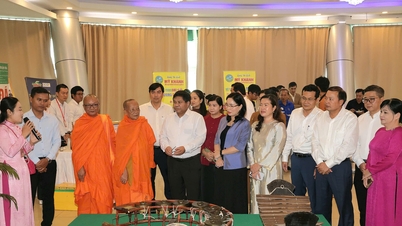
During the month of Ramadhan and the Suk Yeng week, the mosques of the Cham Bini people in the South Central region become busier than usual. Families prepare offerings and traditional dishes to offer to the Acar monks who are observing a fast in the mosque.
During the month of Ramadan, after visiting ancestral graves and bringing offerings to their ancestors, the Cham Bini priests perform rituals in the mosque, diligently reciting scriptures and are only allowed to eat and drink after sunset. The image of Cham women carrying trays of offerings to the mosque in rows, wearing elegant Brem scarves, is a common sight.
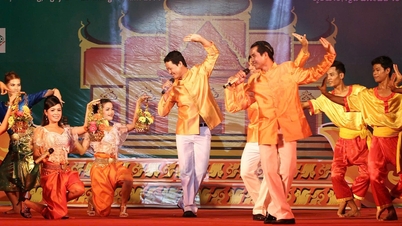
The mosque is the center of religious life for the Cham Bini community, and the venue for village festivals. Traditional Cham music and dance performances are held within the mosque grounds to celebrate major events such as the month of Ramadhan and the Suk Yeng week.
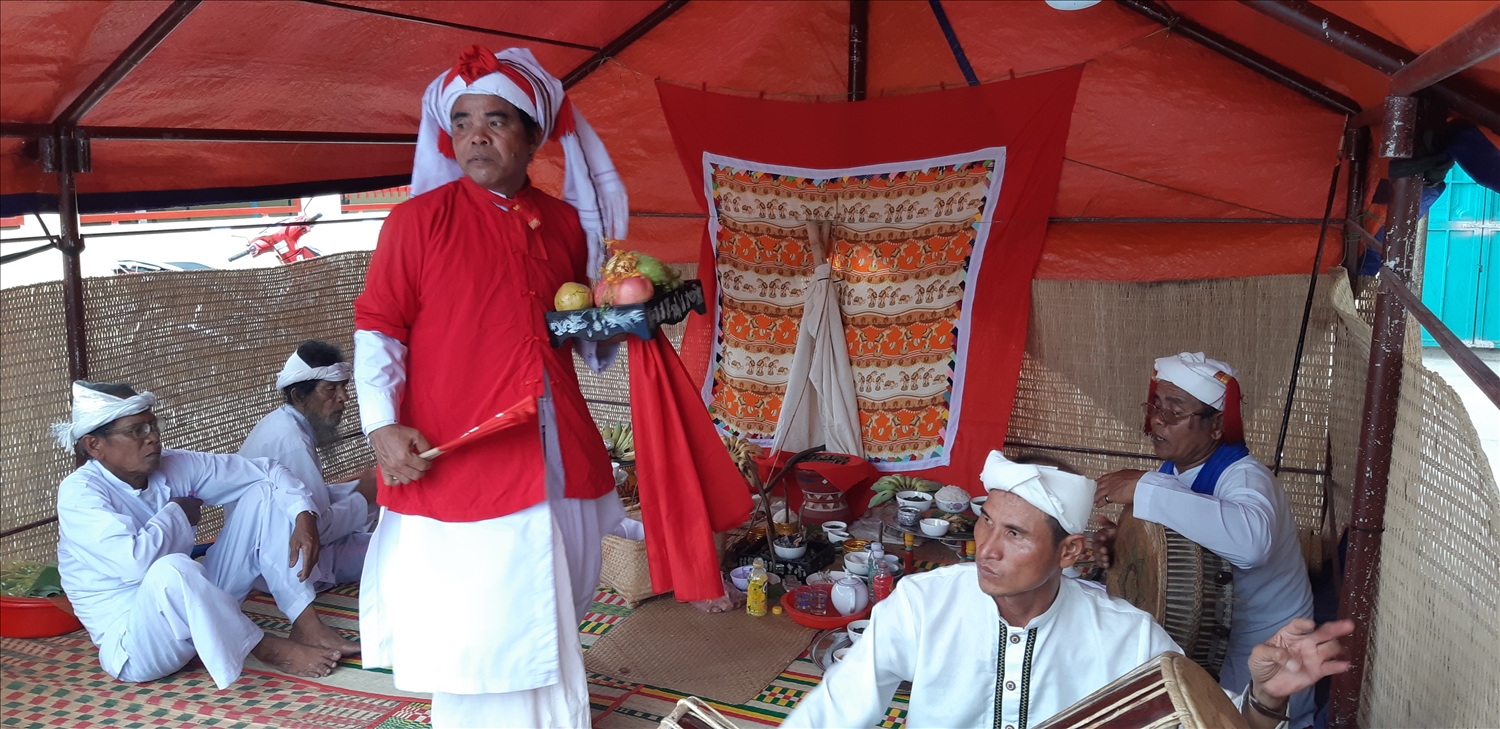
Mr. Ka-ing performs a dance in the likeness of the goddess Po Nai during the Rija Nagar Festival.
Community festival
The Rija Nagar festival is a community festival held in both the Cham Brahman (Cham Ahiér) and Cham Bini (Cham Awal) villages, aimed at warding off evil spirits. The master of ceremonies is the shaman Maduen, who invites the deities, beats the baranâng drum, and sings hymns recounting the biographies and merits of the gods. Alongside Maduen is Ka-ing, who acts as a dancer in the ceremonial dance.
Each deity has a different title, personality, and attire. Therefore, during the ceremonial dance, Mr. Ka-ing disguises himself, embodies the characters, and carries various props to portray the characteristics, personalities, and demeanor of the deities. The music accompanying Mr. Ka-ing's dance is provided by a ceremonial band consisting of two ginang drum players, one saranai horn player, and one gong player. When Mr. Ka-ing embodies a particular deity, the band plays music specifically for that deity.
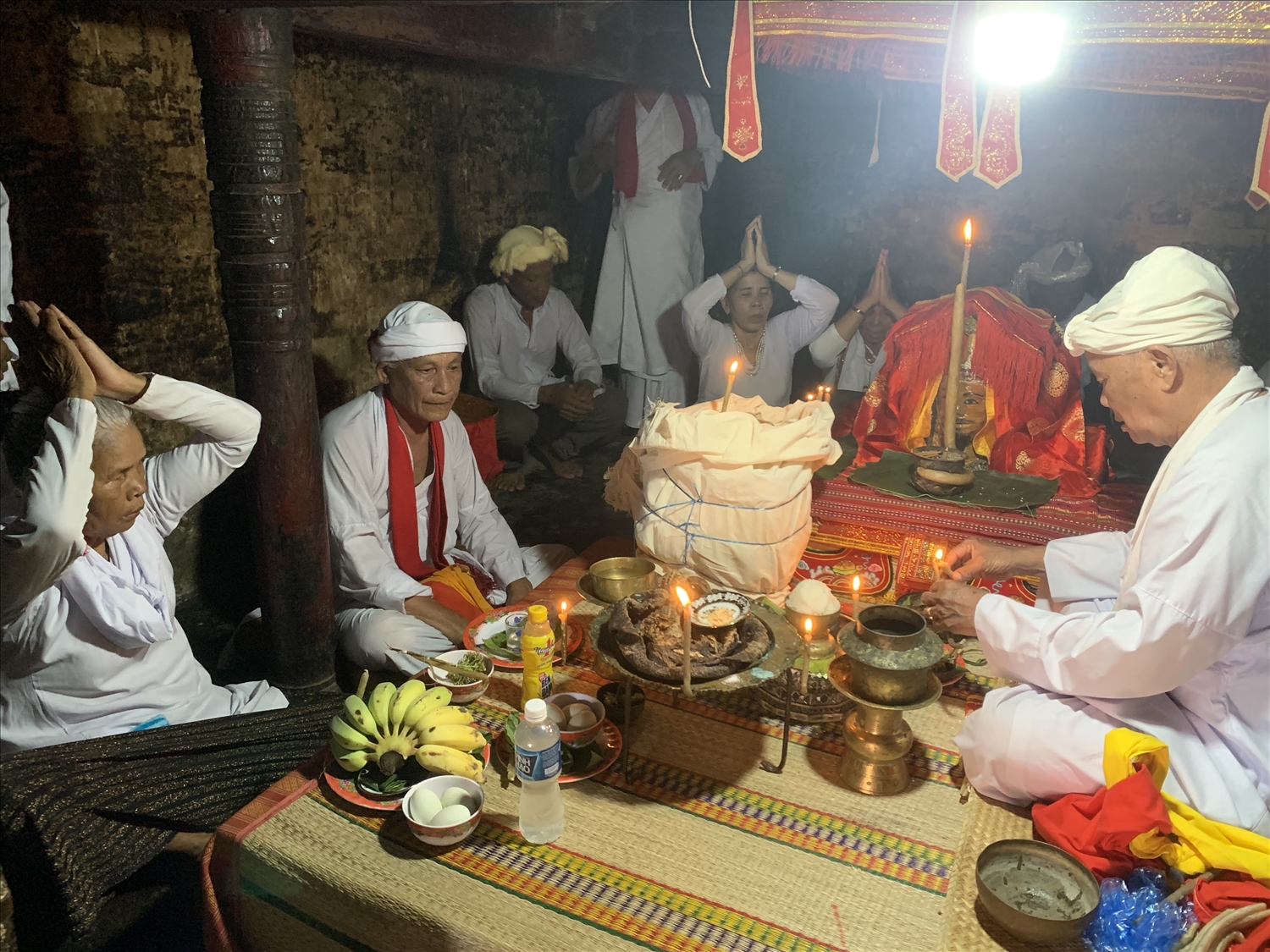
The Cham people offer sacrifices at the Po Klong Garai temple.
At the end of the Rija Nagar ceremony, effigies made of rice flour (Salih), consisting of one male and one female figure, are set adrift on the river into the sea, carrying the villagers' messages and prayers. The Rija Nagar festival takes place during the transition from the dry season to the rainy season.
The lives of the Cham people have been closely intertwined with agricultural activities and farming for generations. Therefore, they always yearn for favorable weather, praying for rain and fertile land for a bountiful harvest. The Rija Nagar festival is a cultural and religious event of the Cham people, combined with performing arts such as singing and dancing, creating an atmosphere of excitement and joy for the new year.
Preserving and promoting the cultural heritage values of the Cham people in the South Central region serves as a foundation and driving force for economic , cultural, and social development. It contributes to raising awareness of preserving and protecting cultural heritage within the community, representing a sustainable development direction.
This is also the spirit of Project 6 on preserving the cultural beauty of ethnic minorities for tourism development, under the National Target Program for socio-economic development of ethnic minority and mountainous areas giai đoạn 2021-2030.
Source: https://baodantoc.vn/nhung-sac-mau-le-hoi-nguoi-cham-1749724697526.htm



















































Comment (0)