

For many years it remained only on paper.
According to the plan, during the period 2016-2020, Hanoi will build 75 new parking projects, with a total investment of over 14,200 billion VND.
Regarding underground parking, in addition to the 7 projects already approved and granted investment, the city will build 4 more new projects, bringing the total number of underground parking lots in this phase to 11.
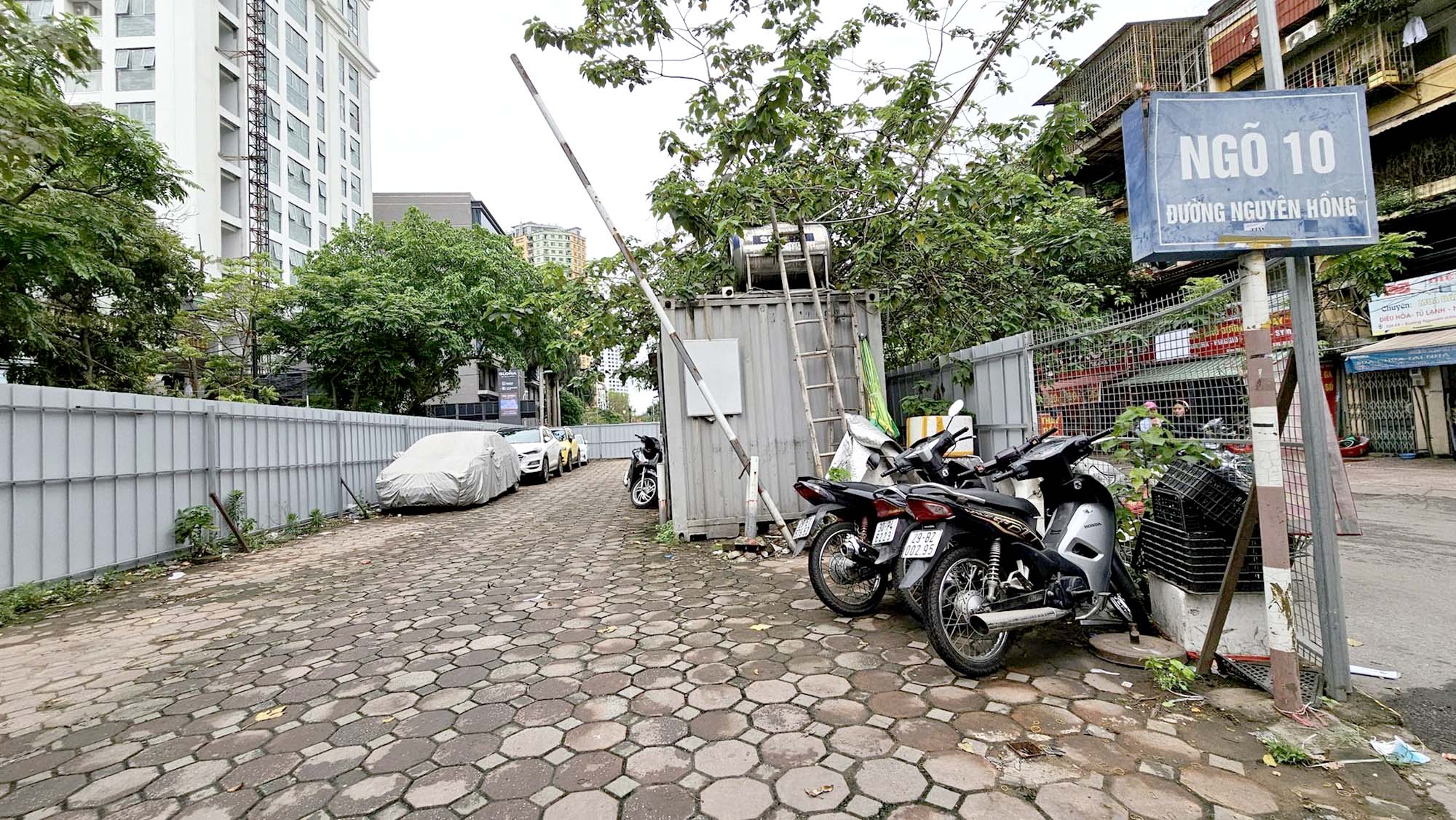
The underground parking project on Nguyen Hong Street has been fenced off with corrugated iron since 2017 by the investor, but to date, it has not been implemented, turning the area into a temporary parking lot.
However, according to investigations by reporters from Giao Thong Newspaper, no underground parking lots have been built to date. The reason is due to procedural obstacles and issues related to investment and capital recovery mechanisms.
On the morning of July 19th, while present at the automated parking lot project (H1-3) in the area of the Nguyên Hồng canal (located in Láng Hạ ward, Đống Đa district and Thành Công ward, Ba Đình district), the reporter witnessed the land remaining undeveloped. Instead, an unauthorized parking lot had sprung up.
This parking lot was licensed for planning purposes in 2017, with a design capacity of approximately 200 cars. In addition, there is a motorbike parking area, a maintenance area, and landscaped gardens.
Not far from there, the project to build an underground parking lot combined with commercial services in Thu Le Park (Ngoc Khanh ward, Ba Dinh district) has not yet started.
The project received investment approval from Hanoi City in May 2019, with a total budget of over 1,700 billion VND. It has an operating period of 50 years and is expected to be completed in the fourth quarter of 2020.
Meanwhile, the underground parking lot in Thong Nhat Park (Hai Ba Trung District), which was repurposed from a previous hotel construction project, remains an abandoned plot of land enclosed by corrugated iron fences nearly 20 years later.
According to the design, the parking lot project is expected to have 3 underground parking levels, each over 5,600m2, with enough capacity to accommodate 390 cars.
Mechanisms are needed to attract businesses to invest.
Dr. Nguyen Huu Duc, a transportation expert, stated: "It's not entirely accurate to say that procedural obstacles have prolonged the implementation time. The core issue is that the city has not issued clear directives for implementation, leading to subordinates avoiding responsibility."
"At the current rate of development, after just 2-3 years, the initial conditions will change, adjustments will be needed, and permissions will have to be sought again, creating a vicious cycle that could last 5-7 years."
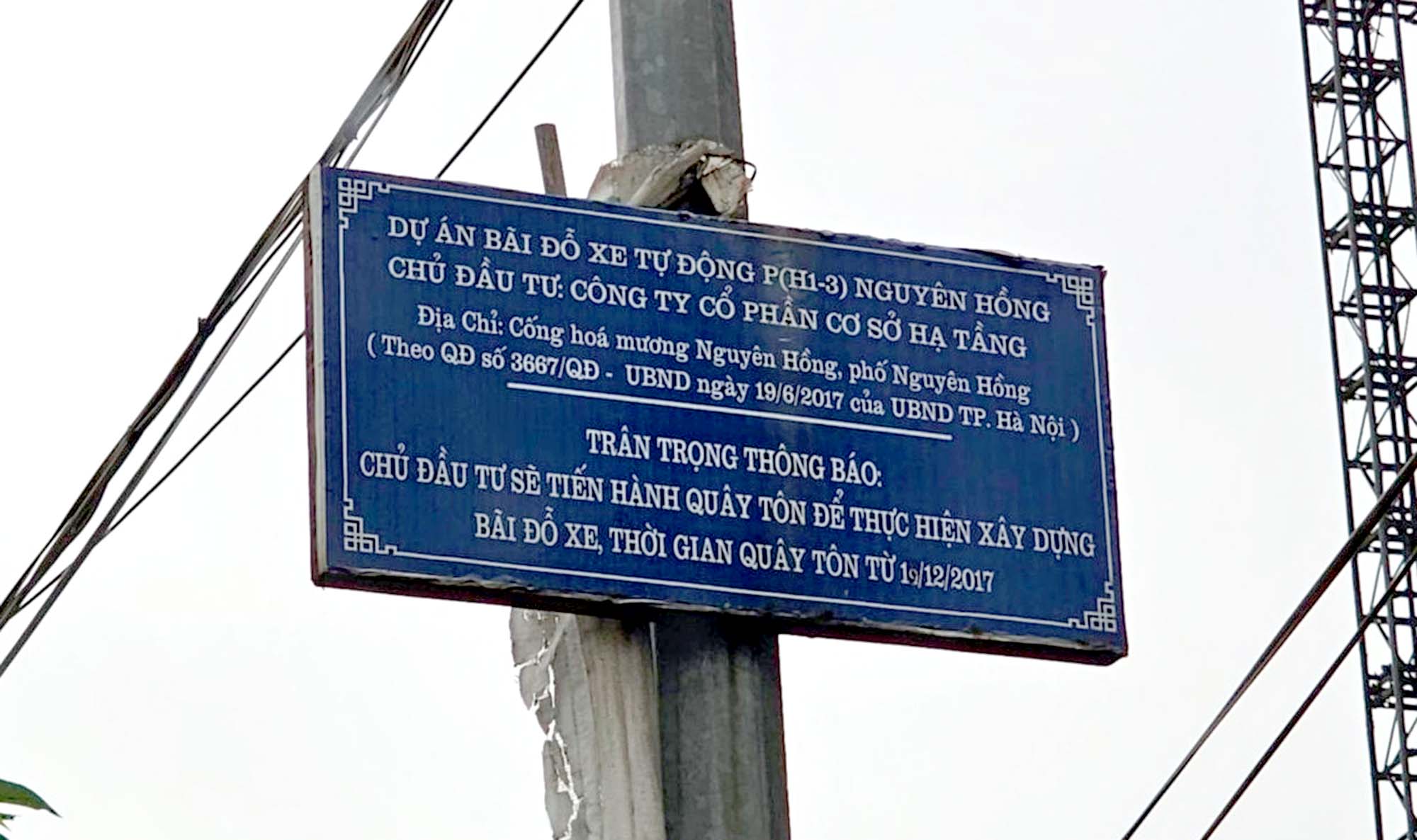
The developer has put up a corrugated iron fence and posted a notice, but has not yet started construction.
According to architect Tran Huy Anh of the Hanoi Architects Association, due to a lack of feasibility and attractiveness in terms of mechanisms and financial objectives, a series of planned parking lots have been indefinitely "suspended". Large investment capital and a payback period of 30-40 years have led investors to turn their backs on these projects from the outset.
The main difficulty relates to the investment value of parking lots, which require very large capital investments. Businesses must have financial resources, vision, and the ability to accumulate capital. Investing in smart parking also requires preferential policies for businesses.
"Some businesses have acquired ownership, but the legal procedures are incomplete, making it difficult to invest in parking lots."
"Some planned areas are located far from residential areas, leading to investors seeing little or no profit, thus reducing their enthusiasm," architect Ánh expressed.
A major parking management company in the area stated: "Investing in underground parking lots costs hundreds of billions of dong, but it takes up to 50 years to recoup the investment."
Meanwhile, without additional commercial business activities, preferential mechanisms, or incentives for loans, how can we dare to do it?"
According to Mr. Tran Huu Bao, Deputy Director of the Hanoi Department of Transport, the Hanoi People's Committee is requesting relevant departments and agencies to review all underground parking lots included in the planning to propose solutions to attract private investment.
"In the fourth quarter of 2024, Hanoi will hold a large-scale meeting to resolve issues related to investment in underground parking lots," Mr. Bao said.
The Hanoi People's Committee currently has preferential policies to support private investment in underground parking lots, such as: 100% land tax support for 10 years, and 100% import tax support for imported equipment and technology lines.
Projects can borrow capital from the city development fund at preferential interest rates, with interest rate subsidies of up to 50% for projects borrowing from credit institutions. Socialized above-ground and underground parking projects can utilize 20-30% of the building floor area for other services.
Source: https://www.baogiaothong.vn/ha-noi-bai-xe-ngam-dap-chieu-nhieu-nam-go-cach-nao-192240723090057584.htm






































































































Comment (0)