

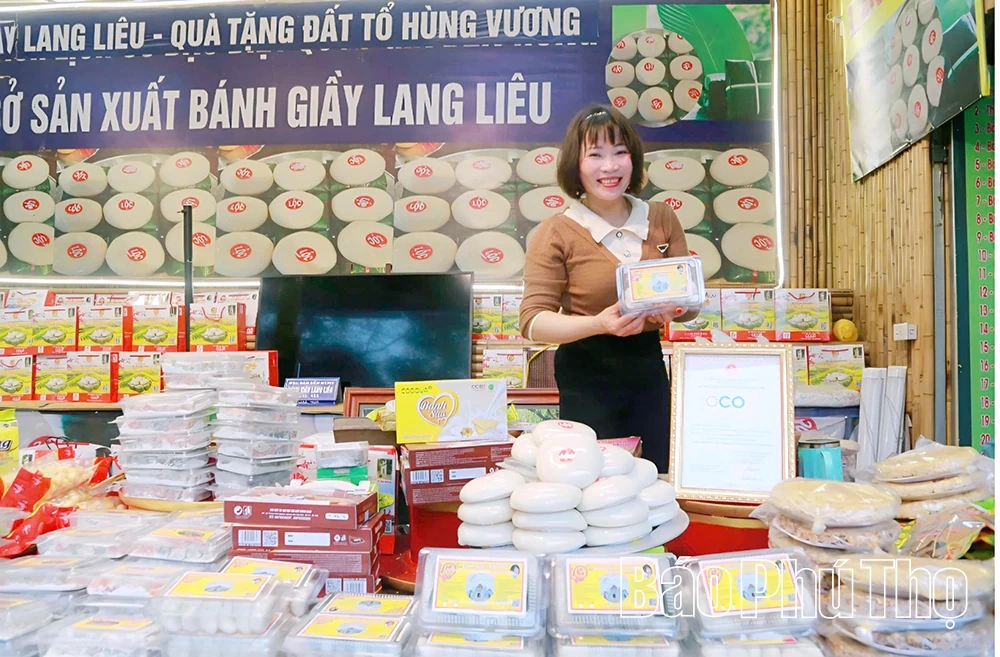
These fragrant, chewy rice cakes are served to visitors at the Hung Temple historical site.
As Vietnamese people, whenever we mention banh chung and banh giay (traditional Vietnamese rice cakes), we all know the legend of "Banh Chung and Banh Giay," associated with Lang Lieu offering the fragrant cakes to King Hung as a token of filial piety and gratitude, which led to King Hung VI passing the throne to him. Legend says banh giay originated during the reign of King Hung VI. After defeating the Yin invaders, the king intended to pass the throne to his son, saying, "...Whichever son can find the most delicious food to prepare the most meaningful feast, I will pass the throne to him..." Lang Lieu, the 18th son of King Hung, a kind and filial son, dreamt of a deity who told him to use glutinous rice to make round and square cakes to symbolize the round sky and the square earth. Because in heaven and earth, nothing is more precious than rice... From then on, banh giay became a part of Vietnamese culture, not just a food item but also a part of history. To this day, sticky rice cakes are still offered by people during the Hung Kings Commemoration Day and the Lunar New Year to express their gratitude to their ancestors.
Visiting the Hung Temple historical site, tourists can enjoy Lang Liêu sticky rice cakes made by the people of the ancestral land. Ms. Tran Thi Hang, owner of a Lang Liêu sticky rice cake production facility in Hy Cuong commune, with a shop selling sticky rice cakes in the Den Gieng area, said: “This is a delicious, chewy, white, and smooth cake full of meaning. To this day, sticky rice cakes are still offered to King Hung on the Hung King's death anniversary to show their remembrance of King Hung – the founder of our nation.” The cake-making process is quite elaborate and requires the skill of the baker. The smooth, non-sticky crust is soft and fragrant with the aroma of glutinous rice, subtly scented with dong leaves, creating a gift that is distinctly rural. Lang Liêu sticky rice cakes come in three flavors: savory bean filling, sweet bean filling, and plain. In 2024, Lang Liêu sticky rice cakes were recognized as a 3-star OCOP product. This is a highlight that creates the brand for Lang Liêu sticky rice cakes.
To achieve this, the Lang Liêu Den Hung sticky rice cake production facility places great importance on rice selection. The rice used is usually glutinous rice of the "golden flower" variety. The rice is washed clean, soaked, and then steamed over a wood fire to make the sticky rice chewy and sticky. The filling is made from carefully selected yellow-hearted mung beans. Ms. Hang shared that in the past, her family pounded the rice by hand, but now it's done by machine, without compromising the flavor of the cake. On a normal day, the facility produces about 10kg of rice. During the beginning of the year, especially during the Hung Kings' Commemoration Day - Hung Temple Festival, the facility produces 300kg - 500kg of glutinous rice per day.
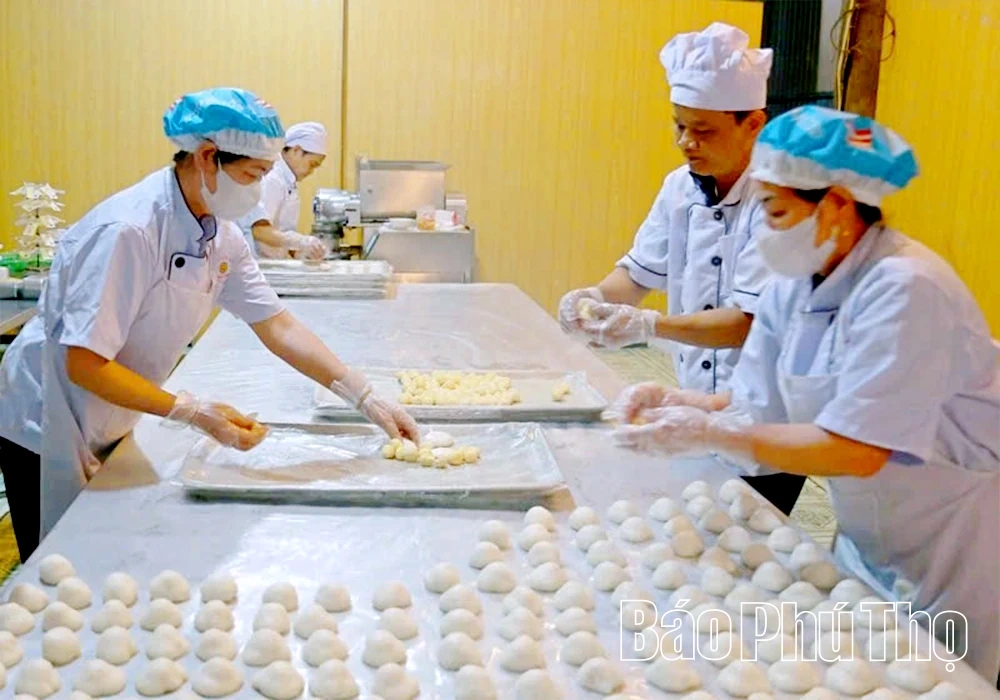
Lang Liêu rice cakes have been recognized as a 3-star OCOP product.
The delicious sticky rice cakes sold to tourists each day all bear labels from the production facility with complete information about the address, ingredients, contact phone number, production date, and expiration date. Ms. Nguyen Thi Thuy from Thanh Mieu ward shared: “Every year during the Ancestor Commemoration Day, I often come here to buy a few pairs of sticky rice cakes to offer to my ancestors. The cakes are freshly pounded, so they are still hot, chewy, fragrant, and have a distinctive flavor. I also choose to buy these sticky rice cakes to take home as gifts for relatives and friends.”
Visiting the Hung Temple historical site, tourists are not only captivated by the beautiful scenery but also get to enjoy the simple yet delicious specialties of the people of the ancestral land. The Lang Liêu rice cakes are not just a fragrant treat; they embody the solidarity, gratitude, and respect of the Vietnamese people for their ancestors who, over thousands of years, diligently built and defended the nation.
Thuy Hang
Source: https://baophutho.vn/banh-giay-lang-lieu-nbsp-thao-thom-tu-dat-me-244858.htm
![[Photo] The General Secretary, President and his wife begin their state visit to the Philippines.](https://vphoto.vietnam.vn/thumb/1200x675/vietnam/resource/IMAGE/2026/05/31/1780230559452_anh-man-hinh-2026-05-31-luc-19-28-11.png)
![[Photo] Solemn bathing ceremony and Buddha procession in Hue](https://vphoto.vietnam.vn/thumb/1200x675/vietnam/resource/IMAGE/2026/05/31/1780228263543_1-jpg.webp)
![[Photo] Admire the coral "masterpiece" amidst the million-year-old heritage of Dak Lak province.](https://vphoto.vietnam.vn/thumb/1200x675/vietnam/resource/IMAGE/2026/05/31/1780221235105_anh-man-hinh-2026-05-31-luc-16-53-27.png)








![[Video] Sunset at Lap An Lagoon – Where the sun sets over the fishing nets](https://vphoto.vietnam.vn/thumb/340x192/vietnam/resource/IMAGE/2026/05/31/1780192137701_beach-landscape-sea-water-nature-grass-745871-pxhere-com.jpeg)






















![[Photo] Admire the coral "masterpiece" amidst the million-year-old heritage of Dak Lak province.](https://vphoto.vietnam.vn/thumb/402x226/vietnam/resource/IMAGE/2026/05/31/1780221235105_anh-man-hinh-2026-05-31-luc-16-53-27.png)
























Comment (0)