


Perform many difficult techniques
At the end of 2025, Vung Tau General Hospital (Ho Chi Minh City) admitted patient V. (born in 1958) with chest pain and severe dizziness. Upon examination, the patient was diagnosed with junctional pacing. Despite receiving medical treatment according to the protocol, the condition did not improve.
Dr. Hoang Thi Loan, from the Geriatric Cardiology Department at Vung Tau General Hospital, stated: “Prolonged bradycardia poses a risk of hemodynamic instability, which can be life-threatening. Therefore, patients need to have a temporary pacemaker implanted as soon as possible.” At that time, temporary pacemaker implantation was a new technique at Vung Tau General Hospital. However, thanks to the hands-on training and technical transfer from doctors at Cho Ray Hospital, the treatment team at the facility was confident enough to implement it.
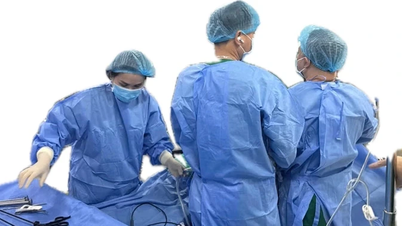
Dr. Hoang Thi Loan, who directly performed the procedure, carefully threaded the electrode wire through the right internal jugular vein into the heart chamber according to professional protocol. The intervention went smoothly, and the patient's heart rate stabilized. "At that moment, I had a very special feeling. I felt both professional pride and relief because the intervention was safe. More importantly, I clearly understood the significance of supporting and transferring technology from higher-level hospitals to local ones, helping patients receive timely intervention right in their local area," Dr. Hoang Thi Loan shared.
About a week earlier, also at Vung Tau General Hospital, with the direct support of neurosurgeons, thoracic and vascular surgeons, and anesthesiologists from Gia Dinh People's Hospital, the two hospitals' teams collaborated to save a patient with severe traumatic brain injury who was in critical condition. According to Dr. Ha Ngoc Phuc, Head of the General Surgery Department at Vung Tau General Hospital, previously, with such severe cases, the hospital had to transfer patients to higher-level hospitals. The transportation process carried many risks and could miss the "golden hour" for surgery. "Thanks to the timely support from higher-level hospitals, our doctors at the grassroots level are now more confident and secure in receiving and treating severe cases. We are also boldly implementing many new techniques and surgeries, contributing to improving the quality of treatment and patient care," Dr. Ha Ngoc Phuc shared.
Meanwhile, at the Ba Ria - Vung Tau Traditional Medicine Hospital, after signing a comprehensive support agreement with the Ho Chi Minh City Traditional Medicine Hospital, the unit has implemented many more advanced techniques and individualized treatment protocols for each disease group. Every Monday and Tuesday, the Ho Chi Minh City Traditional Medicine Hospital sends doctors to provide direct professional support, participate in examinations, consultations, and treatment alongside the medical staff at the facility. Conversely, the Ba Ria - Vung Tau Traditional Medicine Hospital sends personnel to participate in training and receive new, advanced techniques from the higher-level unit to gradually improve its professional capacity.
Foundation for development
According to Dr. Tran Thien Truong, Deputy Director of Vung Tau General Hospital, after receiving comprehensive support from top-tier hospitals in Ho Chi Minh City, Vung Tau General Hospital has seen positive changes. Professionally, the medical staff have received training, technology transfer, and support for direct and remote consultations; thereby gradually mastering many advanced techniques and effectively handling complex cases that previously required referral to higher-level hospitals.
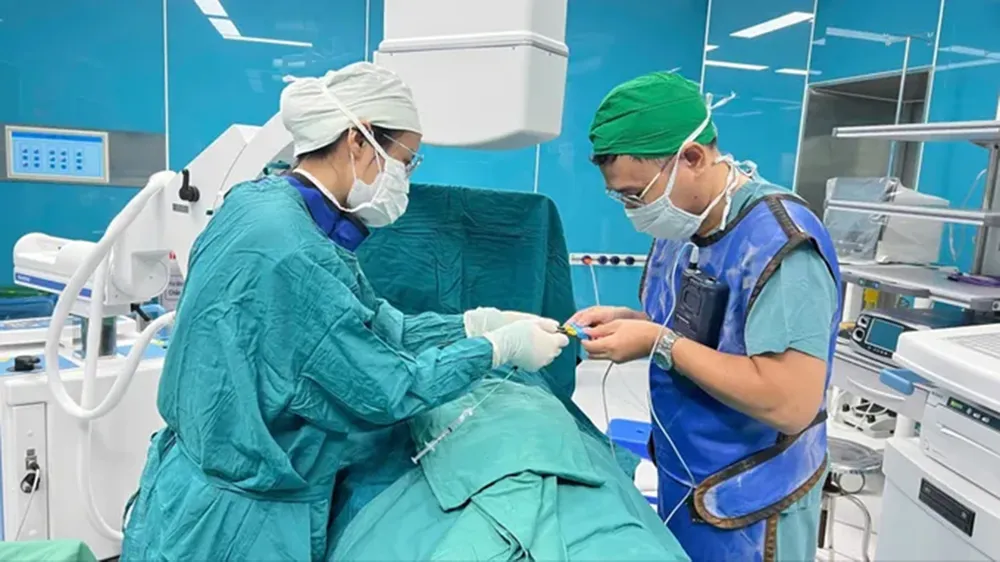
Furthermore, professional procedures are standardized and synchronized according to the protocols of higher-level hospitals. Hospital management is also gradually being reformed, realizing the goal of building a smart hospital that puts patients at the center.
In the coming period, with the support of tertiary hospitals, Vung Tau General Hospital will build a complete emergency center, develop endoscopic surgery, interventional endoscopy, and vascular intervention techniques. Support in hospital management, digital transformation, and quality management will also be the foundation for the unit's sustainable development.
Beyond simply improving treatment capacity, the support model also opens up new avenues for the development of local healthcare . Associate Professor, Dr. Nguyen Anh Dung, Deputy Director of the Ho Chi Minh City Department of Health, stated that, in addition to providing routine medical examination and treatment, the Ba Ria - Vung Tau Traditional Medicine Hospital is being oriented towards becoming a specialized medical tourism destination focusing on traditional medicine. This is an advantage for the hospital and aligns with the local tourism development potential. "With the professional support and collaboration from leading hospitals in Ho Chi Minh City, residents and tourists will have access to high-quality traditional medicine services right in their local area," the Deputy Director of the Department of Health emphasized.
Dr. Nguyen Thi Uyen Chi, Deputy Director of the Traditional Medicine Hospital of Ba Ria - Vung Tau, said: “The most noticeable change is the application of a comprehensive treatment method, combining specialized traditional medicine with modern medicine in treating both acute and chronic diseases. Patients clearly feel the effectiveness of the treatment and the difference of the new method, as evidenced by the increasing level of satisfaction.”
Source: https://www.sggp.org.vn/benh-vien-co-so-chuyen-minh-post834828.html


![[Photo] The General Secretary, President and his wife begin their state visit to the Philippines.](https://vphoto.vietnam.vn/thumb/1200x675/vietnam/resource/IMAGE/2026/05/31/1780230559452_anh-man-hinh-2026-05-31-luc-19-28-11.png)
![[Image] Hanoi Police officially crowned champions of V-League 2025/2026](https://vphoto.vietnam.vn/thumb/1200x675/vietnam/resource/IMAGE/2026/05/31/1780244769054_ndo_br_039d561b692be875b13a-jpg.webp)
![[Photo] Admire the coral "masterpiece" amidst the million-year-old heritage of Dak Lak province.](https://vphoto.vietnam.vn/thumb/1200x675/vietnam/resource/IMAGE/2026/05/31/1780221235105_anh-man-hinh-2026-05-31-luc-16-53-27.png)
![[Photo] Solemn bathing ceremony and Buddha procession in Hue](https://vphoto.vietnam.vn/thumb/1200x675/vietnam/resource/IMAGE/2026/05/31/1780228263543_1-jpg.webp)














![[Video] Sunset at Lap An Lagoon – Where the sun sets over the fishing nets](https://vphoto.vietnam.vn/thumb/340x192/vietnam/resource/IMAGE/2026/05/31/1780192137701_beach-landscape-sea-water-nature-grass-745871-pxhere-com.jpeg)































![[Photo] Admire the coral "masterpiece" amidst the million-year-old heritage of Dak Lak province.](https://vphoto.vietnam.vn/thumb/402x226/vietnam/resource/IMAGE/2026/05/31/1780221235105_anh-man-hinh-2026-05-31-luc-16-53-27.png)
































Comment (0)