

TPO - During the group discussion, Mr. Nguyen Chi Dung - Minister of Planning and Investment - emphasized that separating land clearance from public investment projects is necessary to reduce project delays and avoid situations where capital and projects are waiting for land.
TPO - During the group discussion, Mr. Nguyen Chi Dung - Minister of Planning and Investment - emphasized that separating land clearance from public investment projects is necessary to reduce project delays and avoid situations where capital and projects are waiting for land.
The reform involves a very strong emphasis on decentralization and delegation of power.
On the afternoon of October 29th, during group discussions on the draft Law on Public Investment (amended), Minister of Planning and Investment Nguyen Chi Dung addressed some concerns raised by delegates. Mr. Dung emphasized that the decentralization and delegation of authority for public investment projects represent a very strong reform this time around.
"The 10th Central Committee meeting decided that if the Central Committee decides, the Central Committee will act; if the localities decide, the localities will act and bear the responsibility," Mr. Dung said.
 |
Minister of Planning and Investment Nguyen Chi Dung. Photo: Nhu Y. |
Mr. Dung also emphasized that this draft law is designed to be flexible. If the district or provincial level finds that the capacity of the subordinate level is insufficient, they will not delegate tasks, or if they have delegated tasks but find that the subordinate level cannot perform them, they will withdraw them. However, he also stated that decentralization does not mean delegating everything to the lower levels.
"If decentralization fails, it means either things are done incorrectly or everything remains stagnant, and that's unacceptable," Mr. Dung said, expressing his hope that National Assembly delegates would strongly support the spirit of decentralization, as outlined in the 10th Central Committee Conference.
Why, despite all the policy decisions and efforts, is disbursement still low?
During the group discussion, Minister Nguyen Chi Dung also emphasized the need to separate land clearance from public investment projects to reduce project delays and avoid situations where capital and projects are waiting for land. According to him, this is the most significant obstacle in disbursing public investment funds, and in this revision, the drafting agency has separated "land clearance" into a separate project, independent of or unrelated to public investment projects.
"Why, despite all the policy decisions and efforts, is the disbursement rate in 2024 lower than in 2023? There are many reasons, but one important one is land clearance," the Minister of Planning and Investment explained.
According to Minister Nguyen Chi Dung, currently, after an investment decision is made, we only then proceed with land clearance, surveying, counting, compensation plans, and resettlement construction… this sequential process for public investment projects takes a lot of time.
This time, the amendment to the Law on Public Investment is based solely on planning, identified funding sources, designated resettlement areas, and the determination of the Party committee and the head of the organization… to implement the project, separating land clearance. Mr. Dung affirmed that these factors determine the success of public investment projects, and if implemented, it will reduce the time for each project by 6-8 months.
Therefore, when deciding to invest, implementation should begin immediately. Most importantly, the three stages of the implementation process should be clearly separated: investment preparation, procedural work, and project implementation preparation (land clearance), followed by project construction. Clearly defining the responsibilities of each stage, who is responsible, and which unit is accountable will shorten the project implementation time.
Source: https://tienphong.vn/bo-truong-nguyen-chi-dung-noi-ve-viec-du-an-bi-delay-post1686743.tpo

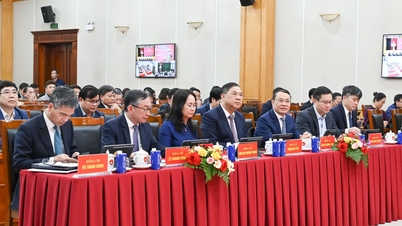
![[Image] Central Party Office summarizes work in 2025](/_next/image?url=https%3A%2F%2Fvphoto.vietnam.vn%2Fthumb%2F1200x675%2Fvietnam%2Fresource%2FIMAGE%2F2025%2F12%2F18%2F1766065572073_vptw-hoi-nghi-tong-ket-89-1204-jpg.webp&w=3840&q=75)









































































Comment (0)