


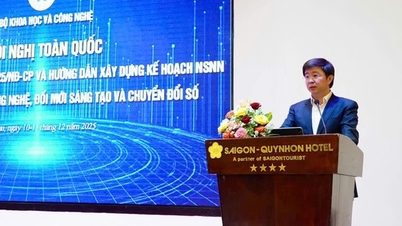
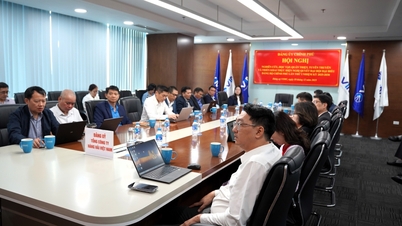
Minister Nguyen Manh Hung delivered a directive speech at the working session.
During the meeting, the heads of the Digital Transformation Units presented several proposals and recommendations regarding organizational structure, personnel, policies, and strategic direction to support task implementation, overcome difficulties, and enhance the national digital transformation leadership capacity.
According to Nguyen Thanh Phuc, Director of the National Digital Transformation Department (NDSD), the Department is currently handling a very large workload, serving as the permanent unit directing the implementation of Resolution 57-NQ/TW within the Ministry and will soon be in charge of drafting the Digital Transformation Law. In the first six months of 2025, the number of documents received by the Department doubled compared to 2024, while the availability of additional personnel remains limited. The Department proposes establishing a specialized unit to carry out the tasks assigned under Resolution 57-NQ/TW, allowing the Department's leadership to focus on institutional development, specifically drafting the Digital Transformation Law in the last six months of 2025.
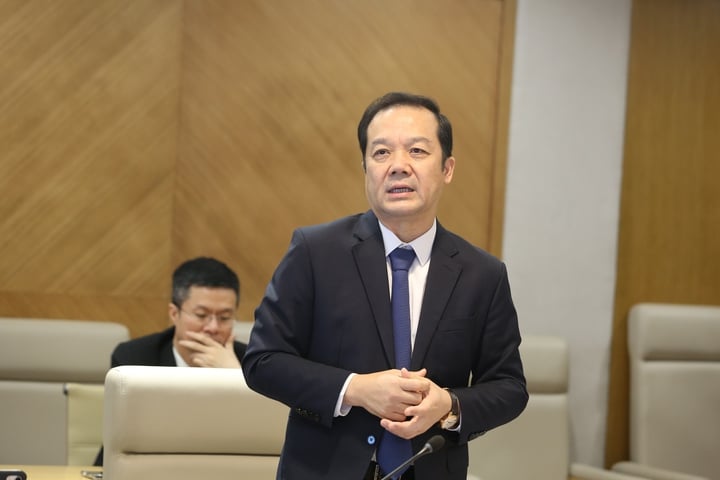
Deputy Minister of Science and Technology Pham Duc Long speaks at the working session.
Responding to the proposal from the National Science and Technology Development Agency, Minister Nguyen Manh Hung stated that establishing such a specialized unit within the Agency is necessary and would also be responsible for science and technology (S&T) and innovation issues. The Minister instructed Deputy Minister Pham Duc Long to add representatives from the S&T and innovation fields to this specialized unit. Regarding the recruitment of additional personnel for the Agency, the Minister directed the Personnel and Organization Department to transfer personnel from other units within the Ministry within the next week to increase the Agency's workforce.
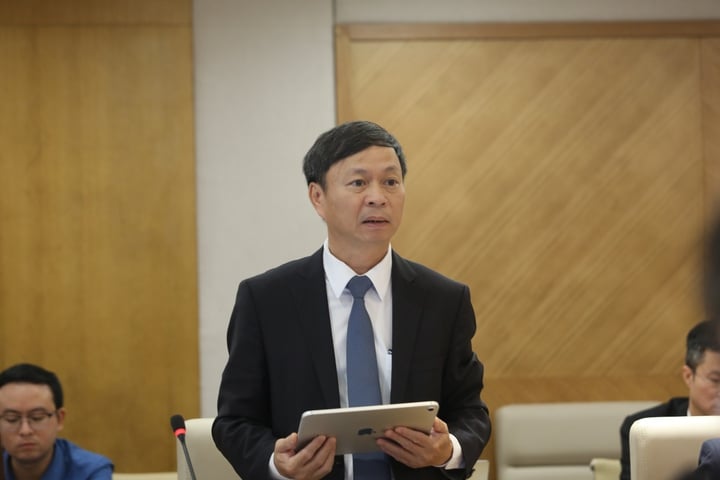
Deputy Minister of Science and Technology Hoang Minh speaks at the working session.
The Minister also instructed unit heads not only to focus on professional work, but also to comprehensively manage all aspects from office work, personnel, finance, etc. The Posts and Telecommunications Institute of Technology has now completed the design of mini-MBA courses (lasting 3-5 months) to provide management skills for unit leaders under the Ministry to address these issues. The Personnel Department will soon announce the deadline for unit heads to obtain certificates of completion for the mini-MBA courses.
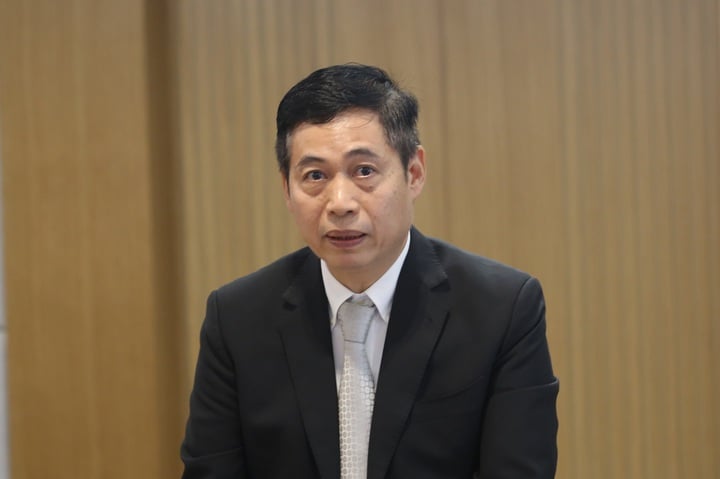
Director of the National Bureau of Railway Standards, Nguyen Thanh Phuc, proposed several key issues for the Bureau.
Institutions play a crucial role in the digital transformation process.
The Minister also affirmed that, for the field of digital transformation, institutional building plays a crucial role, demonstrating the leading role of the Department in the national digital transformation sector. In the context where many ministries, sectors, and localities are also building institutions for digital transformation, there must be a unit to act as the overall designer, like a chief architect, for the digital transformation institutional framework in Vietnam. That is precisely the role of the National Digital Transformation Department.
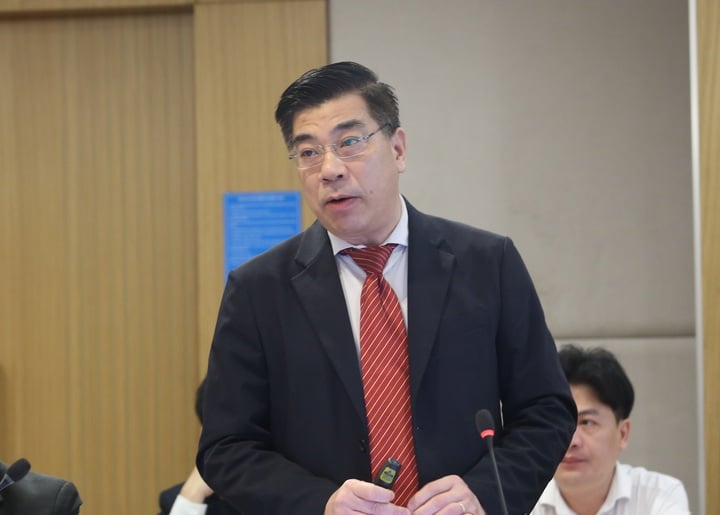
Mr. Tran Minh Tuan, Director of the Department of Digital Economy and Society, delivered a speech at the conference.
Minister Nguyen Manh Hung also emphasized that, for national digital transformation to be truly effective, the important thing that state management agencies need to do is to establish mechanisms for others to do it, specifically businesses.
To achieve excellence in digital transformation, pilot programs are necessary. Successful pilot programs can then be scaled up nationwide. Pilot programs require financial resources, infrastructure (laboratories, etc.), and a policy sandbox.

Director of the National Electronic Authentication Center, To Thi Thu Huong
The head of the science and technology sector also emphasized the importance of digitalization, stating that digitalization is essential for obtaining data to train AI, and equally important is changing the operating model. Instead of blindly following the trend of AI transformation, AI should be viewed as a data processing tool.
Digital platforms drive the digital economy.
Responding to comments from the Department of Digital Economy and Society (DSO) and the National Electronic Authentication Center (NEAC), Minister Nguyen Manh Hung emphasized the importance of a digital economy as a foundation. This is the fundamental difference between the digital transformation era and the information technology era. Platforms like Facebook are both easy to use and enable all businesses, including one-person businesses, to easily participate in the digital economy. Without digital platforms, there is no digital economy.
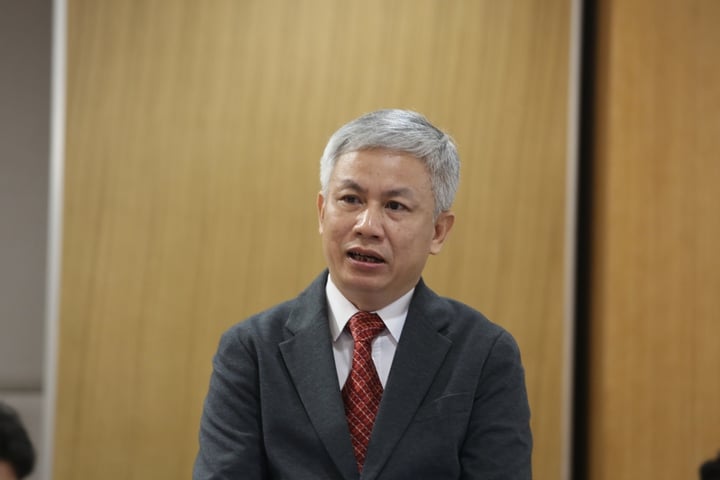
Deputy Director in charge of the National Institute of Digital Technology, Chu Minh Hoan
However, the Minister noted that the current institutional framework for the digital economy is very limited, lacking standards and regulations, and specific support mechanisms for small and medium-sized enterprises.
Regarding the question of attracting talented and high-quality human resources, the Minister suggested learning from Australia's experience: allocating 10% of the total payroll to hiring talented individuals on a seasonal basis. This is a good and effective experience that we should learn from. Because 80% of state management work involves implementation, we need a workforce with a positive attitude towards serving the people and businesses, and who are loyal to the country and the nation.
Concluding the conference, Minister Nguyen Manh Hung emphasized that the digital transformation initiative, launched in 2018, has been underway for seven years. We have accomplished a great feat: making digital transformation an urgent societal need. Currently, the head of the Party and State is the Chairman of the National Steering Committee on Digital Transformation.
However, we are now facing a new phase. Ministries and local authorities are all building digital transformation institutions, resulting in a lack of synchronization, with some areas having too much and others too little, and a disconnect between them. Therefore, a national digital institutional architect is needed to transform Vietnam into a digital nation. The four units within the Digital Transformation Block and related units under the Ministry need to continue their efforts and improve themselves to maintain their leading role in the nation's digital transformation.
Finally, the head of the Ministry of Science and Technology wished the units in the Digital Transformation sector to have new thinking and new awareness to fulfill their role in leading the nation in digital transformation, realizing the dream of making Vietnam a strong, prosperous nation, and one of the high-income countries.
Source: https://mst.gov.vn/bo-truong-nguyen-manh-hung-can-mot-tong-cong-trinh-su-ve-the-che-cho-chuyen-doi-so-quoc-gia-197250711210019022.htm































![[Video] The craft of making Dong Ho folk paintings has been inscribed by UNESCO on the List of Crafts in Need of Urgent Safeguarding.](https://vphoto.vietnam.vn/thumb/402x226/vietnam/resource/IMAGE/2025/12/10/1765350246533_tranh-dong-ho-734-jpg.webp)

























































Comment (0)