This far-reaching institutional reform is not merely an administrative adjustment but also a revolution in management thinking, aiming to create a more efficient, transparent, and dynamic Vietnam than ever before on the world map.
First stage: Building independence and unity after the August 1945 Revolution.
The first "reorganization of the nation" took place immediately after the victory of the August Revolution in 1945. From a country divided by French colonialism into three regions with different political systems – the colonial South, the central region with its demagogic royalist regime, and the North under the direct control of the French Resident – Vietnam rose up.
The 1946 Constitution immediately abolished the three-region division, unifying the S-shaped strip of land under the sole leadership and ownership of the Vietnamese people. This laid a solid foundation for the protracted resistance against French colonialism and American imperialism, culminating in the victory in 1975, completing the liberation and unification of the country and ending centuries of division.
Second installment: Innovation, integration, and remaining challenges.
After 1975, particularly after crushing the northern border invasion, Vietnam entered its second period of "national restructuring" with the 1980 Constitution, subsequently amended by the 1992 and 2013 Constitutions. This period witnessed a dramatic transformation of the country through the Doi Moi (Renovation) process, which began in 1986. Economic achievements have transformed Vietnam from a war-torn nation into a leading dynamic economy in the region. Vietnam's GDP has increased more than 100 times in 50 years, from over $4 billion in 1975 to over $400 billion in 2024, a growth rate rarely seen globally.
However, despite achieving remarkable feats, Vietnam has never been complacent. In practice, after 2016, Vietnam's GDP growth rate averaged only 5.3% per year, lower than the average of 6.3% per year during the 40 years of Doi Moi (Renovation). This reveals institutional bottlenecks that need to be addressed. The cumbersome administrative system, particularly the existence of the district level as an intermediate level, has reduced governance efficiency, making it difficult for central government policies to reach the grassroots. The merger and separation of provincial-level administrative units over the past three decades has also shown a lack of uniformity in criteria and objectives, causing inadequacies in management and development.
Third: The historic institutional revolution of 2025
Not resting on its laurels, Vietnam once again faces the need for even more profound reforms. 2025 is the crucial time to undertake the third "reorganization of the nation," a historical undertaking of immense significance. This is a comprehensive revolution in reorganizing the Party/State/ Fatherland Front system based on restructuring national territorial units.
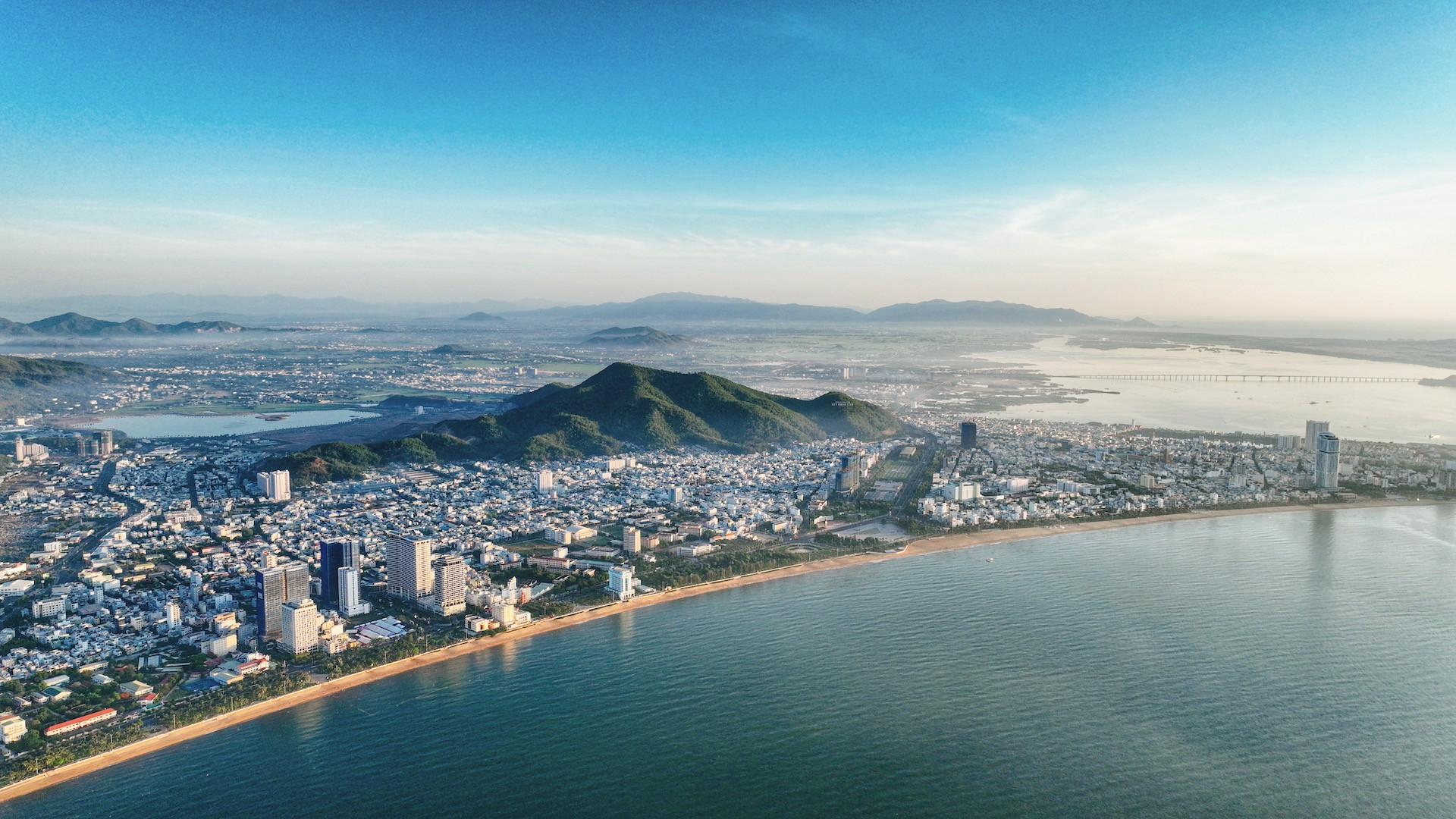
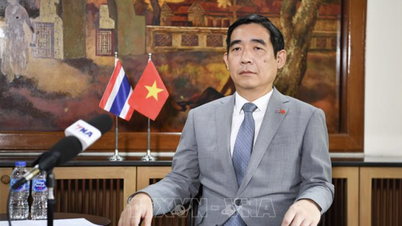
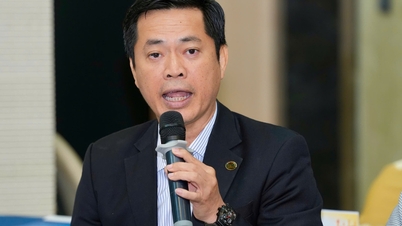
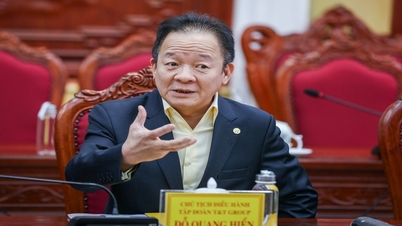
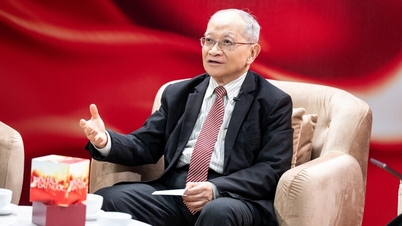
Vietnam is becoming an attractive destination for many heads of state, international delegations, and leading businesspeople and scholars from around the world. Photo: Hoang Ha
The groundbreaking changes include:
The complete elimination of the district level: This is one of the boldest decisions, ending the intermediate role of the district level. This not only streamlines the administrative apparatus but also brings policies and guidelines from the central government directly to the commune level, shortening the gap between the government and the people, and improving service efficiency.
Streamlining provincial and commune-level administrative units: The number of provincial-level administrative units will be reduced from 63 to 34, and the number of commune-level units from over 80,000 to over 20,000. Merging and reorganizing these units will create larger areas with sufficient potential in terms of land area, population, and economic structure for sustainable development.
A drastic restructuring of the central government apparatus: A series of government agencies were streamlined, most notably the merger of the Ministry of Planning and Investment and the Ministry of Finance – a long-standing issue that had not yet been implemented. All 13 General Departments, 219 Departments, 519 Bureaus, and over 3,000 Sub-bureaus were dissolved, creating an unprecedentedly lean central administrative apparatus.
Streamlining the Party and mass organization system: Alongside the administrative system, the Party apparatus has also been streamlined. Party organizations at the district level no longer exist locally. At the central level, no Party organization overlaps with a government agency, and all Party Committees at ministries have been dissolved. The system of political and social organizations has also been reorganized to be directly under the Fatherland Front, instead of simply "under one roof" as before, ensuring synchronization and efficiency throughout the entire political system.
This reform was carried out with a decisive spirit, not "testing the waters" or "Hanoi can't rush things," but with the motto "The central government sets the example, localities respond, and the spirit of running while queuing up." The resolute will of the Politburo spread to the entire Party and the entire people, creating a strong national spirit.
"Favorable timing, advantageous location, and harmonious human relations" converge, ushering in an era of growth.
The third "rearrangement of the nation" is not only being carried out with internal determination but also coincides with harmony and support from the international community. Vietnam is becoming an attractive destination for many heads of state, international delegations, and leading businesspeople and scholars from around the world. Visits, working sessions, and the signing of political, economic, cultural, scientific, and social documents are taking place continuously with satisfaction from both sides. In particular, relations with the Permanent States of the United Nations, the EU, ASEAN, BRICS, and the UAE are increasingly strengthened. Even stories like Cuba's success in growing Vietnamese rice or Burkina Faso having a national flag similar to that of the former National Liberation Front demonstrate Vietnam's widespread influence and reach.
With favorable timing, geographical advantages, and human resources converging, this "reorganization of the nation" is expected to create a tremendous impetus, helping Vietnam realize the development goals set for the 100th anniversary of the founding of the Socialist Republic of Vietnam (2045) and the 100th anniversary of the founding of the Communist Party of Vietnam (2030).
An era of strong growth, with a solid institutional foundation and a streamlined, efficient apparatus, has officially begun.
Vietnamnet.vn
Source: https://vietnamnet.vn/ba-lan-sap-xep-lai-giang-son-2420798.html






















































































Comment (0)