Ca Mau is one of the four key economic provinces and cities in the Mekong Delta region, and one of the largest fishing grounds in Vietnam. It has potential and strengths in developing marine economy, aquaculture, and ecotourism, with over 100,000 hectares of characteristic mangrove forests recognized by UNESCO as a World Biosphere Reserve.
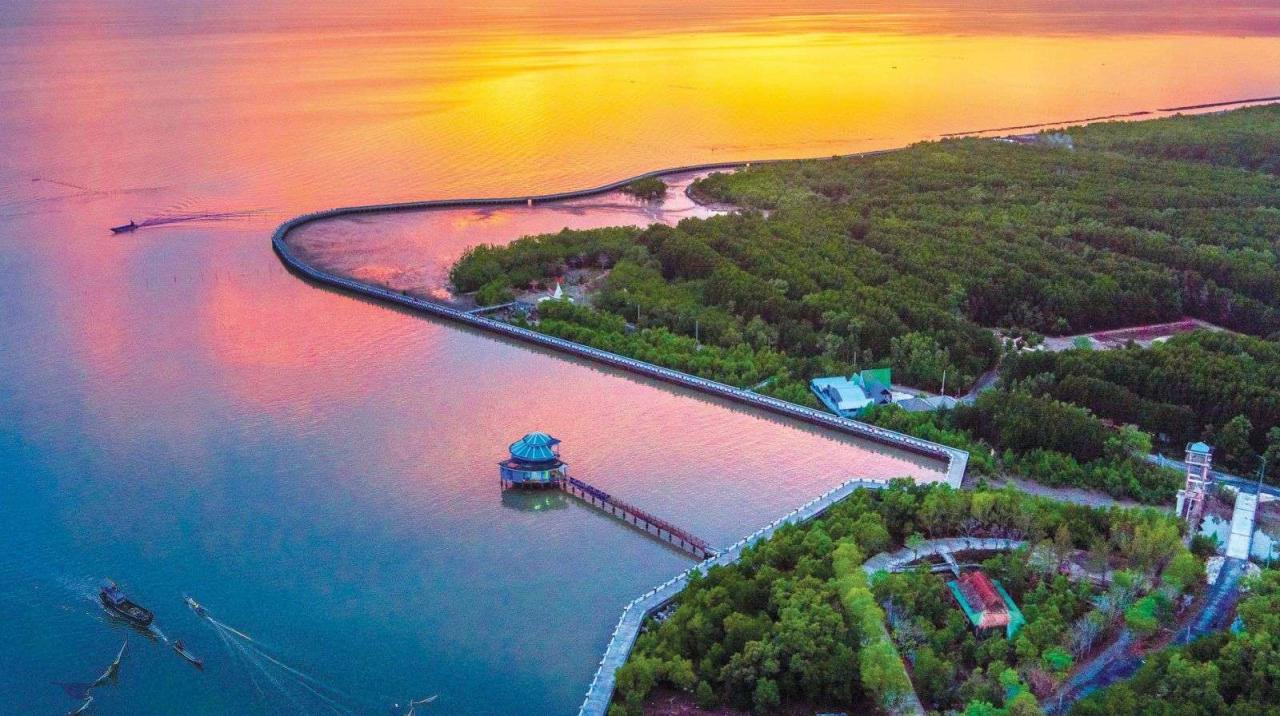
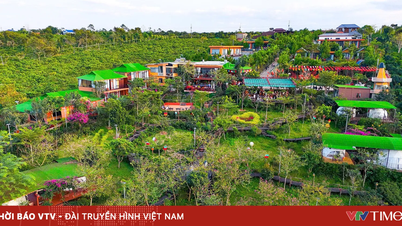
Ca Mau boasts an ecotourism area with over 100,000 hectares of characteristic mangrove and nipa palm forests, recognized by UNESCO as a World Biosphere Reserve (Image: Internet).
With its geographical location as the southernmost point of Vietnam and situated within the southern economic development corridor of the Greater Mekong Subregion cooperation program, Ca Mau has favorable conditions for economic exchange and development with Southeast Asian countries. Therefore, cooperation and integration are very important strategies for tourism in Ca Mau.
In the context of economic integration and globalization, Ca Mau tourism is no exception, constantly striving to introduce visitors to the harmonious and vibrant landscapes of nature, the unique potential of its forests and seas, and the friendly, warm smiles of its coastal people.
The demand for tourism (international and domestic) is increasing along with stability in security and politics, especially the domestic market which accounts for a very high proportion and is the key, highly stable market for Ca Mau tourism. It is a World Biosphere Reserve and a Wetland of International Importance (the 2088th Ramsar site in the world), and a key economic zone in the South.
Ca Mau is also adjacent to Phu Quoc and Can Tho city (the tourism center of the Mekong Delta region); at the same time, it is located in the key economic zone of the Mekong Delta, and this area has up to 4 airports (Can Tho, Phu Quoc, Ca Mau, Rach Gia), including 22 international airports. If international tourist tours connecting Phu Quoc and Can Tho to Ca Mau can be linked, it will attract a significant number of international tourists annually.
As a land that evokes many sacred emotions in visitors, Ca Mau's tourism products are being perfected and developed with a focus on experiential activities, exploration, and learning about local culture and historical landmarks.
According to tourism experts, this is the right direction for Ca Mau tourism. Because experiential and exploratory tourism activities will bring added value to each trip for tourists, such as fostering love for their homeland, researching and learning about history, geography, and culture, and contributing to creating many highlights and building the Ca Mau tourism brand. Among these, exploring the freshwater mangrove ecosystem in the buffer zone of U Minh Ha National Park, with the Muoi Ngọt Ecotourism Area in Khanh Binh Tay Bac commune, Tran Van Thoi district, is one of the unique tourism products that many tourists seek out and experience.
Besides experiencing the freshwater mangrove ecosystem, tourists visiting Ca Mau can also discover unique attractions linked to mangrove ecosystems, with vast stretches of mangrove forests in Nam Can, Ngoc Hien, and other areas. The orientation of the Ca Mau provincial leadership is to build a rich and diverse image of the locality through major programs and events, helping the province to effectively exploit opportunities and advantages in socio-economic development; and to promote trade, attract investment, and boost tourism in the future.
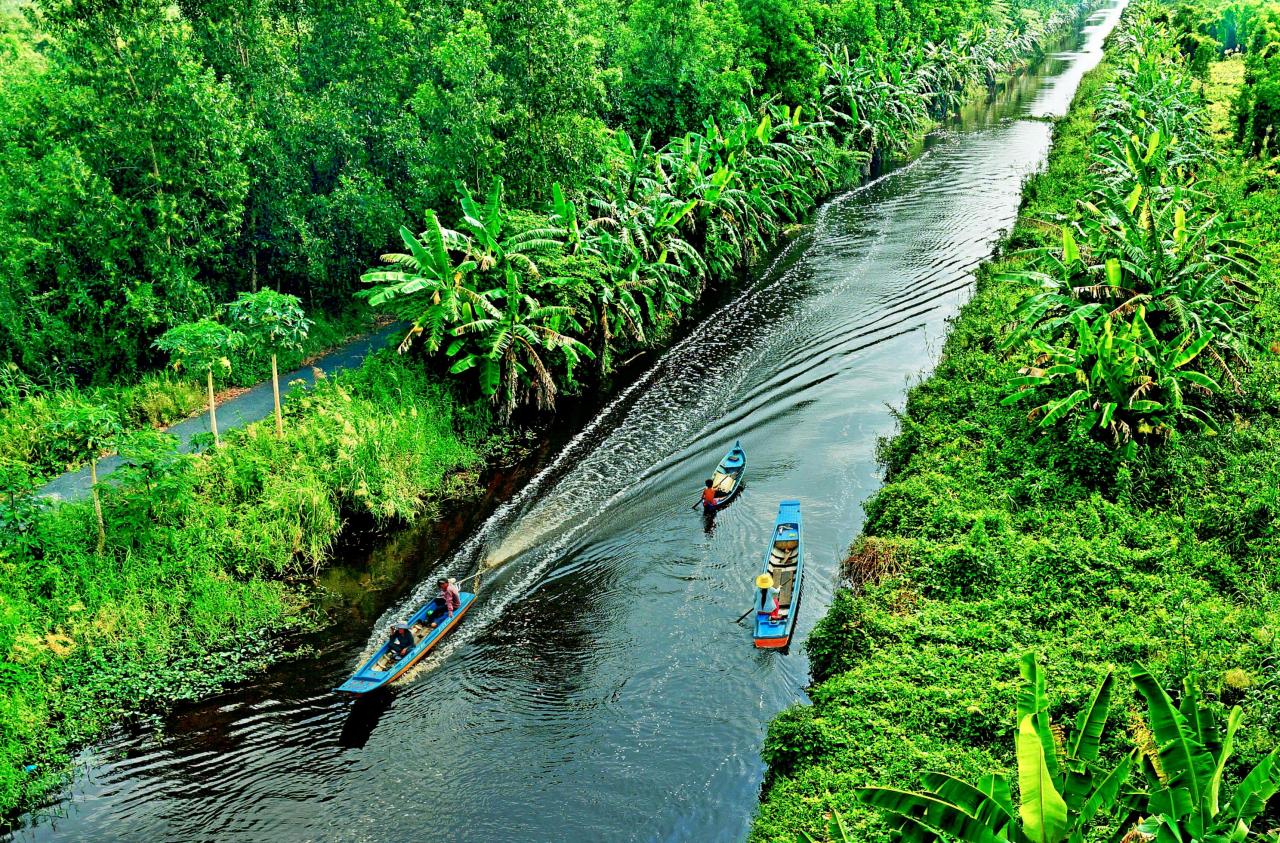
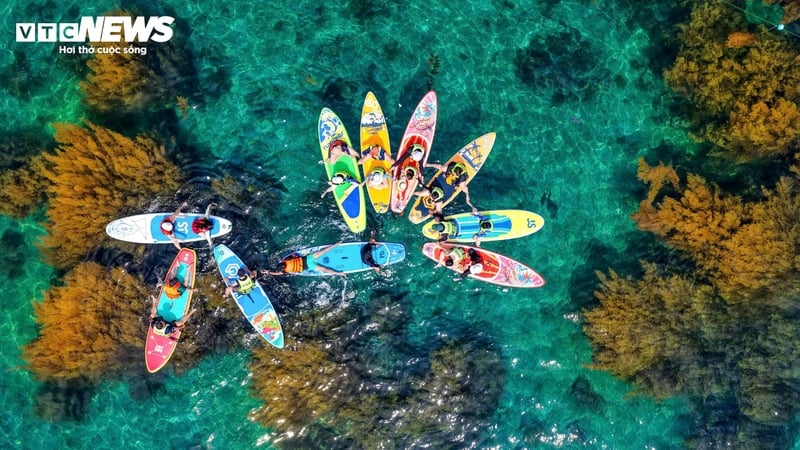
Ca Mau needs to create unique tourism products to retain tourists (Photo: Internet)
The Department of Culture, Sports and Tourism of the province focuses on building and developing a diverse range of products, product chains, and brands of marine tourism based on biodiversity conservation; effectively promoting the value of the Ca Mau Cape Biosphere Reserve, the Ca Mau Cape World Ramsar Site, the Ca Mau Cape National Park, and the province's unique historical and cultural relics; and concentrating on effectively exploiting coastal tourism resources such as ecosystems, traditional culture, craft villages, and lifestyles to promote tourism development.
Dan Hung


![[Photo] Capturing the moment the tide recedes at Yen Binh Son rapids - a million-year-old scenic spot in Quang Ngai.](https://vphoto.vietnam.vn/thumb/1200x675/vietnam/resource/IMAGE/2026/05/19/1779175463885_yen9-1199-jpg.webp)
![[Photo] National Assembly Chairman Tran Thanh Man attends the groundbreaking ceremony for the National Highway 1A spatial axis project.](https://vphoto.vietnam.vn/thumb/1200x675/vietnam/resource/IMAGE/2026/05/19/1779161360398_ndo_br_bnd-1412-jpg.webp)































![[Photo] General Secretary and President To Lam receives Indian Defense Minister Rajnath Singh](https://vphoto.vietnam.vn/thumb/402x226/vietnam/resource/IMAGE/2026/05/19/1779184046302_anh-man-hinh-2026-05-19-luc-16-46-58.png)















Comment (0)