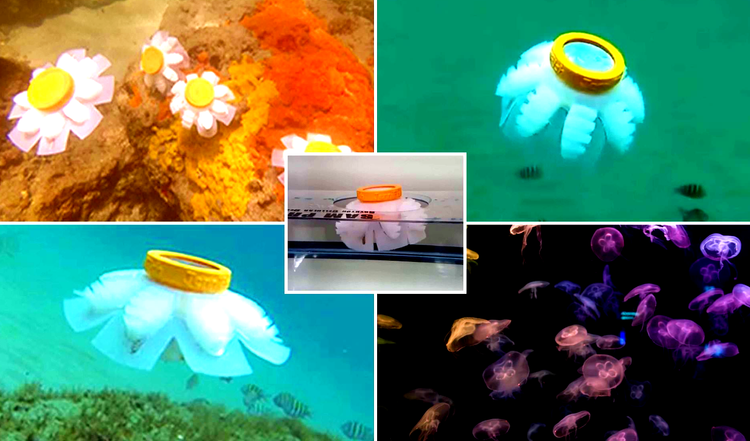
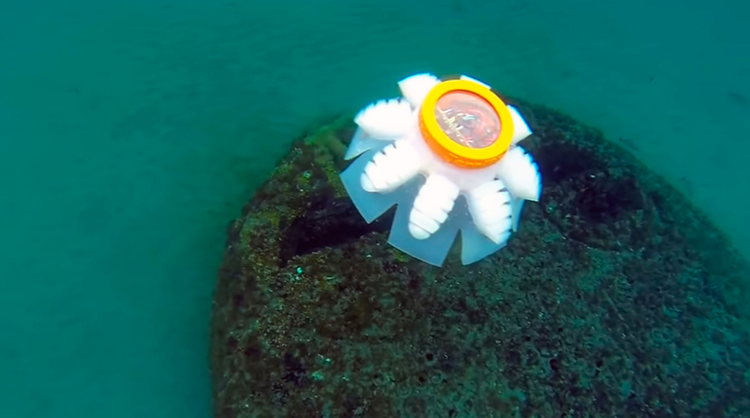
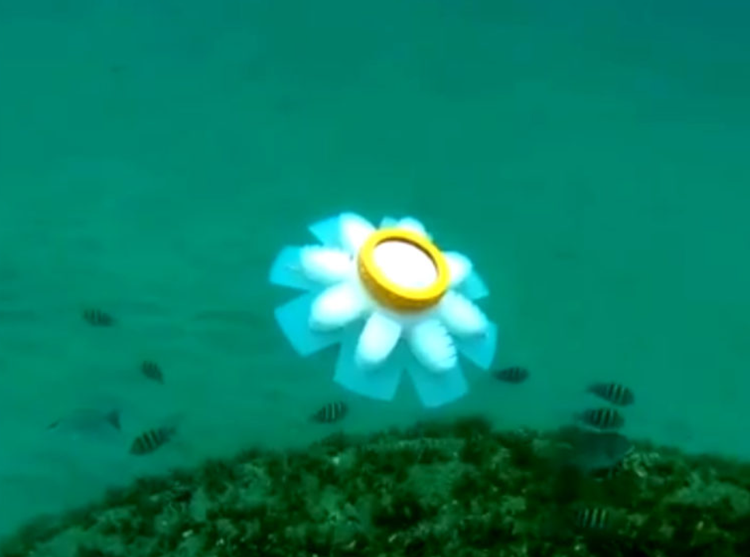
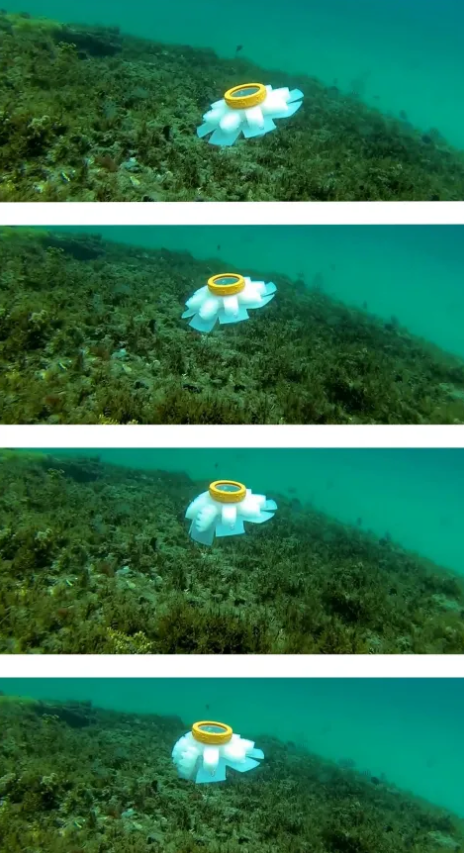
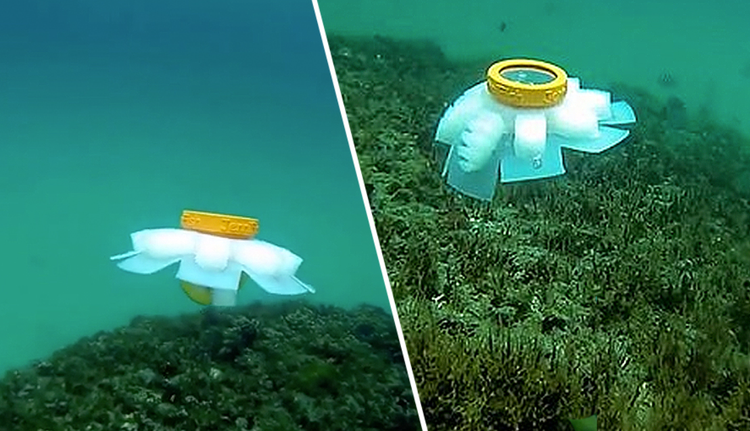
A close-up view of a robotic jellyfish moving gracefully in the ocean.
With its smooth, gentle movements, it's not easy to tell that this is a robotic jellyfish.
Báo Khoa học và Đời sống•26/05/2025
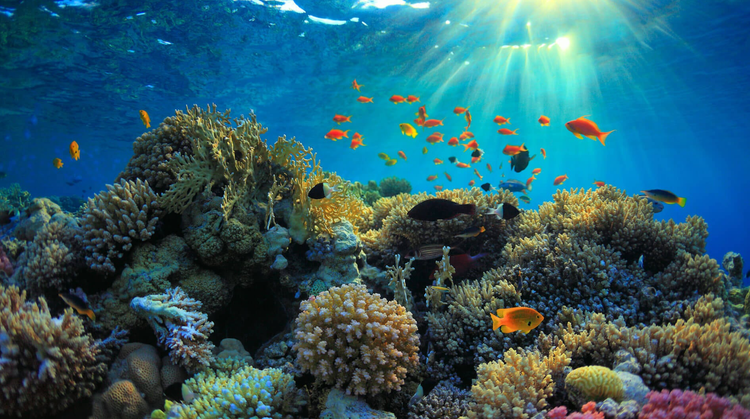
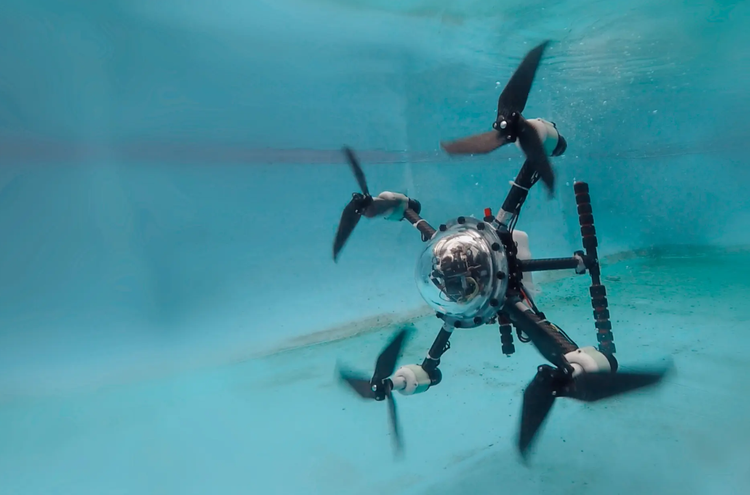
Coral reefs are considered the backbone of a diverse marine ecosystem. That's why scientists are working, and will continue to work, to understand what's needed to keep them healthy and sustainable. Photo: @andBeyond. To study coral reefs and the life on the ocean floor, scientists sometimes deploy underwater drones. But these drones are not perfect ocean spies. Photo: @New Atlas.
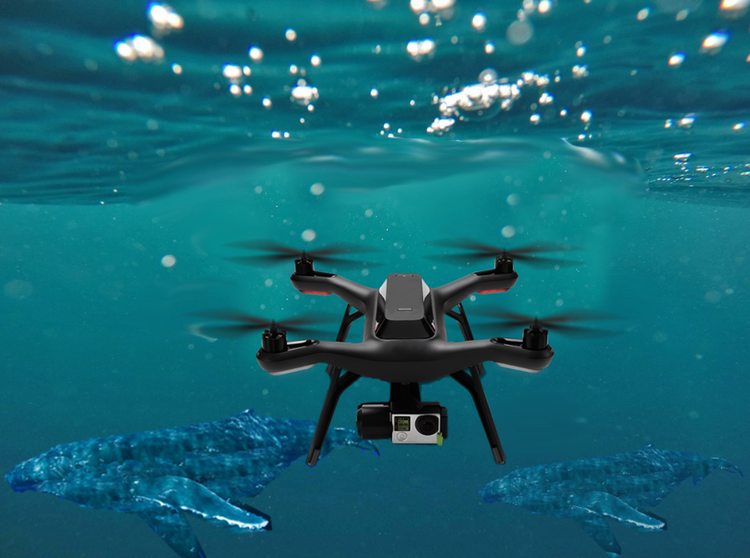
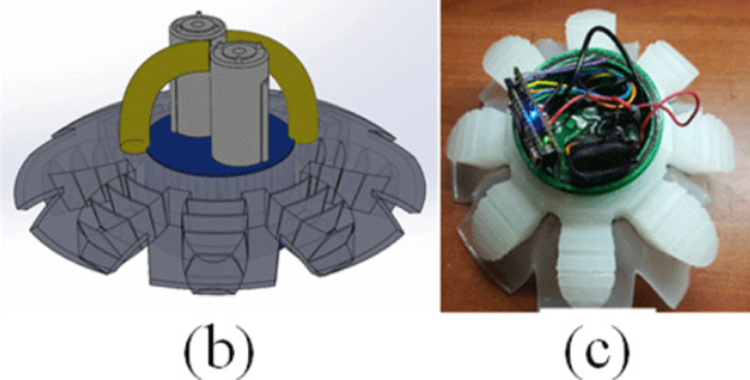
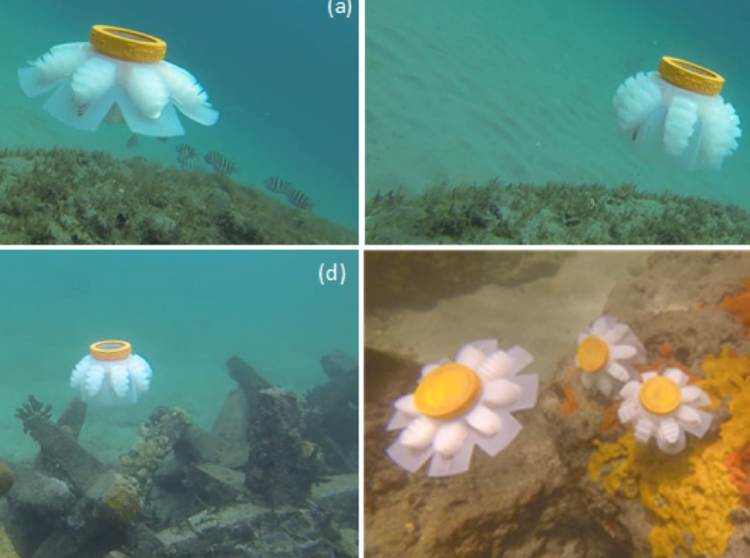
Their propellers can tear apart coral reefs and harm living organisms. These drones can also be noisy, frightening other marine animals. Photo: @StrategicPartnerships. Faced with this situation, Erik Engeberg, a mechanical engineer at Florida Atlantic University in Boca Raton, and his team developed a new device: a jellyfish-shaped robot that can act as a more subtle and quiet ocean spy. Photo: @Erik Engeberg. Soft and gliding smoothly across the seabed, this jellyfish robot will not harm coral reefs or disturb the animals living around them. Additionally, this jellyfish robot carries sensors to collect data on the ocean floor. Photo: @Erik Engeberg. This robotic device has eight tentacles made of soft silicone rubber. A pump on the underside of the robot draws seawater and directs it into the tentacles. The water inflates the tentacles, causing them to extend. Photo: @Erik Engeberg.
Then, the power supply to the pump is temporarily cut off. The tentacles now relax, and water shoots back out from the holes on the underside of the device. The escaping water quickly propels the jellyfish upwards. Photo: @Erik Engeberg. This robot also has a rigid, cylindrical shell on top. This shell houses sensors, electronics that control the jellyfish, and data storage, allowing experts to communicate wirelessly with the robotic jellyfish remotely. Currently, this robotic jellyfish is still under development. Photo: @Erik Engeberg. Engineer Erik Engeberg said that the soft body of this robotic jellyfish allows it to monitor the marine ecosystem without harming surrounding organisms. Photo: @Erik Engeberg.
The robot could carry a sensor to record ocean temperature. The data it collects could help scientists map where and when the ocean is warming due to climate change. Photo: @Erik Engeberg. He further stated: “Through this robotic jellyfish model, I have a deep desire to help threatened coral reefs around the world .” Erik Engeberg hopes his robotic jellyfish will help scientists study the potential impacts of climate change on the sea. Photo: @Erik Engeberg. According to engineer Erik Engeberg, monitoring sea surface temperatures and other data can also benefit humans by warning of worsening conditions. Warmer oceans can lead to stronger and more destructive storms. Warmer seawater also melts sea ice. That meltwater raises sea levels. And rising sea levels can lead to coastal flooding, or the complete disappearance of low-lying islands. Photo: @Axios.
We invite our readers to watch the video : Horrifyingly Realistic Humanoid Robot - Will It "Usurp" Humanity's Throne in the Future? Video source: @Top 1 Khám Phá.



 Báo Khoa học và Đời sống•26/05/2025












![[Photo] Prime Minister Pham Minh Chinh attends the Conference on the Implementation of Tasks for 2026 of the Industry and Trade Sector](/_next/image?url=https%3A%2F%2Fvphoto.vietnam.vn%2Fthumb%2F1200x675%2Fvietnam%2Fresource%2FIMAGE%2F2025%2F12%2F19%2F1766159500458_ndo_br_shared31-jpg.webp&w=3840&q=75)


![[INFOGRAPHIC] Legion Go Gen 2 sets a new standard for gaming.](https://vphoto.vietnam.vn/thumb/402x226/vietnam/resource/IMAGE/2025/12/19/1766146888809_info-taycamgames-02-jpg.webp)







































































Comment (0)