

Dark corridors, no fire alarm system, dilapidated and peeling floors and walls... this is the scene at dozens of Grade D (severely damaged and dangerous) apartment buildings in Ho Chi Minh City awaiting rescue. However, for various reasons, rescue efforts remain largely stalled.
According to a report by the Ho Chi Minh City Department of Construction, the city has 474 old apartment buildings constructed before 1975, including 16 Grade D buildings (14 of which were inspected in 2016-2017) that are increasingly deteriorating. However, the progress of rebuilding these old apartment buildings is very slow due to many reasons, mainly due to the existing mechanisms.
Looking back at the process from 2016 to the present, the demolition and reconstruction of severely damaged and dangerous old apartment buildings has so far only involved relocating and providing temporary housing for residents. For example, the apartment building at 440 Tran Hung Dao Street (Ward 11, District 5), despite being classified as a Class D building with insufficient structural integrity for normal use, took nearly six years after the Ho Chi Minh City People's Committee requested urgent relocation before local authorities were able to persuade residents to agree to move to new housing.
Many have argued that renovating old apartment buildings is even more difficult than developing social housing. The biggest bottleneck is the issue of compensation and land clearance. Furthermore, some decisions require the consensus of the majority or all residents before they can be implemented.
Renovating old apartment buildings is generally divided into two groups. One is constructing apartments with minimum floor area to accommodate on-site resettlement. The other is constructing large commercial apartments to attract customers.
A representative of a real estate company that previously participated in rebuilding old apartment buildings in Ho Chi Minh City stated that, under previous regulations, after deducting all costs, including temporary housing support, resettlement costs, and compensation, the profit was very low, making the company uninterested. The company also faced difficulties in implementing the mechanism of exempting land use fees, land lease fees, and land-use conversion fees for the entire allocated land area within the project due to a lack of agreement from the finance sector. Furthermore, there is currently no mechanism to address the value of the area used for constructing auxiliary structures such as corridors, staircases, and rooftops.
Recently, the issue of renovating and rebuilding apartment buildings has been regulated in more detail by the 2023 Housing Law, which also codifies many regulations related to the percentage of residents' consent and incentive mechanisms for investors undertaking apartment building renovation and rebuilding projects.
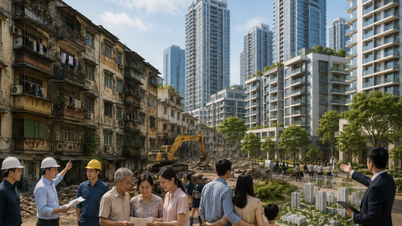
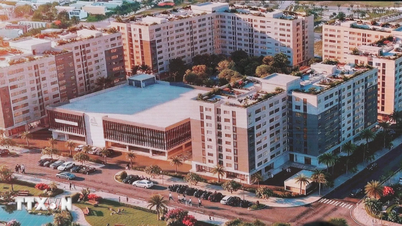
Specifically, investors are exempt from land use fees and land lease fees for land areas that are subject to such fees within the scope of the project to renovate and rebuild old apartment buildings. Furthermore, one of the breakthroughs in the new regulations on renovating and rebuilding old apartment buildings is that the 2023 Housing Law has solved the problem of apartment buildings lacking sufficient land for new construction projects after relocation; it has allowed for the implementation of apartment building reconstruction projects through consolidation (gathering low-rise old apartment buildings in one location to renovate and build a new high-rise building, providing sufficient housing for residents of multiple old apartment buildings).
This approach was previously applied by the People's Committee of District 3, Ho Chi Minh City, when developing a plan to consolidate 43 apartment complexes in the district to rebuild 3 large-scale apartment complexes, sufficient to resettle residents. This not only increased green space and amenities for residents but also beautified the urban landscape – as noted by Mr. Le Hoang Chau, Chairman of the Ho Chi Minh City Real Estate Association: “This solution addresses the problem of abandoned resettlement projects built elsewhere, especially those that do not meet the needs for transportation, living, healthcare, education, and business, leading to residents not moving in.”
It is expected that this mechanism, along with the experience gained by Ho Chi Minh City, will create a turning point, promoting the plan to renovate and rebuild apartment buildings that have deteriorated to dangerous levels in Hanoi , Hai Phong, and many other localities.
Source: https://baodautu.vn/batdongsan/giai-cuu-chung-cu-cu-xuong-cap-can-chinh-sach-mo-duong-d222294.html

























































































Comment (0)