

Popular tourist destinations such as Hanoi, Nha Trang, Da Nang, Da Lat, Phu Quoc, Quang Ninh, and Vung Tau are targets for online scams. Many fake websites have high engagement rates and elaborate designs, misleading people.
A common tactic used by these individuals is to create Facebook pages with names similar to those of large, reputable travel companies, posting advertisements for cheap or discounted tour packages and hotel rooms, along with various accompanying benefits.
At the same time, they often update images and videos promoting tours with "shocking" discounted prices, deep discounts, buy interactions, run advertisements, etc., to set traps. When someone contacts them, the perpetrators ask for a deposit and then embezzle the money.

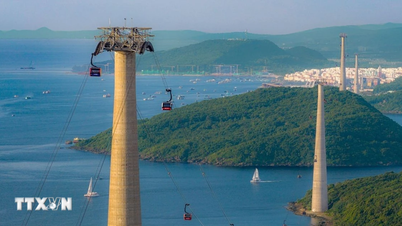
Tourists participating in tourism activities in Phu Quoc Special Economic Zone. Photo: KHANH MY
Ms. NNT, residing in Long Xuyen ward, stated that she recently booked a 3-day, 2-night tour to Nha Trang, including two nights at a 4-star hotel and entertainment at Vinpearl Nha Trang, for only 1,690,000 VND per person, through a Facebook page with a name similar to a large travel company. Ms. T transferred a 3 million VND deposit for three family members. “When we arrived and checked into the hotel, the receptionist said they hadn’t received any booking from my family. When I tried to contact them, they blocked my phone number and Facebook account, and that’s when I realized I had been scammed,” Ms. T said.
Ms. Tran Thi Nhung, a resident of An Chau commune, nearly fell victim to a scam when booking hotel rooms, ferry tickets, and transportation on Phu Quoc Island online. “I didn’t realize it was a fraudulent website at all, because it looked 99% like the real one, so I messaged them for advice. The consultant was quite enthusiastic and asked me to transfer a deposit beforehand, but they sent it to an account with a very strange name. I became suspicious and asked for clarification, but after only a few minutes, I was blocked. Only then did I realize it was a fake website,” Ms. Nhung shared.
One of the common scams used by criminals is impersonating airline ticket agents, creating websites and social media pages with addresses and designs similar to the official channels of airlines or authorized agents. They are willing to spend money on advertising, offering extremely attractive prices compared to the general market to attract buyers.
If contacted, the scammers will book airline tickets, send a booking confirmation, and request payment. After receiving payment, they do not issue the airline tickets and cut off contact. Since the booking code has not been used to issue the tickets, it will automatically cancel after a period of time, and the buyer will only find out about this upon arrival at the airport.
According to Nguyen Vu Khac Huy, Chairman of the Provincial Tourism Association, cybercrime in the tourism sector tends to increase during peak season, with increasingly sophisticated methods. Travel agencies, hotels, and resorts are stepping up warnings to help customers avoid risks.
The safest approach is for people to thoroughly research information when choosing travel packages. They should also carefully compare the phone numbers, email addresses, and bank account details provided by the seller with the publicly available information of the business; and absolutely avoid providing personal information to unreliable sources.
People should be wary of travel packages, hotel rooms, and airline tickets that are priced too cheaply; be cautious when asked to transfer a deposit to reserve a place, and if possible, should make direct payments…
KHANH MY
Source: https://baoangiang.com.vn/can-trong-voi-chieu-lua-dat-tour-du-lich-gia-re-a473386.html
![[Photo] Solemn bathing ceremony and Buddha procession in Hue](https://vphoto.vietnam.vn/thumb/1200x675/vietnam/resource/IMAGE/2026/05/31/1780228263543_1-jpg.webp)
![[Image] Hanoi Police officially crowned champions of V-League 2025/2026](https://vphoto.vietnam.vn/thumb/1200x675/vietnam/resource/IMAGE/2026/05/31/1780244769054_ndo_br_039d561b692be875b13a-jpg.webp)
![[Photo] The General Secretary, President and his wife begin their state visit to the Philippines.](https://vphoto.vietnam.vn/thumb/1200x675/vietnam/resource/IMAGE/2026/05/31/1780230559452_anh-man-hinh-2026-05-31-luc-19-28-11.png)
![[Photo] Admire the coral "masterpiece" amidst the million-year-old heritage of Dak Lak province.](https://vphoto.vietnam.vn/thumb/1200x675/vietnam/resource/IMAGE/2026/05/31/1780221235105_anh-man-hinh-2026-05-31-luc-16-53-27.png)











![[Video] Sunset at Lap An Lagoon – Where the sun sets over the fishing nets](https://vphoto.vietnam.vn/thumb/340x192/vietnam/resource/IMAGE/2026/05/31/1780192137701_beach-landscape-sea-water-nature-grass-745871-pxhere-com.jpeg)

































![[Photo] Admire the coral "masterpiece" amidst the million-year-old heritage of Dak Lak province.](https://vphoto.vietnam.vn/thumb/402x226/vietnam/resource/IMAGE/2026/05/31/1780221235105_anh-man-hinh-2026-05-31-luc-16-53-27.png)



























Comment (0)