

"Today, let's set aside all the hustle and bustle of the outside world and return to the warm, sacred atmosphere of a traditional memorial day in Northern Vietnam, where cultural values and family bonds are preserved through every home and every feast."
"This isn't the first time I've had the chance to experience this heartwarming moment. However, what's special this time is that I had the opportunity to prepare the traditional dishes for the memorial feast with my family," said Nguyen Le Thanh Hung (born in 1996), a son-in-law from Ho Chi Minh City, excitedly introducing the memorial feast in his wife's hometown.
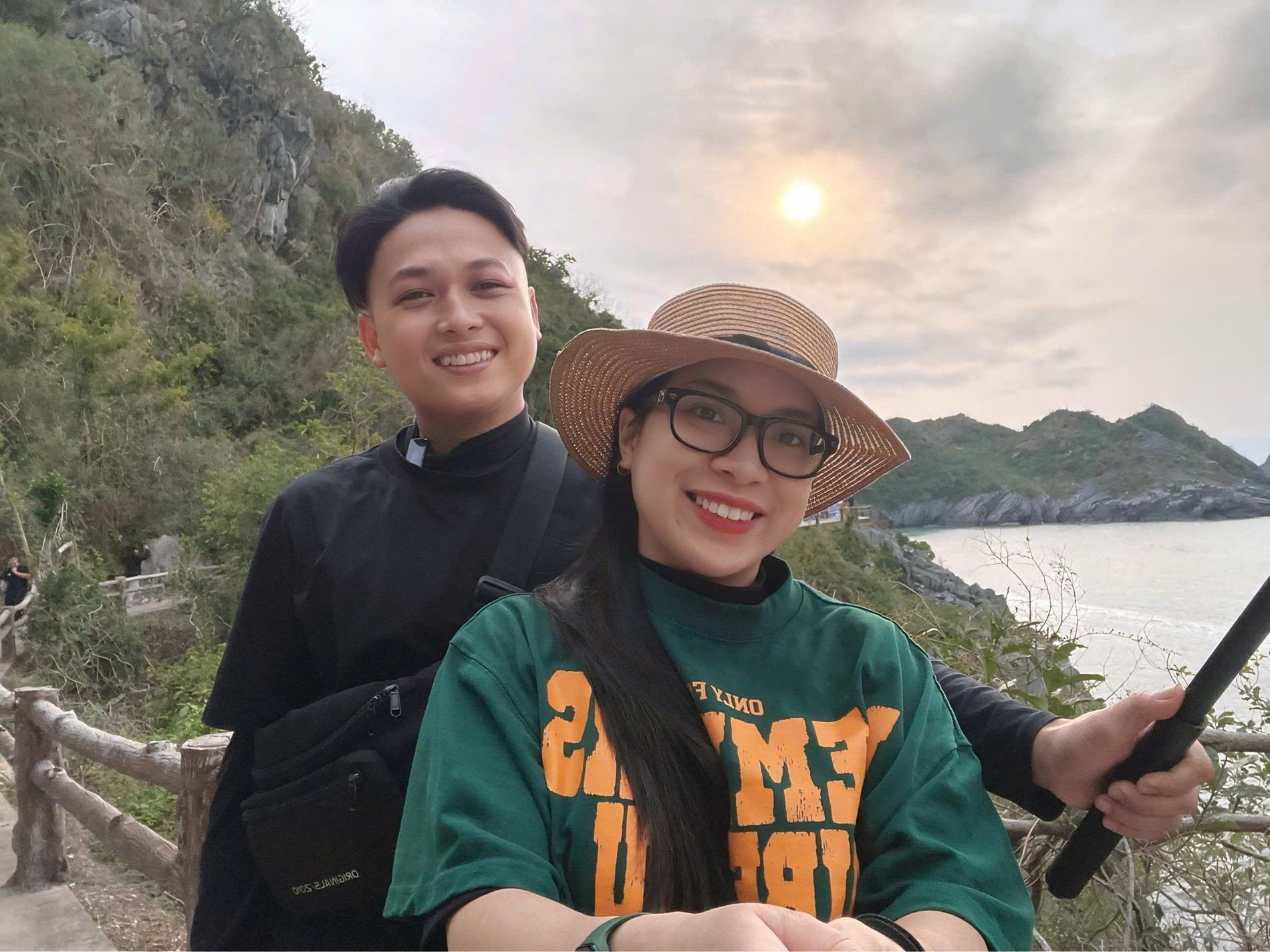
Hung said he was born and raised in the Cu Chi area, known for its steel production. In 2022, he got married and became a son-in-law from the North. His wife, Nguyen Hong Nhung, is from Hai Phong .
“After getting married, we lived and worked in Ho Chi Minh City for a while and then decided to move to the North. We chose Hai Phong, my wife’s hometown, as our place to start a business, based on our special impressions of this place. One of them is the rich cuisine , with many delicious dishes.
"In particular, after participating in ancestral worship ceremonies with my wife's family a few times, I've grown to love this land even more. I consider it my second home and want to learn more about its unique local culture," Hung said.
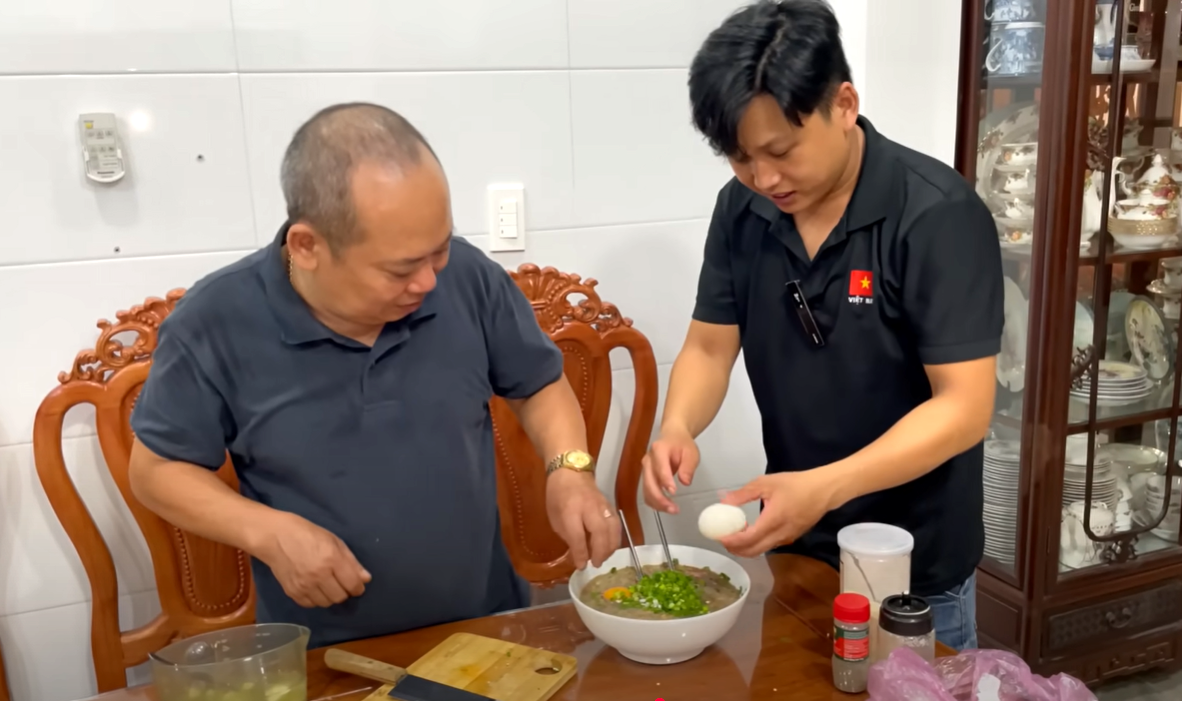 |  |
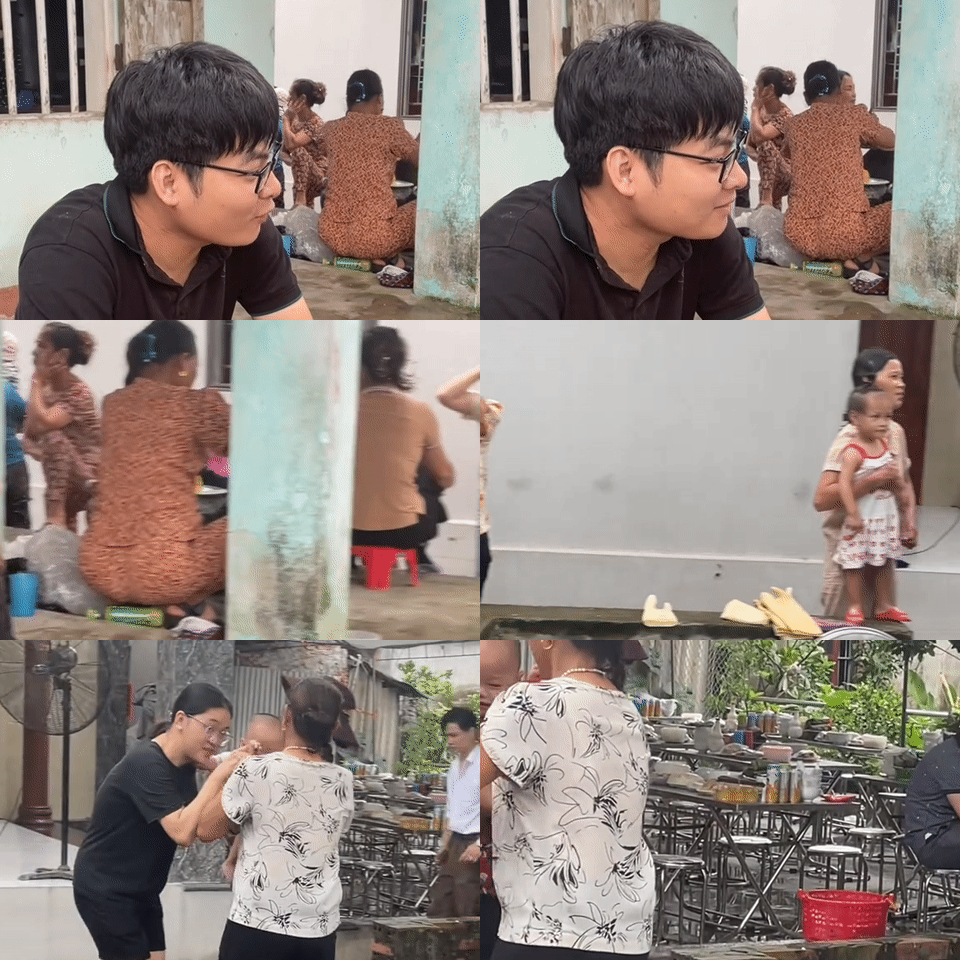
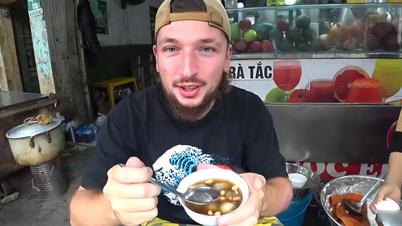
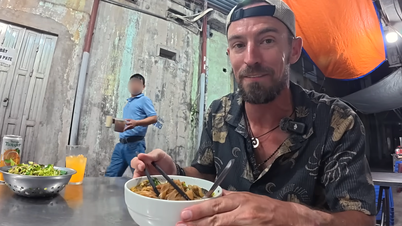
Since moving to Hai Phong, the young son-in-law has had the opportunity to experience many traditional feasts on different occasions. On each occasion, he usually records videos, both to preserve memories and to spread the unique cultural characteristics of his "second home".
Hung said that the feast in Hai Phong was prepared very neatly. From the previous afternoon, family members were busy buying ingredients, frying some dishes such as spring rolls, fried shrimp rolls, etc. so that they could be prepared immediately the next day, saving time.

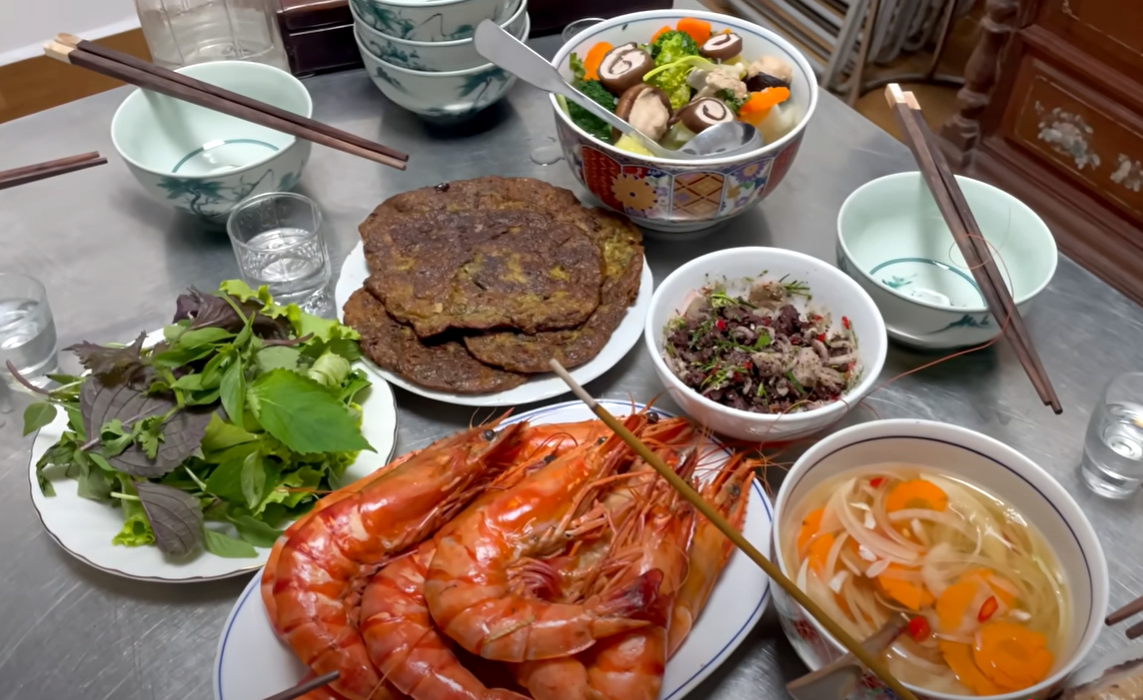
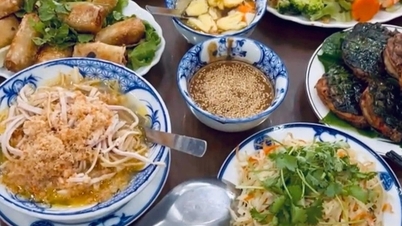
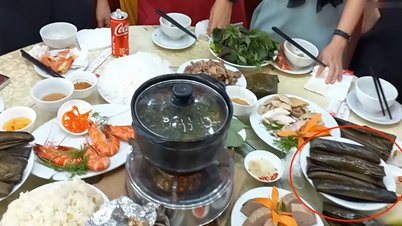
From his observations, the ancestral worship ceremonies at his wife's house always feature familiar dishes such as boiled chicken, boiled shrimp, fried spring rolls, and soup.
During the traditional Tet holiday, the tray of food also includes banh chung, xoi and especially cannot lack braised pork. This is a familiar dish of many families in Hai Phong in the winter because it is convenient to prepare in the cold weather of the North.
“These dishes do not represent all the dishes in the North,” said the 9X.
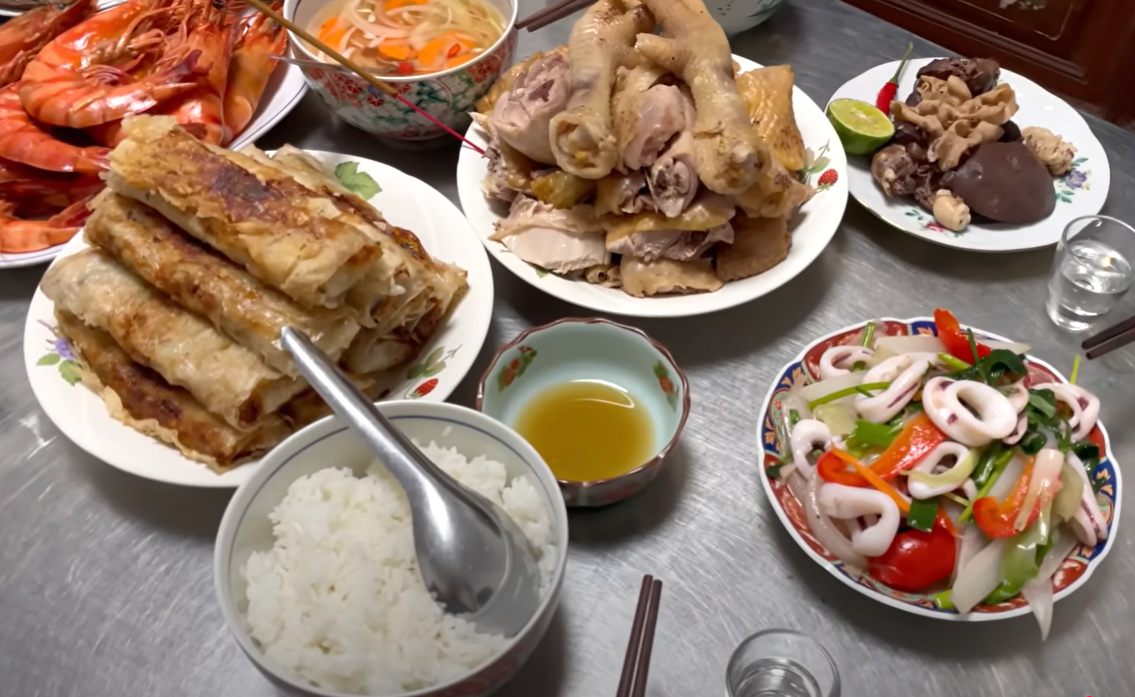 |  |
The young son-in-law also noticed that the feast at his wife's hometown was delicately and harmoniously arranged, showing solemnity and traditional spirit.
The dishes often have a light taste, less sweet, less spicy and pay special attention to the natural colors of the ingredients, such as the red color of boiled shrimp, the bright yellow color of chicken, combined with the green and orange colors of vegetables and tubers.
"Interestingly, each feast has a balance of nutrition and flavor, between oily and light dishes, between dishes with broth and dry dishes. For example, spring rolls and fried shrimp patties dipped in sweet and sour fish sauce, eaten with various herbs, or mushroom soup cooked with vegetables, help reduce the feeling of satiety when eating," Hung added.

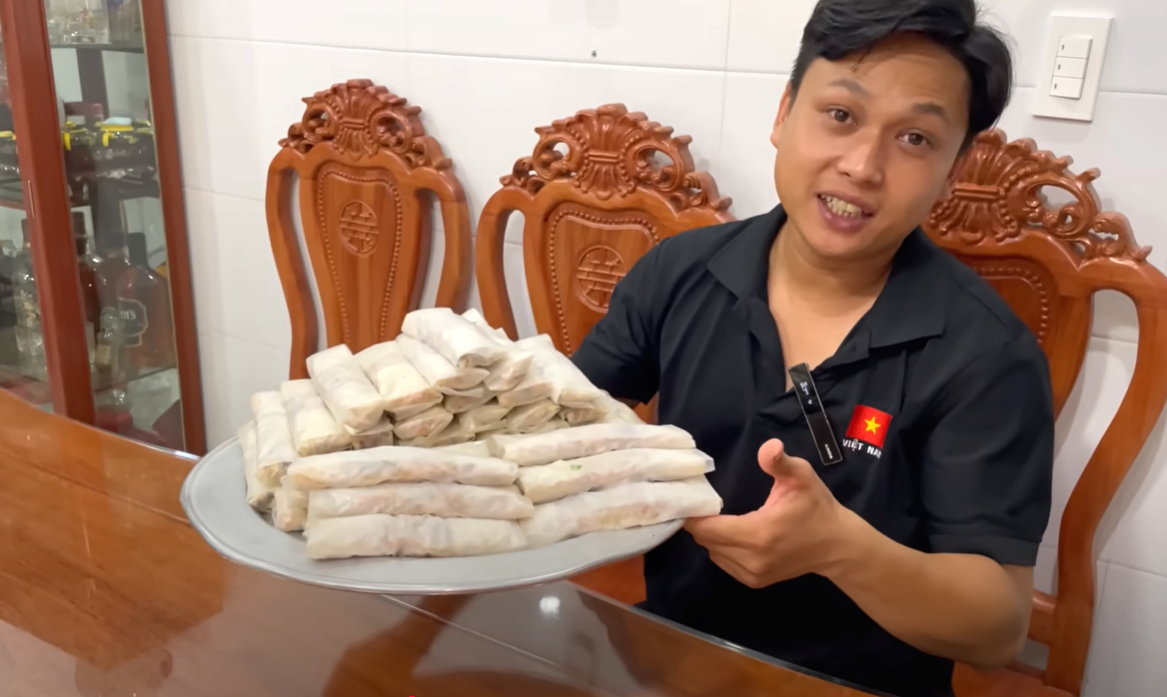
Nem cua be (or cha nem) is the dish on the ancestral altar at his wife's house that Hung loves the most. He commented that this dish is similar to Southern spring rolls but is larger in size, has a rich filling and has crab meat which is very appealing.
Hai Phong crab spring rolls can be wrapped in a cylindrical or elongated shape, but the most popular shape is square. When eaten, the spring rolls are cut into small pieces and served with vermicelli noodles, lettuce, perilla, Vietnamese coriander leaves, and sliced vegetables in a sweet and sour sauce such as papaya, cucumber, and carrot.

The son-in-law from Hai Phong admitted that his wife's family's feast doesn't represent all other feasts in Northern Vietnam. Depending on the circumstances and preferences of each family, each feast has its own unique characteristics.
"On the anniversary of a death, although each family may flexibly change the way they organize the feast to suit modern life, they always maintain the sacred meaning, expressing reverence for their ancestors."
This is also an opportunity for members to gather and remind each other to preserve and develop the good traditional culture of the nation and family, becoming an indispensable part of the spiritual and cultural life of Vietnamese people," Hung expressed.
Photos and videos: 2 Đứa Mình Vlogs
Source: https://vietnamnet.vn/chang-re-mien-nam-an-gio-o-bac-me-tit-1-mon-dac-san-trong-mam-co-hai-phong-2417527.html





![[Photo] Closing Ceremony of the 10th Session of the 15th National Assembly](/_next/image?url=https%3A%2F%2Fvphoto.vietnam.vn%2Fthumb%2F1200x675%2Fvietnam%2Fresource%2FIMAGE%2F2025%2F12%2F11%2F1765448959967_image-1437-jpg.webp&w=3840&q=75)




























![[OFFICIAL] MISA GROUP ANNOUNCES ITS PIONEERING BRAND POSITIONING IN BUILDING AGENTIC AI FOR BUSINESSES, HOUSEHOLDS, AND THE GOVERNMENT](https://vphoto.vietnam.vn/thumb/402x226/vietnam/resource/IMAGE/2025/12/11/1765444754256_agentic-ai_postfb-scaled.png)





































Comment (0)