

1. Are sugar-free foods really good for your health?
With rising rates of obesity and diabetes, products labeled "low sugar," "sugar-free," or "zero sugar" are becoming increasingly popular. This trend is accompanied by the widespread availability of sugar substitutes such as aspartame, sucralose, saccharin, stevia, erythritol, and xylitol. Thanks to their ability to provide sweetness while supplying little to no energy, they are often seen as a solution to help limit daily sugar intake.
In fact, replacing sugar with sweeteners can offer certain short-term benefits, especially for those needing to reduce calorie intake or control blood sugar. However, that doesn't mean "sugar-free" products are completely harmless.
The World Health Organization (WHO) advises against using sugar-free sweeteners as a long-term solution for weight loss. According to the WHO, existing evidence has not demonstrated a sustainable effectiveness in reducing body fat, while some studies have noted undesirable effects related to metabolism and cardiovascular health.
It's worth noting that many people view "zero-sugar" drinks as a more palatable option than regular soft drinks. This mindset sometimes leads to overeating or compensating with other foods, significantly reducing the desired benefits.
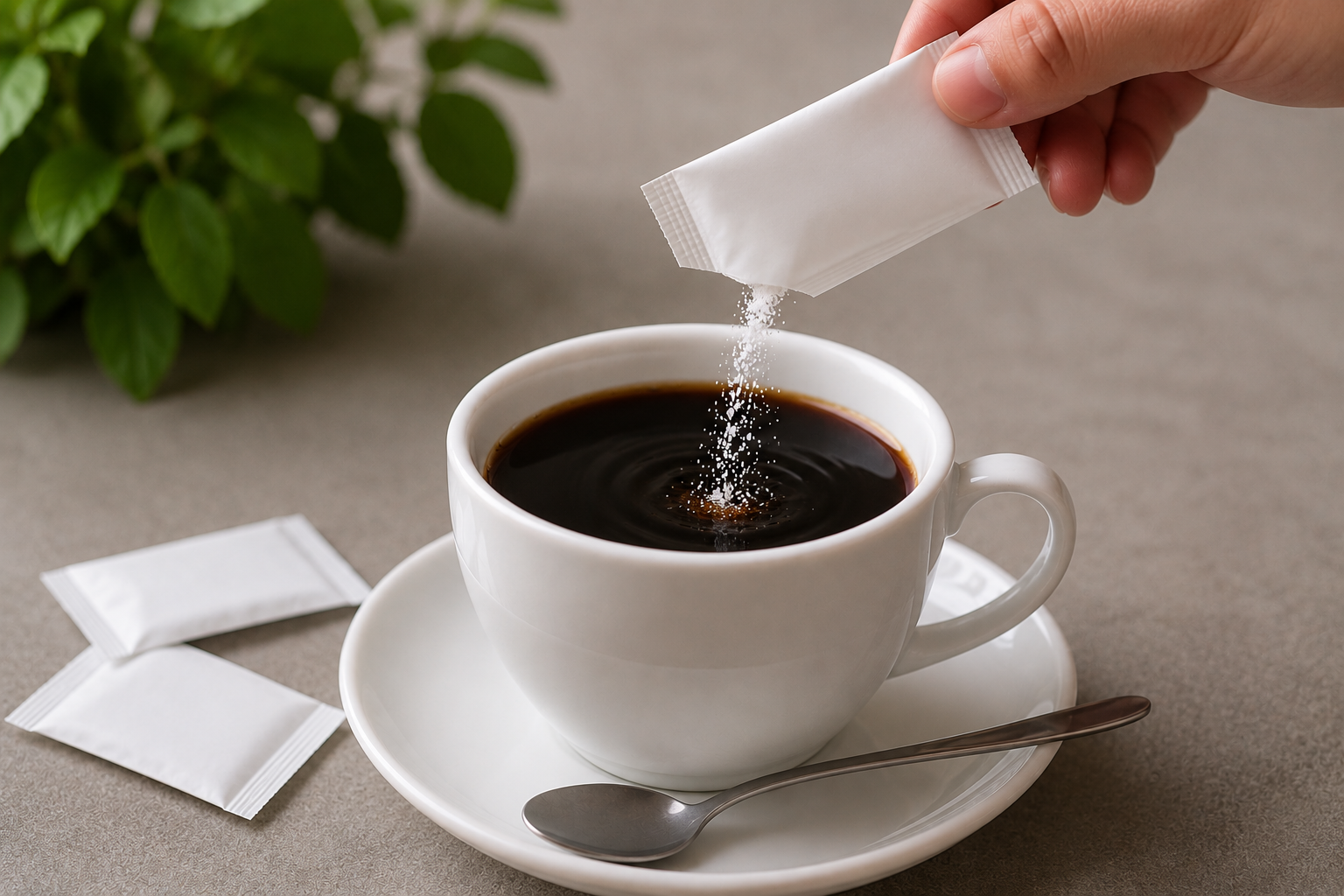
Many recent studies show that sugar substitutes are not entirely harmless as many people believe.
2. How do sugar substitutes affect health?
Recent studies suggest that some sweeteners may affect the body in ways that go beyond simply replacing sugar.
2.1. Disrupting the sense of hunger and fullness.
The human brain is programmed to associate sweetness with energy. When a sweet taste is perceived but no corresponding calorie intake is received, the body may compensate by increasing appetite or seeking more food later. Some studies suggest that regular consumption of artificially sweetened beverages may make it more difficult to control portion sizes, especially in individuals who already have a habit of consuming a lot of sweets.
This explains why many people still gain weight even after switching to "zero sugar" products.
2.2. Effects on the gut microbiota
The gut contains trillions of beneficial bacteria that make up the gut microbiome. This microbiome participates in digestion, immunity, and glucose metabolism regulation. Some studies have noted that sweeteners such as saccharin, sucralose, and aspartame may alter the composition of the gut microbiome in certain individuals.
When the balance of the gut microbiome is disrupted, the risk of insulin resistance, glucose metabolism disorders, and chronic inflammation may increase. However, scientists also emphasize that this impact depends on the type of sweetener, the dosage used, and the individual's biological characteristics.
2.3. Cardiovascular Risk
Erythritol was once considered a relatively safe sweetener. However, several studies published in recent years have noted a link between high blood erythritol levels and an increased risk of blood clots, heart attacks, and strokes.
Although there is not enough evidence to conclude that erythritol directly causes cardiovascular disease, these findings suggest that greater caution is needed when using it regularly in large quantities.

Prioritize filtered water, unsweetened tea, or low-sugar drinks.
3. How to use sweeteners appropriately?
Sweeteners aren't inherently bad, but they're not the perfect solution for good health either. If you have a habit of drinking a lot of soda or consuming too much sugar, using sweeteners can be a transitional step to help reduce your sugar intake. However, the long-term goal should still be to gradually reduce your sugar cravings.
To protect your health, everyone should:

- Gradually reduce your daily intake of sugar and sugary drinks.
- Prioritize filtered water, unsweetened tea, or low-sugar drinks.
- Eat whole fruits instead of drinking juice.
- Limit ultra-processed foods, including products advertised as "diet" or "zero sugar".
- Read the nutrition label carefully to find out what type of sweetener is used.
- Maintain a balanced diet combined with regular physical activity.
Among currently available sweeteners, stevia is considered relatively more favorable in terms of metabolism due to its natural origin and the lack of significant adverse effects. However, long-term data are still being studied.
Health doesn't depend on choosing a particular type of artificial sweetener, but rather on an overall healthy lifestyle. Reducing sugar is necessary, but completely replacing it with artificial sweeteners isn't a panacea against all health risks. The most important thing remains building balanced eating habits, limiting processed foods, and maintaining regular daily exercise.
See more trending videos :
Source: https://suckhoedoisong.vn/chat-tao-ngot-thay-the-duong-co-thuc-su-an-toan-169260531132437665.htm

![[Photo] The General Secretary, President and his wife begin their state visit to the Philippines.](https://vphoto.vietnam.vn/thumb/1200x675/vietnam/resource/IMAGE/2026/05/31/1780230559452_anh-man-hinh-2026-05-31-luc-19-28-11.png)
![[Image] Hanoi Police officially crowned champions of V-League 2025/2026](https://vphoto.vietnam.vn/thumb/1200x675/vietnam/resource/IMAGE/2026/05/31/1780244769054_ndo_br_039d561b692be875b13a-jpg.webp)

![[Photo] Admire the coral "masterpiece" amidst the million-year-old heritage of Dak Lak province.](https://vphoto.vietnam.vn/thumb/1200x675/vietnam/resource/IMAGE/2026/05/31/1780221235105_anh-man-hinh-2026-05-31-luc-16-53-27.png)
![[Photo] Solemn bathing ceremony and Buddha procession in Hue](https://vphoto.vietnam.vn/thumb/1200x675/vietnam/resource/IMAGE/2026/05/31/1780228263543_1-jpg.webp)






















![[Video] Sunset at Lap An Lagoon – Where the sun sets over the fishing nets](https://vphoto.vietnam.vn/thumb/340x192/vietnam/resource/IMAGE/2026/05/31/1780192137701_beach-landscape-sea-water-nature-grass-745871-pxhere-com.jpeg)












































































Comment (0)