

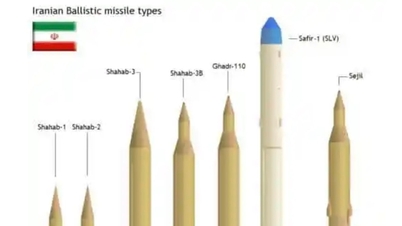
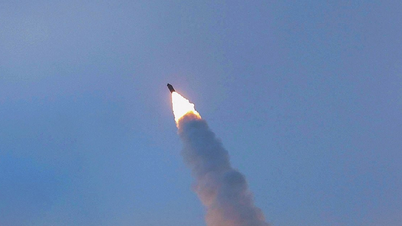
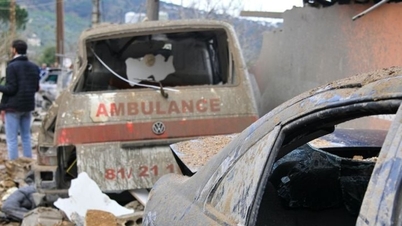
According to The Economist, the possession of long-range missiles is no longer limited to a few military powers as before, but has expanded to many countries, as well as militia forces in the Middle East.
This altered the strategic landscape in the region and led to a worrying missile race.
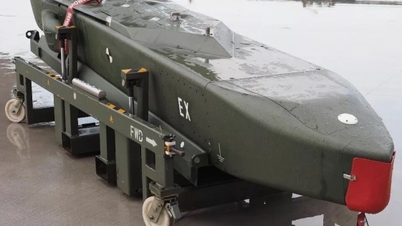
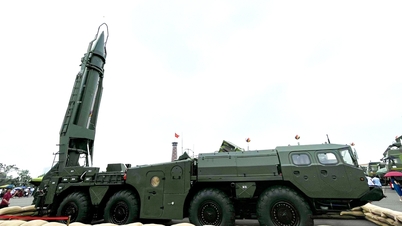
According to estimates by expert Hassan Elbahtimy of King's College London (UK), there are currently 11 countries in the region that possess ballistic or cruise missiles with a range of more than 250km.
An Israeli statistic indicates that Hamas's armed forces possessed approximately 30,000 missiles in 2021. Hezbollah's more sophisticated arsenal in Lebanon currently holds around 150,000 missiles, including approximately 400 long-range missiles capable of striking anywhere in Israel.
More importantly, states no longer have a monopoly on technology. For the past 20 years, Iran has supplied drones, rockets, and missiles, as well as manufacturing know-how, to Hamas, the Houthi forces in Yemen, militias in Iraq and Syria, and especially Hezbollah. As a result, these armed groups now pose a military threat that, 20 years ago, only states could pose.
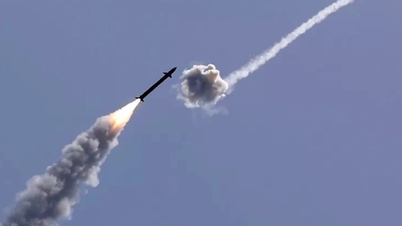
However, the numbers aren't the main issue. Previously, most nations wanting to strike distant enemies required expensive air forces. But now, participants who don't necessarily possess air forces can still strike deep into enemy territory. This changes the strategic calculations. In a future war that many Israeli officials consider inevitable, the ratio of missiles fired to interceptors used will increase.
Israeli engineer Yair Ramati, former head of the missile defense agency of the Israeli Ministry of Defense , observes that an arms race has been underway for over 30 years, in which all sides have continuously built up their arsenals, while Israel has had to develop its defense systems. And that race shows no signs of slowing down.
MINH CHAU
Source


![[Photo] General Secretary and President visit the China-ASEAN AI Application Cooperation Center](https://vphoto.vietnam.vn/thumb/1200x675/vietnam/resource/IMAGE/2026/04/17/1776404277677_vna-potal-tong-bi-thu-chu-tich-nuoc-tham-trung-tam-hop-tac-ung-dung-ai-trung-quoc-asean-8706616-2286-jpg.webp)













![[Photo] National Assembly Chairman Tran Thanh Man attends the policy seminar to promote Vietnam-Türkiye cooperation.](https://vphoto.vietnam.vn/thumb/1200x675/vietnam/resource/IMAGE/2026/04/16/1776351415367_vna-potal-chu-tich-quoc-hoi-tran-thanh-man-du-toa-dam-chinh-sach-thuc-day-hop-tac-viet-nam-tho-nhi-ky-8705791-jpg.webp)




















































![[Video] Preserving the "green gold" on Hong Thai Mountain](https://vphoto.vietnam.vn/thumb/402x226/vietnam/resource/IMAGE/2026/04/18/1776468522858_a1-jpg.webp)





Comment (0)