After graduating from high school, like many young people in rural areas, Vu Van Quang from Dai An village, Mau A commune, faced many choices: learning a trade, working as a factory worker in industrial zones, or doing agriculture at home…
Mr. Quang shared: “After much deliberation, I decided to choose to work abroad under contract. With advice, introductions, and support from the local authorities in securing a preferential loan of 60 million VND, I completed the procedures for working under contract in Taiwan (China).”
Here, Quang works at a mechanical engineering company, initially earning around 13 million VND per month, which later increased to 20 million VND per month, not including overtime. By being frugal, Quang sends 10-15 million VND home to his family each month.
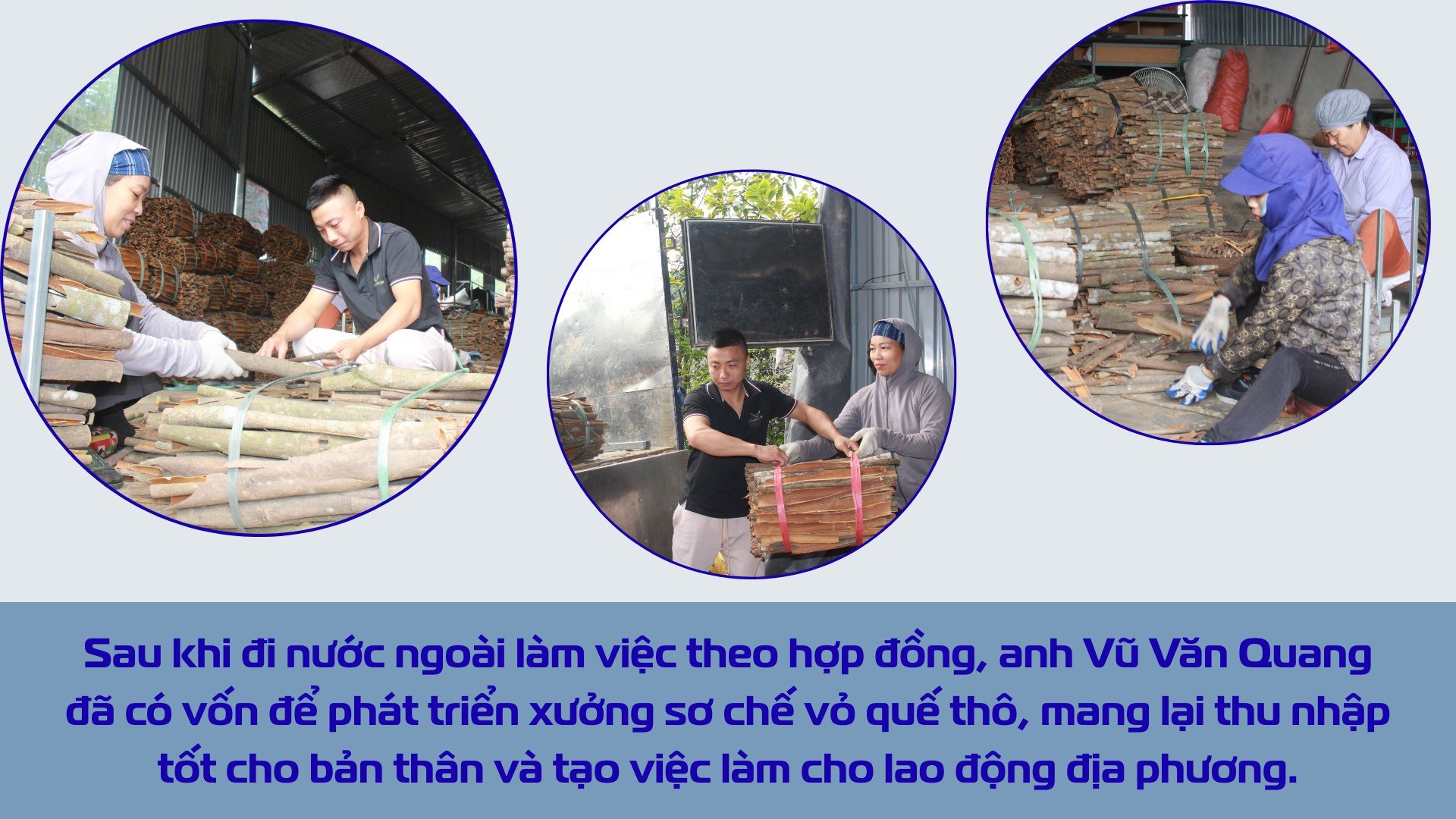
“I sent my savings home to buy land to plant cinnamon. After 6 years, I have more than 5 hectares of forest and a little capital to start a business . Currently, some of the cinnamon trees are yielding about 70-80 million VND per year. I also bought more trucks to collect cinnamon bark from local people and then sell it to companies and traders,” Quang said.
Mr. Vu Van Quang's raw cinnamon bark processing workshop is currently doing well, not only generating an income of over 100 million VND per year, but also providing regular employment for 5 workers and dozens of seasonal workers with wages ranging from 350,000 to 400,000 VND per person per day.
Not only Mr. Vu Van Quang, but in Dai An village alone, there are 25 cases of people working abroad under contract, all of whom have a comfortable life, contributing to raising the average per capita income in the village to 75 million VND/year.
From 2024 to 2025, Mau A commune will have 120 workers going to work abroad under contract, an increase of over 200% compared to previous years. Those working abroad earn an average income of 27-50 million VND per month, significantly contributing to reducing the commune's poverty rate to 1.086%.
Basically, after returning from working abroad, people have learned to use capital wisely, investing in production and business, opening factories and developing agriculture, creating more jobs locally.
Recognizing that sending workers abroad under contract is a crucial task, immediately after establishing a two-tiered local government system, Mau A commune proactively reviewed needs, oriented the labor market, and provided accurate and timely information to its residents.
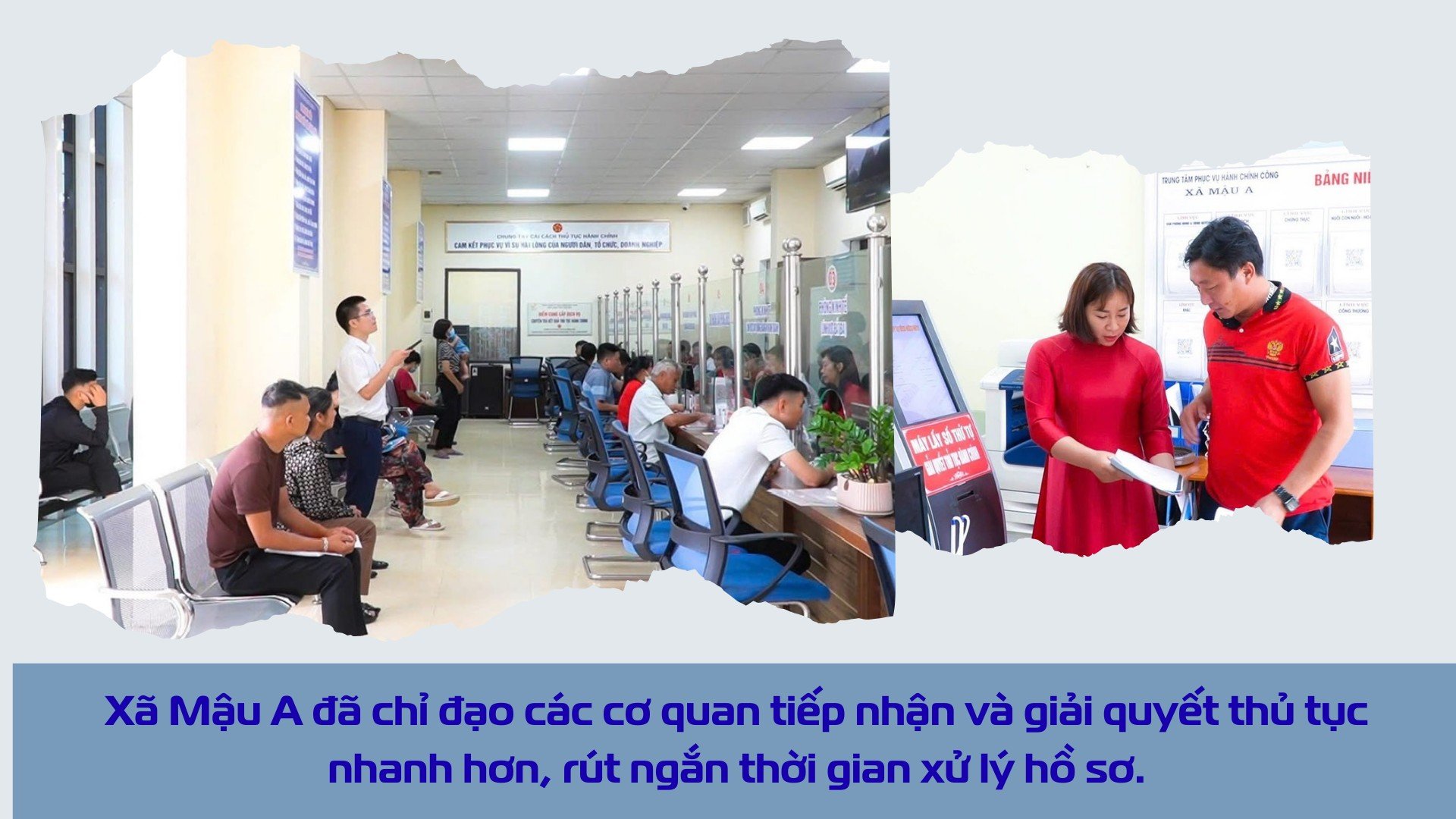
The commune directed relevant agencies to expedite the processing of applications, shortening processing times and supporting residents from consultation and application completion to verification and certification. Public awareness campaigns were intensified in villages to ensure residents understood the market and avoided risks.
Supervision and assessment are emphasized to prevent unofficial brokerage activities. Mau A has strengthened coordination with the Provincial Employment Service Center to select reputable businesses. Professional staff visit households in need to provide consultation.
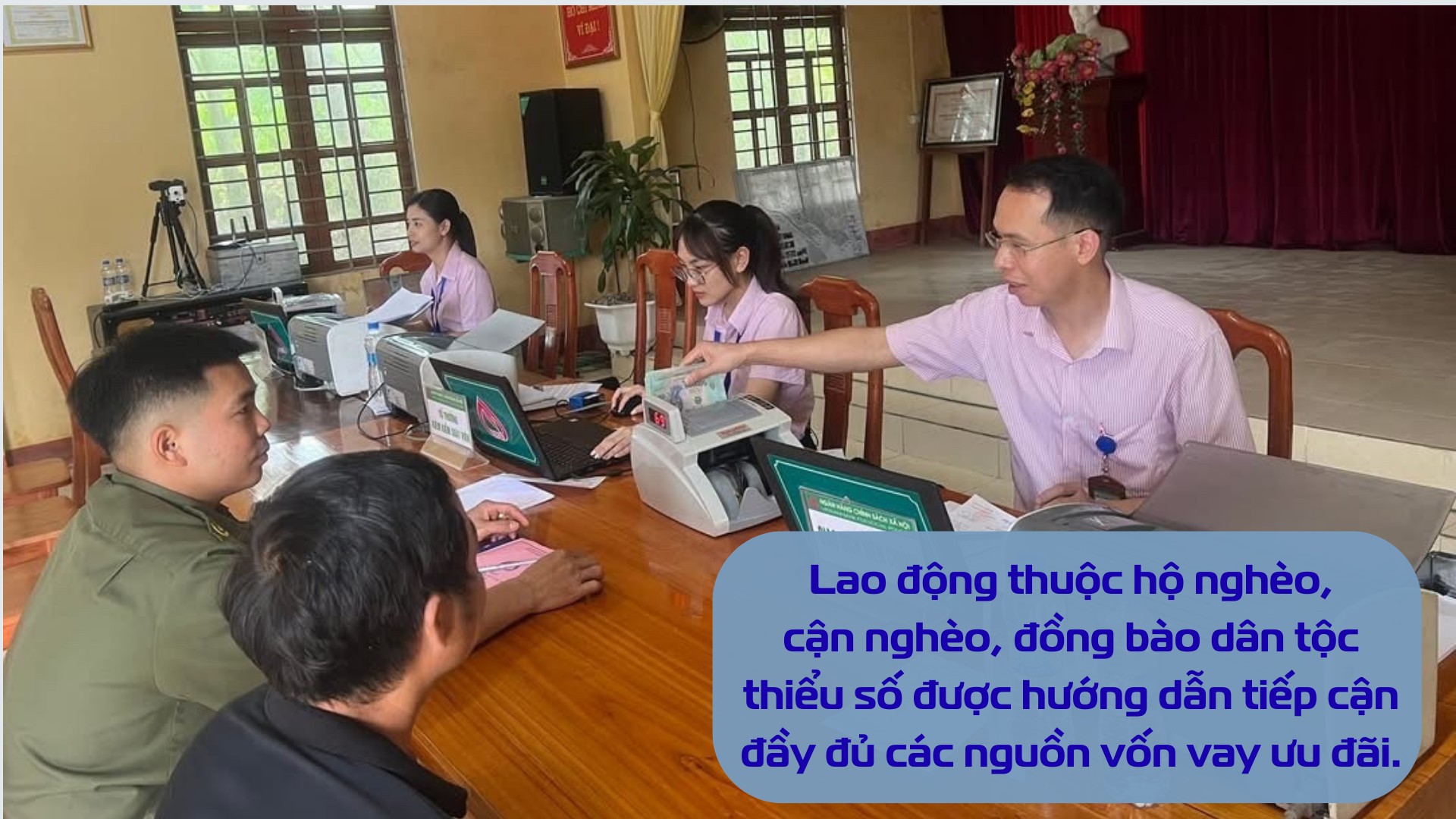
The commune also pays close attention to and effectively implements support policies. Laborers from poor and near-poor households, as well as ethnic minorities, are guided to fully access preferential loan sources. Applications are processed quickly, without any backlog.
In the coming period, Mau A commune will continue to identify sending laborers to work abroad under contract as one of the solutions for sustainable poverty reduction and improving the quality of human resources.
The commune aims to send an average of 50 workers abroad for fixed-term employment each year; prioritizing stable, high-income markets such as Japan, South Korea, and Taiwan (China), while also exploring expansion into some European markets.
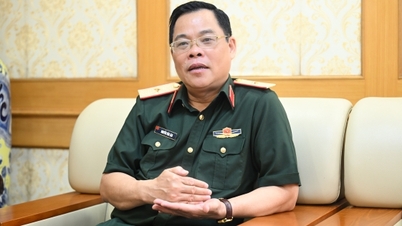
Mr. Luu Quang Loi, Vice Chairman of the People's Committee of Mau A commune, said: “We pay special attention to improving the quality of the workforce through vocational training, orientation education , and foreign language training before departure. Simultaneously, the commune tightens management and inspection of businesses; fully implements policies supporting loans and insurance to protect the rights of workers. After returning home, workers are encouraged to invest in production, start businesses, expand household economic models, contributing to job creation locally and building advanced new rural areas.”
Source: https://baolaocai.vn/chien-strateg-giam-ngheo-ben-vung-o-mau-a-post887940.html

























































































Comment (0)