

 |
| A view of Cho Don commune today. |
Cho Don commune has 39 villages, nearly 4,000 households with over 16,000 inhabitants, and an average per capita income of 47 million VND/year. In recent years, the locality has gradually affirmed its appropriate direction in economic development and new rural construction through focusing on investing in the development of OCOP products, transforming the crop structure, and promoting the application of science and technology in production.
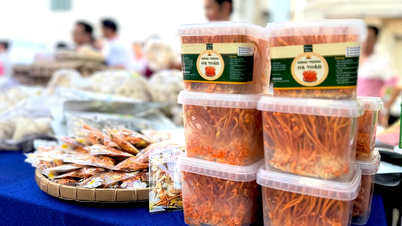
The officials and people of Cho Don commune are proud of their distinctive products, which have gradually established their quality and brand in markets both within and outside the province. Currently, the commune has 12 OCOP 3-star products and 2 4-star products. Some typical products such as Shan Tuyet tea, sticky rice crackers, turmeric starch, golden flower tea, dried bamboo shoots, etc., have become valuable commodities, contributing to increasing the income of the people.
In economic development, Cho Don focuses on building brands and promoting agricultural products to consumers. The local government creates conditions for cooperatives and production facilities to access markets, exchange experiences, and orient their production and business development accordingly. Through this, integrated supply chains are gradually being formed, from production and processing to consumption.
Agriculture continues to play a leading role in economic development; rice, corn, and traditional vegetable crops are identified as the main crop groups. The entire commune has over 1,000 hectares of land planted with food crops, including over 870 hectares of rice with reliable irrigation for two harvests per year. Most of the area applies scientific and technical advancements, introducing new varieties for mass production such as Bao Thai, JO2, and hybrid rice. Thanks to strict adherence to technical procedures, the average rice yield reaches 53 quintals/hectare, with a total food production of nearly 5,900 tons per year.
 |
| Farmers in Cho Don commune are harvesting the Bao Thai specialty rice. |
Besides ensuring food security, Bao Thai and JO2 rice from Cho Don are increasingly favored by the market, becoming valuable specialty products and gifts. In addition to rice cultivation, the locality is developing production models based on biosafety principles. Many areas of safe vegetable production have been established in Ban Duong and Ban Tan villages; oranges, tangerines, and pomelos are grown according to VietGAP standards in Na Pai village, gradually creating marketable products that meet market demands.
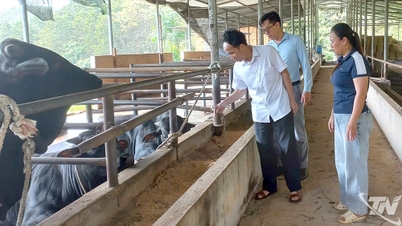
Livestock farming in the commune has shifted towards meeting consumer demand and protecting the environment. Economic models combining fruit tree cultivation, fish farming, and livestock and poultry raising are increasingly developing. Many households have invested in organic pig farming and free-range chicken farming, contributing to job creation and increased family income.
Over the past five years, national target programs have been implemented synchronously and targeted correctly. The entire commune has 59 poor, near-poor, and newly-escaped-from-poverty households participating in livelihood support projects with a total budget of nearly 2 billion VND; 105 households received support for housing construction; 39 households participated in community production development models; and 19 households received support for decentralized access to clean water.
In the commune, 58 construction projects were implemented with a total budget of over 24 billion VND; 5 cooperatives received support to build value chain linkage models with capital of nearly 12 billion VND. In addition, the commune created new jobs for more than 1,500 workers, including 273 who went to work abroad under contract.
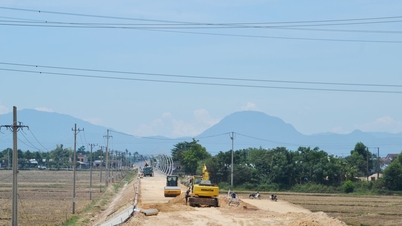
The achievements have significantly transformed the socio-economic landscape of the locality. Infrastructure has been invested in comprehensively, with 100% of villages having concrete roads connecting to the commune center. People's incomes have increased, and the percentage of poor and near-poor households has decreased sharply, from 197 poor households and 75 near-poor households in 2022 to only 55 poor households and 31 near-poor households by the end of 2025... These achievements form an important foundation and create momentum for sustainable socio-economic growth in the locality in the coming years.
Source: https://baothainguyen.vn/kinh-te/202601/cho-don-no-am-tim-ve-d662a8d/















































































Comment (0)