

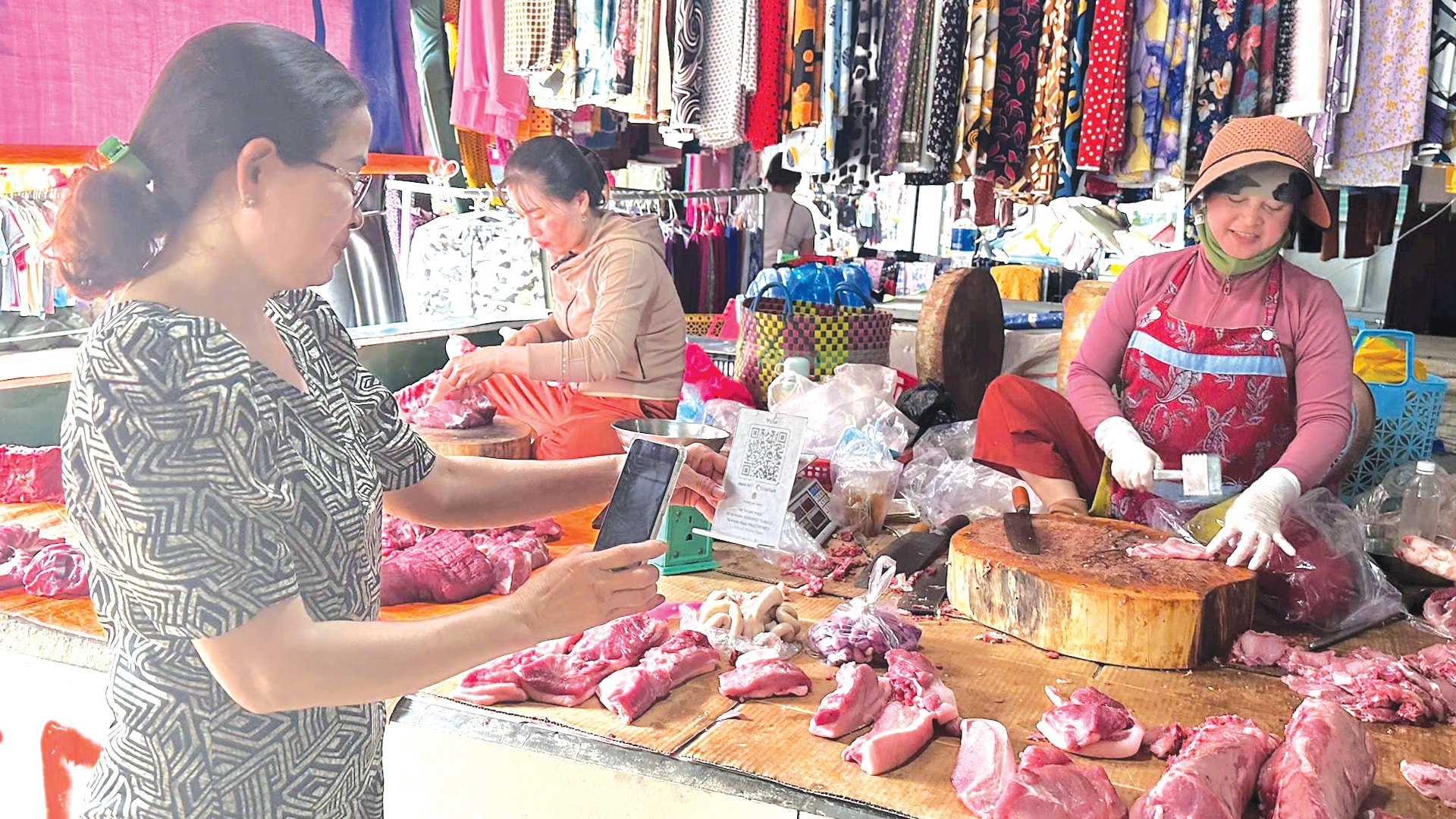
Paying at the market without using cash...
How much is it all for me, sister?
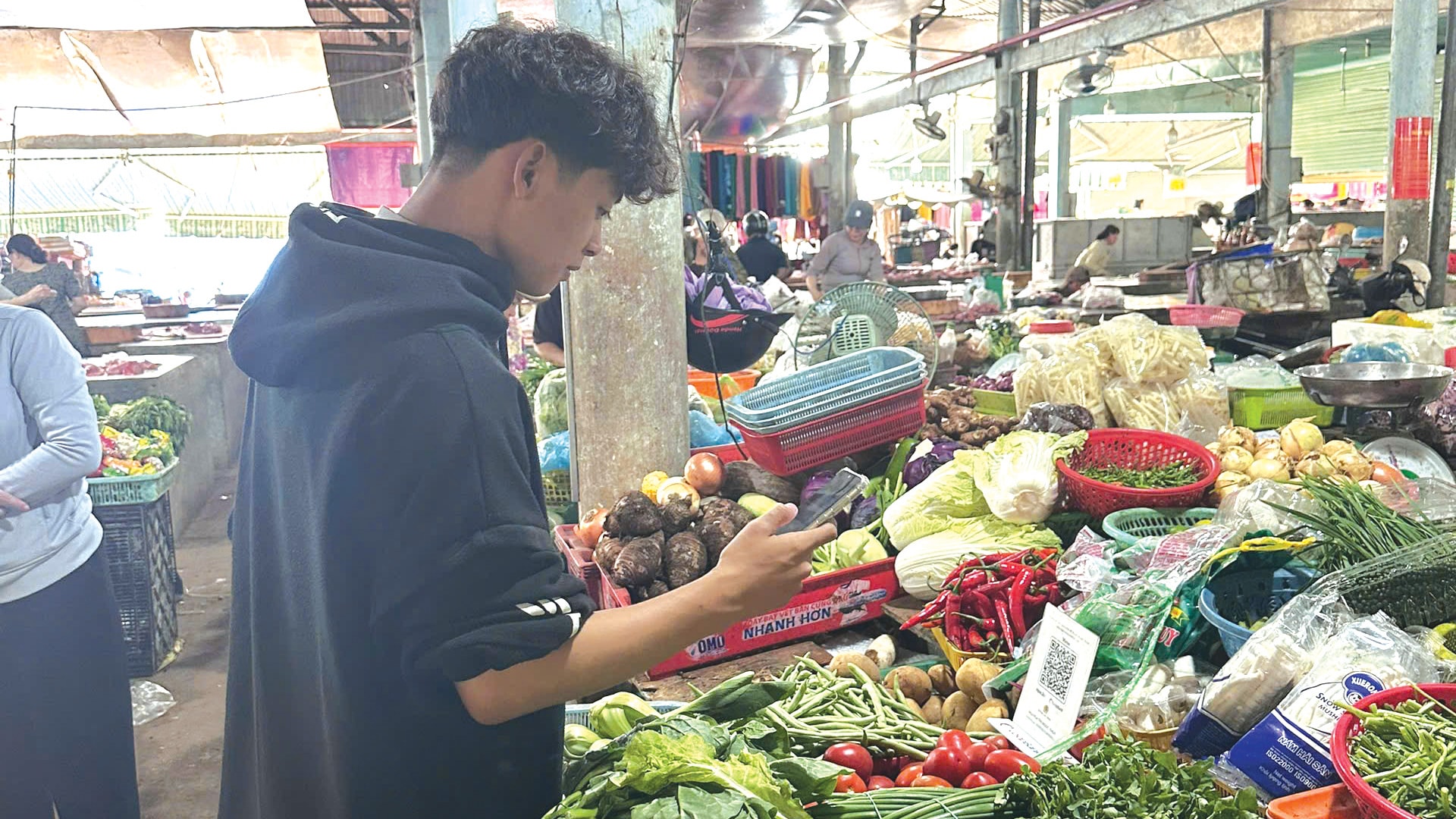
A bunch of water spinach costs 5,000, chili peppers 5,000, onions 5,000... Total 15,000 dong.
Can I scan the QR code, please?
Okay... the money's been transferred.
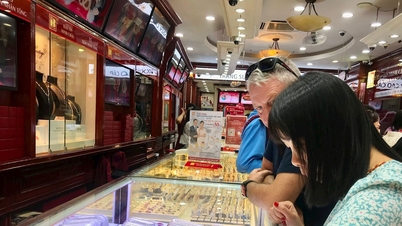
Right next to the vegetable stall is the pork stall: 1 kg of pork belly costs 150,000 VND, minced pork costs 20,000 VND. The total is 170,000 VND. "Should I transfer the money, sister?" "There, there's a QR code ready, just scan it." "Done, sister..." These are just two of the hundreds of conversations I overheard at Lac Tanh Market during my field trip to this QR code market. Lac Tanh Market (Tanh Linh) is a long-standing "district market" for people in the eastern and western parts of Lam Dong province. The market offers a wide variety of goods, from designer clothes costing several million VND each, to bunches of vegetables and fish priced at 5,000-10,000 VND, and even jewelry shops supplying items worth hundreds of millions of VND... Because of its diverse range of goods, it attracts many shoppers from the region. Therefore, the market is crowded every day, especially from 5 am to around 11 am. The vegetables here are sourced from areas in Da Lat, so they are always fresh and green. Pork, chicken, and duck are supplied by local people. Seafood comes from Phan Thiet and La Gi wards. As for freshwater fish such as catfish, snakehead, and especially the spotted catfish, which has been a specialty of Tanh Linh for many years.
Mr. Nguyen Van The, who was buying vegetables and onions, said: "My family runs a restaurant, and I go to the market every morning to buy groceries. For many years, especially during the Covid-19 pandemic, I've gotten used to buying things by bank transfer. Most places in the market have QR codes, so I can buy anything, even just 5,000 VND, by scanning the code and transferring the money quickly."
Ms. Ho Thi Phuc, who sells pork next to the vegetable stall, saw me talking to Mr. The and chimed in: "When QR codes were first introduced, very few people used them; only educated people going to the market would transfer money. But now, even people who aren't literate are paying by scanning the QR code for purchases – it's a daily occurrence... at this market." According to Ms. Nguyen Thi Ngan, in charge of managing Lac Thanh Market: “In 2024, the People's Credit Fund (PCF) provided 267 QR codes to be placed at the stalls of traders in Lac Thanh Market. Almost 100% of traders in the market now use QR codes for payment. Payment via QR codes offers many benefits, such as reducing the amount of cash carried to the market, minimizing the risk of dropping money while shopping, dropping money when taking it out of pockets to pay, or accidentally dropping money while moving around the market. In particular, cashless payments have helped to improve security and order in the market, leaving no room for criminals to infiltrate and pickpocket shoppers and traders.”
Digital transformation viewed from... the market.
Before going to Lac Thanh, I was told by Mr. Phan Thanh En - Deputy Director of the State Bank of Vietnam Region 10 (managing Khanh Hoa and Lam Dong provinces - PV) that: “Digital transformation and cashless payments for People's Credit Funds are one of the key tasks of the State Bank of Vietnam Region 10. In Lam Dong province, many People's Credit Funds have successfully implemented cashless payments. Retail outlets, from cafes to restaurants, almost all use QR codes for payment. Especially at Lac Thanh market, the program, supported by the Cooperative Bank, has been implemented synchronously and systematically by the Lac Thanh People's Credit Fund. The implementation for small traders to adopt the digital transformation creates a synergy, helping people gradually get used to it, creating synergy between the people - the government and the bank... Ms. Le Thi Tuyen - Chairwoman of the Board of Directors of Lac Thanh People's Credit Fund, said: To implement digital transformation, the People's Credit Fund has invested in modern and diverse technological infrastructure. Product and service diversification: Providing online payment products and services such as Internet Banking, Mobile Banking, QR Code… to meet the diverse needs of customers. In addition, the People's Credit Fund also strengthens its efforts in disseminating knowledge and deploying digital banking products and services to rural areas and ethnic minority communities to bridge the gap between urban and rural areas, helping customers and members experience the convenient technologies of products and services, thereby contributing to the effective implementation of cashless payments in the area...
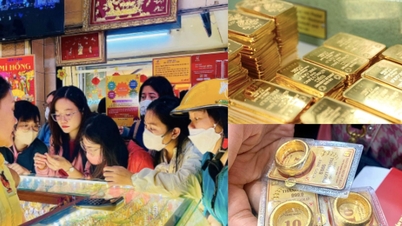
Listening to Ms. Tuyen's story, I suddenly remembered seeing many Cham and K'Ho women living in the area going to the market that morning and buying quite a lot of expensive items like designer clothes; some even stopped by gold shops to buy jewelry. Mr. A Son, a K'Ho man from Tra Cu village, Tanh Linh commune, said: "This time, rubber prices are high, so any family with 1-3 hectares of rubber trees is making a killing, earning 2-4.5 million dong per day. They save up for a few days and then go to Lac Tanh market to buy gold to accumulate wealth. Some people deposit their savings at the People's Credit Fund... As people's lives improve, the demand for high-quality goods clearly increases. Almost everyone has a smartphone to connect with the government, watch news, entertain themselves, and check the prices of goods they want to buy. From here, the widespread use of QR codes for payments in Tanh Linh commune, which has many ethnic minorities, is part of the development towards modernization along with the country..."
Mr. Nguyen Minh Dung, Vice Chairman of the People's Committee of Tanh Linh commune, said: The "Market 4.0 - Cashless Payment" model implemented by Lac Tanh People's Credit Fund brings countless practical benefits to all participants, such as: saving time, safety, security, transparency, and access to modern financial services. It contributes to limiting disease outbreaks, minimizing social ills, and promoting the digital economy . The Lac Tanh People's Credit Fund's implementation of QR code scanning for traders at Lac Tanh market not only benefits the people but also creates a connection between traders, people, and the People's Credit Fund in credit transactions. Previously, some traders and people in the area were not very familiar with the People's Credit Fund and borrowed money at high interest rates from outside sources. However, since the implementation of QR code scanning at Lac Tanh market, the cashless payment effect has spread strongly. More people know about the Lac Tanh People's Credit Fund and have sought loans from it, contributing to preventing illegal lending in the area...
From the perspective of Lac Thanh Market, the use of QR codes for cashless payments by traders and customers is a practical step in the nationwide digital transformation roadmap. This is a good model that needs to be replicated...
A QR code (Quick Response Code) is a type of two-dimensional barcode that can be read by a barcode scanner or a smartphone with a camera. QR codes are used to store a wide variety of information, from text, URLs, and phone numbers to more complex data. Currently, most banks and credit unions are using QR codes for money transfer transactions...
Source: https://baolamdong.vn/cho-qr-lac-tanh-382817.html























































































Comment (0)