

Investors are impatient.
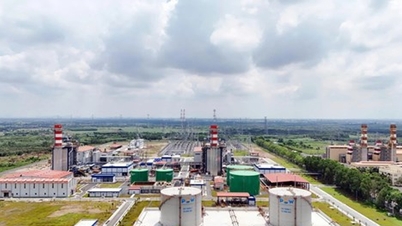
Speaking to reporters, a representative of the investor of Cong Thanh Thermal Power Plant ( Thanh Hoa ) said they are eagerly awaiting approval to convert the project to LNG fuel so that it can generate electricity before 2028.
“We have fully prepared the site, port, land leveling, exploratory drilling, and connection lines. The consortium of investors is in place, with BP providing gas, GE supplying turbines and generators, and Actis Investment Fund arranging financing. Now we are just waiting for the Ministry of Industry and Trade to submit the proposal to the Government and get approval so we can start construction immediately,” said a representative of the investor, Cong Thanh Thermal Power Plant.

Furthermore, according to this expert's assessment, other gas-fired power plant investors are demanding numerous incentives. For example, the Power Purchase Agreement (PPA) must guarantee the purchase of 90% of the electricity produced. Some investors even proposed that the State guarantee payment obligations on behalf of Vietnam Electricity Group (EVN) in case EVN fails to fulfill its contractual payment commitments, and compensate for direct damages as well as damages arising from EVN's inability to pay in the gas-fired power plant project.
They also requested that a portion of the project's foreign currency conversion be guaranteed based on the State's current commitment level for BOT power projects (30% of project revenue), ensuring a foreign currency balance equivalent to the current commitment level of the State.
"Meanwhile, we don't need these things," the representative emphasized.
Regarding the aforementioned Cong Thanh thermal power project, the investor and Thanh Hoa province promptly requested a conversion into an LNG gas-fired power plant project.
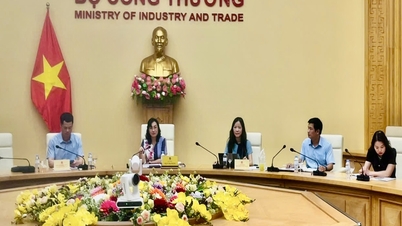
In response to this proposal, in a document sent by the Government Office to the Ministry of Industry and Trade on July 11, Deputy Prime Minister Tran Hong Ha assigned the Ministry to take the lead and coordinate with relevant agencies to handle the matter and report to the Prime Minister on issues beyond its authority.
However, according to feedback from investors, they have not yet received any information about a meeting schedule with the Ministry of Industry and Trade and are expressing great impatience.
Mr. Bui Tuan Tu, Deputy Head of the Management Board of Nghi Son Economic Zone and Industrial Parks in Thanh Hoa province, stated that the Cong Thanh coal-fired power plant project has all the necessary legal procedures and documentation.
If the investor's proposal and the Thanh Hoa Provincial People's Committee are approved soon, the project's implementation will proceed smoothly.

Cong Thanh Thermal Power Plant is not the only project looking to switch to LNG power generation to keep up with the trend.
According to a report by the Ministry of Industry and Trade, the list of five coal-fired power plant projects that are behind schedule or facing difficulties in changing shareholders and securing funding includes five projects. The total capacity of these five projects is 7,220 MW, comprising: Quang Tri Thermal Power Plant (1,320 MW), Cong Thanh Thermal Power Plant (600 MW), Nam Dinh I Thermal Power Plant (1,200 MW), Vinh Tan III Thermal Power Plant (1,980 MW), and Song Hau II Thermal Power Plant (2,120 MW).
In particular, the Quang Tri thermal power project, whose investor is the Electricity Generating Authority of Thailand International (EGATi), has announced the suspension of its implementation. Quang Tri province has proposed replacing it with LNG power, according to a document dated August 9th. Many other localities are also looking to convert uncompleted coal-fired power projects to gas-fired power plants.
Looking to LNG power generation to reduce the risk of electricity shortages.
According to experts, the 7,220MW of coal-fired power plants awaiting resolution will likely not be completed given the tightening of credit for coal power.
According to energy expert Nguyen Thanh Son, it is difficult to implement coal-fired power projects without securing funding. The investors in these projects may not necessarily have excess capital, but rather are facing a capital shortage.
Speaking to reporters, Dr. Le Hai Hung from Hanoi University of Science and Technology stated: "Converting coal-fired power plants to gas-fired power plants is an urgent issue, there's no room for debate. LNG-fired power plants emit significantly less than coal-fired power plants, even less than associated gas. We are currently building the Thi Vai LNG import terminal. LNG-fired power plants are quite secure for energy security over the next 10-20 years."
According to Dr. Hung, there is a global movement to turn away from coal-fired power. In Vietnam, Decision 500 on the Power Development Plan VIII also outlines a roadmap for reducing coal-fired power, aiming for its complete elimination. However, LNG power generation is not yet planned to be phased out in the medium term.
Furthermore, according to Mr. Le Hai Hung, borrowing for LNG power plant projects will be much easier than for coal-fired power plants. "The World Bank and other international financial institutions have stopped lending for coal-fired power plants. Borrowing for coal-fired power plants is very difficult. Instead, financial institutions prioritize funding for renewable energy projects. LNG power plants can still obtain loans more easily," Mr. Hung said.
Regarding the process for investors to convert coal-fired power projects to gas-fired power projects, Mr. Hung suggested that the Ministry of Industry and Trade should support investors in the approval process.
"If any agency delays or hinders the conversion of coal-fired power projects to gas-fired power projects, it goes against the cause of environmental protection. We must create all conditions, and even encourage investors to convert from coal-fired to gas-fired power projects. Because the ultimate goal now is to move towards a sustainable economic development and reduce emissions," emphasized Dr. Le Hai Hung.
Stating that the procedure for converting coal-fired power projects to LNG-fired power plants is "very slow," National Assembly representative Pham Van Hoa, a member of the National Assembly's Law Committee, expressed: "Investors are eagerly awaiting the Ministry of Industry and Trade's approval for the conversion from coal-fired to LNG-fired power plants. Therefore, I suggest that the Ministry of Industry and Trade should get involved and discuss the matter with investors as soon as possible."

Source


![[Photo] General Secretary and President To Lam presides over a meeting on preparations for the review of one year of operation of the three-tiered government system.](https://vphoto.vietnam.vn/thumb/1200x675/vietnam/resource/IMAGE/2026/06/02/1780391821195_a1-bnd-4595-9717-jpg.webp)






























































Comment (0)