

Prior to the merger, the central urban areas of both Bac Ninh and Bac Giang provinces had made significant strides in infrastructure development and e-government reforms. This provided a solid foundation for developing a smart city model. In the core area of Bac Ninh – now Kinh Bac ward and neighboring wards (Vu Ninh, Vo Cuong, Nam Son, Hap Linh) – transportation, water supply and drainage, wastewater treatment, lighting, and telecommunications infrastructure were comprehensively invested in, along with the deployment of security monitoring systems and intelligent traffic control on major streets.
In urban management, the authorities established a Zalo group called " Bac Ninh City" to promptly detect and handle violations. They also used management software to collect data and number tens of thousands of trees along roads and in parks. Bac Ninh is also one of the leading localities in digitizing urban planning and integrating GIS data to serve planning, management, and infrastructure development.
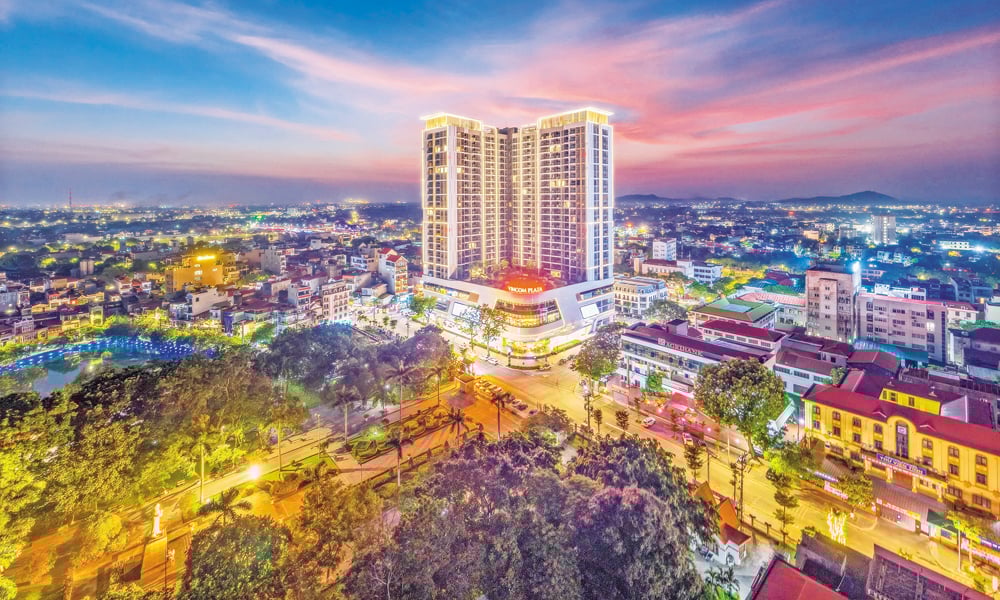 |
Bac Giang ward applies many technologies in urban management. Photo: Tran Van Tuan. |
Meanwhile, Bac Giang ward – formerly the administrative center of Bac Giang province – has also made new strides in deploying technology applications in urban management. Along with the synchronized development of urban infrastructure, the authorities at all levels prioritize resources for building digital platforms in each sector. Typical examples include the operation of the Smart City Monitoring and Operating Center (IOC); upgrading the electronic information portal; applying QR codes for meeting documents; installing and replacing lighting systems; installing free Wi-Fi hotspots in public places; and building smart schools... contributing to improving the quality of life for residents. In 2024, the locality put into operation an automated environmental monitoring station; monitoring data is transmitted directly to the IOC, facilitating the direction and management of the authorities at all levels.
Building upon the unique strengths in infrastructure and technology of previous levels of government, Bac Ninh province continues to strive towards becoming a model smart city. According to experts and scientists, developing a smart city is not simply about applying high technology, but more importantly, about changing governance thinking and placing citizens at the center. The Bac Ninh provincial government has clearly defined this in its urban development plan for the 2025-2030 period, focusing on key areas such as: establishing a smart transportation system, smart resource and environmental management, digital government, smart security and fire prevention, digital economy , and open data. The province will gradually strengthen its automated traffic light system, traffic sensors, and electronic signage along central roads. This will enable traffic flow analysis, congestion warnings, and rapid accident response. Simultaneously, it will maintain and expand the interconnected online public service portal between wards and the province. Establish focal points and consulting units to support businesses in applying digital transformation and accessing open data repositories on urban planning, investment, and development.
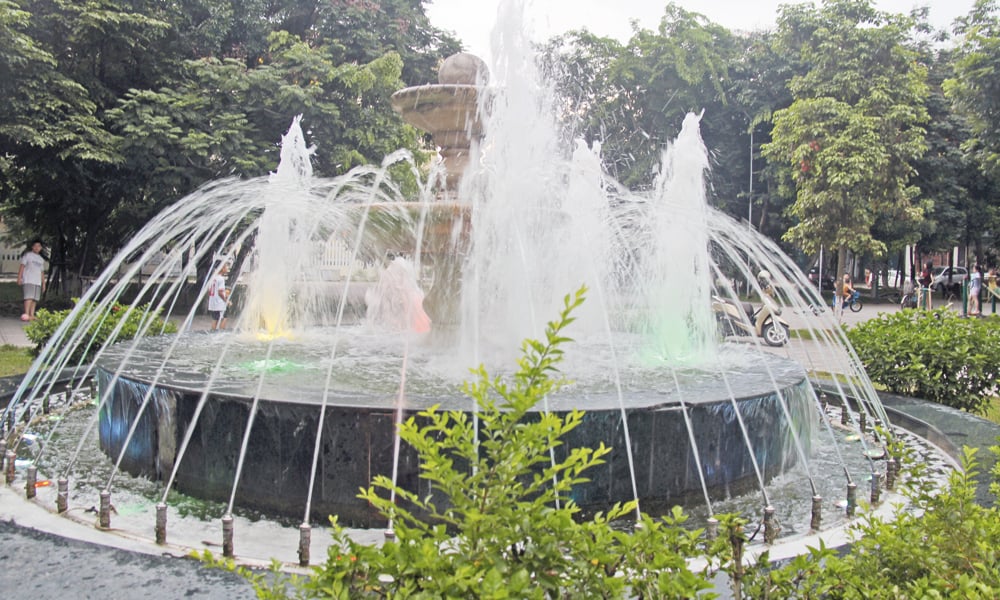 |
Fountains in gardens and parks utilize technology that automatically controls their on/off times, saving electricity and water. |
According to Deputy Director of the Department of Construction Nguyen Ngoc Son, in the early years after the province's merger, Bac Ninh focused on integrating digital infrastructure on existing systems. Functional departments, the Smart City Operations Center, and wards coordinated to gradually identify practical needs and development orientations for each core urban area to invest in and upgrade technology, and apply artificial intelligence to urban development. Currently, the functional departments of the Department are compiling and evaluating the current state of urban infrastructure, the level of technology application, and scientific and technical achievements in urban development management. From there, they are building a roadmap and plan to maintain and promote the achievements gained. The province is developing a plan for the smart, integrated, and modern development of Bac Ninh city. At meetings and workshops on the topic of "Building Smart Cities," provincial leaders consistently affirm that smart city development is not just a destination but also a continuous process of improvement, enhancing the quality of life and management efficiency. The province aims to become a center of industry and a model of modern, safe, and ecological urban governance by 2030.
With a population of over 3.6 million and a strategic location connecting to the Hanoi Capital Region, Bac Ninh province has all the conditions to develop into a modern urban area, aiming to become a centrally-governed city by 2027. The application of information technology, science and technology, and artificial intelligence to all aspects of urban life is a necessary step to realize this aspiration.
Source: https://baobacninhtv.vn/chuyen-dong-manh-me-trong-xay-dung-do-thi-thong-minh-o-bac-ninh-postid422335.bbg
![[Photo] Prime Minister Pham Minh Chinh receives Lao Minister of Education and Sports Thongsalith Mangnormek](/_next/image?url=https%3A%2F%2Fvphoto.vietnam.vn%2Fthumb%2F1200x675%2Fvietnam%2Fresource%2FIMAGE%2F2025%2F12%2F16%2F1765876834721_dsc-7519-jpg.webp&w=3840&q=75)
![[Photo] Prime Minister Pham Minh Chinh receives the Governor of Tochigi Province (Japan)](/_next/image?url=https%3A%2F%2Fvphoto.vietnam.vn%2Fthumb%2F1200x675%2Fvietnam%2Fresource%2FIMAGE%2F2025%2F12%2F16%2F1765892133176_dsc-8082-6425-jpg.webp&w=3840&q=75)


![[Image] Leaked images ahead of the 2025 Community Action Awards gala.](/_next/image?url=https%3A%2F%2Fvphoto.vietnam.vn%2Fthumb%2F1200x675%2Fvietnam%2Fresource%2FIMAGE%2F2025%2F12%2F16%2F1765882828720_ndo_br_thiet-ke-chua-co-ten-45-png.webp&w=3840&q=75)
![[Live] 2025 Community Action Awards Gala](/_next/image?url=https%3A%2F%2Fvphoto.vietnam.vn%2Fthumb%2F1200x675%2Fvietnam%2Fresource%2FIMAGE%2F2025%2F12%2F16%2F1765899631650_ndo_tr_z7334013144784-9f9fe10a6d63584c85aff40f2957c250-jpg.webp&w=3840&q=75)














































![[Photo] Prime Minister Pham Minh Chinh attends the Vietnam Economic Forum 2025](https://vphoto.vietnam.vn/thumb/402x226/vietnam/resource/IMAGE/2025/12/16/1765893035503_ndo_br_dsc-8043-jpg.webp)

























Comment (0)