

Excavations reveal 2,000 years of history beneath Paris.
While crowds patiently queue under the summer sun to visit Notre Dame Cathedral in Paris, another journey is unfolding right beneath their feet.
About 4 meters below the surface, archaeologists are digging deep into the earth, tracing back Paris's past from the Middle Ages all the way to the Roman era, approximately 2,000 years ago.
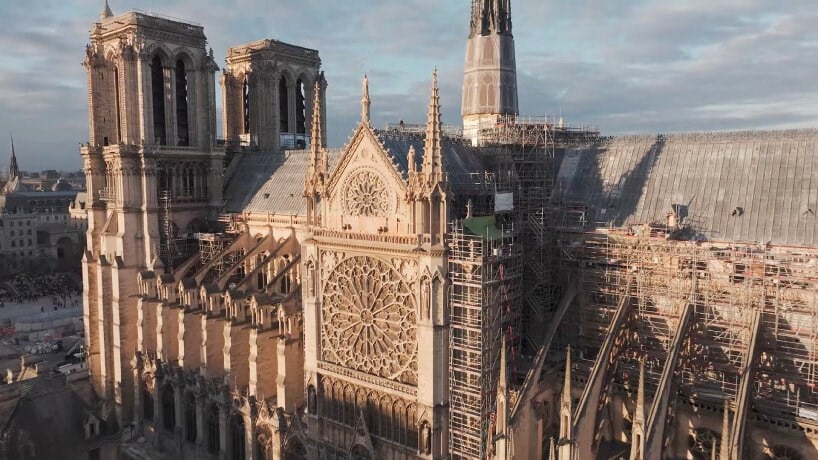
The excavation was carried out during the renovation of the square in front of the cathedral. Following the 2019 fire that caused the collapse of Notre Dame Cathedral's iconic spire, the structure was restored and reopened in late 2024. Parisian authorities now plan to green the large square in front to provide more shade and reduce heat in the summer.
However, in a city with such a long history as Paris, all excavation work must be accompanied by preventative archaeology to ensure that underground relics are not destroyed during the construction process.
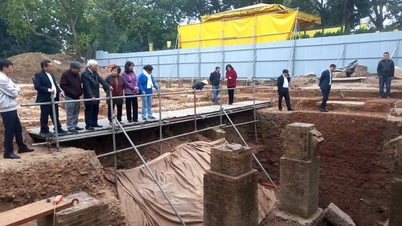
Therefore, part of the square has been transformed into an open-air excavation site, where researchers are exploring layers of history buried beneath the ground.
French media have called this "the excavation of the century".
According to Lucie Altenburg, a conservation expert at the Paris Archaeological Service, this is a rare opportunity for scientists to participate in a project that could change perceptions of the city's history.
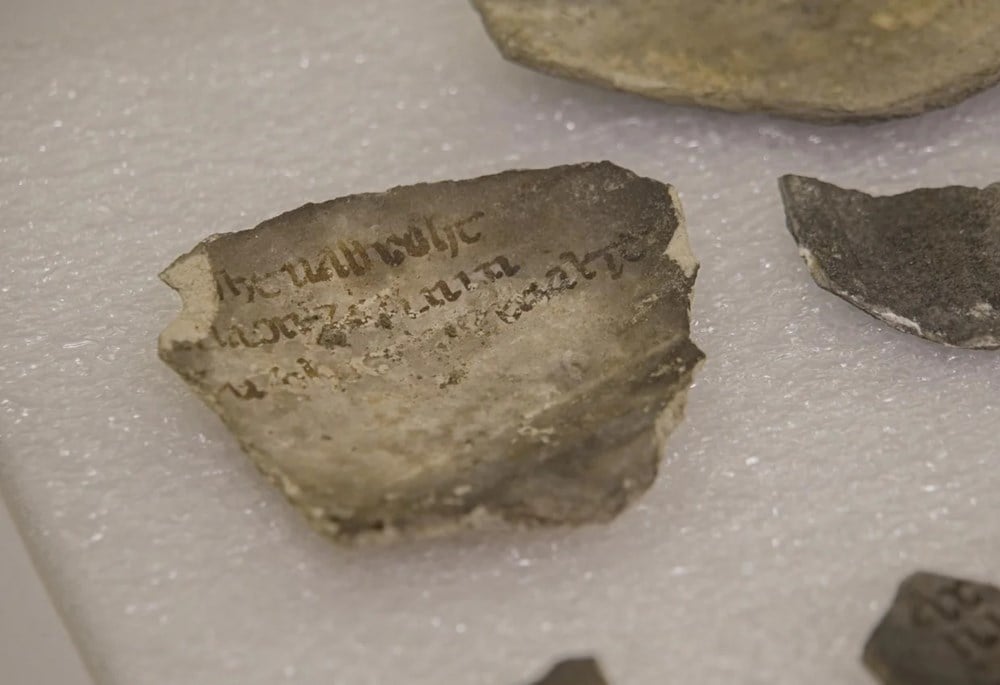
Among the hundreds of artifacts discovered were a 4th-century coin bearing the portrait of Emperor Constantine, along with many fragments of medieval pottery decorated with red symbols that experts have yet to decipher.
The first traces appeared at a depth of about 50cm. The deeper they dug, the more layers of history they discovered. On some days, they recovered up to 15 crates of artifacts from layers of soil that had remained almost untouched for decades.
According to archaeologists, the history of Paris is preserved in layers of geological strata. Each stage of the city's development was built upon the ruins of the preceding period.
Archaeologist Camille Colonna, who is in charge of the excavation, said that when Notre Dame Cathedral in Paris began construction in 1163, the area of what is now the square was a densely populated medieval residential area, separated only by a single street.
Digging deeper, the research team discovered wine cellars from medieval houses. Below were grain silos from the Merovingian and Carolingian periods, dating from the 6th to the 10th centuries. Even deeper were the remains of a bustling Roman settlement from the 4th and 5th centuries.
Roman coins and their unexplained symbols.
One of the most remarkable discoveries came from medieval latrines that were once used as garbage disposal sites. The soft soil in these latrines helped preserve many artifacts almost intact for hundreds of years.
Archaeologists found many pottery vessels, drinking cups, and household items that were still intact, something very rare in archaeology.
However, what has most intrigued researchers are the red symbols discovered inside some fragments of medieval pottery. These symbols appear repeatedly on many artifacts, but their meaning remains undetermined to this day.
According to archaeologist Valentine Breloux, this is one of the most astonishing discoveries in the entire process of working at Notre Dame Cathedral in Paris.
The coins found also played a crucial role in dating the soil layers. Initially, they appeared only as dark, corroded metal discs, but X-ray images revealed the portrait of Emperor Constantine, who ruled the Roman Empire in the early 4th century.
Roman artifacts are of particular importance to archaeologists because this period of history still leaves many gaps in our understanding of ancient Paris, when the city was still called Lutetia.
The research team also discovered a Roman step that once belonged to a larger structure, which was later dismantled, transported, and reused as paving material in a later period.
Each artifact, once unearthed, is transported to the city's archaeological center for preservation and research.
According to scientists, opportunities for excavation in historical centers like Notre Dame Cathedral in Paris are extremely rare. Such research usually only takes place when new construction projects are underway.
By 2028, the square in front of Notre Dame Cathedral in Paris is expected to be renovated into a green space with approximately 160 new trees, water-based cooling systems, and a modern reception area overlooking the Seine River.
However, for the archaeologists, the journey is far from over. After accessing layers of Roman remains, they hope to dig even deeper to find traces of the Gauls, the first inhabitants who named the land that would later become Paris.
Archaeological discoveries at Notre Dame Cathedral in Paris are not the first to attract attention. In 2022, scientists found several ancient tombs and a nearly perfectly preserved lead sarcophagus dating back to the 14th century. Along with these were painted sculptures belonging to the cathedral's original 13th-century screen.
By 2023, researchers further confirmed that Notre Dame Cathedral in Paris was the first Gothic cathedral to extensively use iron nails in its construction, a detail only discovered after the 2019 fire exposed parts of the building's interior.
Source: https://baovanhoa.vn/the-gioi/cuoc-khai-quat-the-ky-duoi-chan-nha-tho-duc-ba-paris-233717.html


![[Photo] Delegation attending the 14th Congress of the Vietnam Trade Union visits the Mausoleum of President Ho Chi Minh.](https://vphoto.vietnam.vn/thumb/1200x675/vietnam/resource/IMAGE/2026/06/03/1780451842301_ndo_br_img-3824-jpg.webp)




























































































Comment (0)