

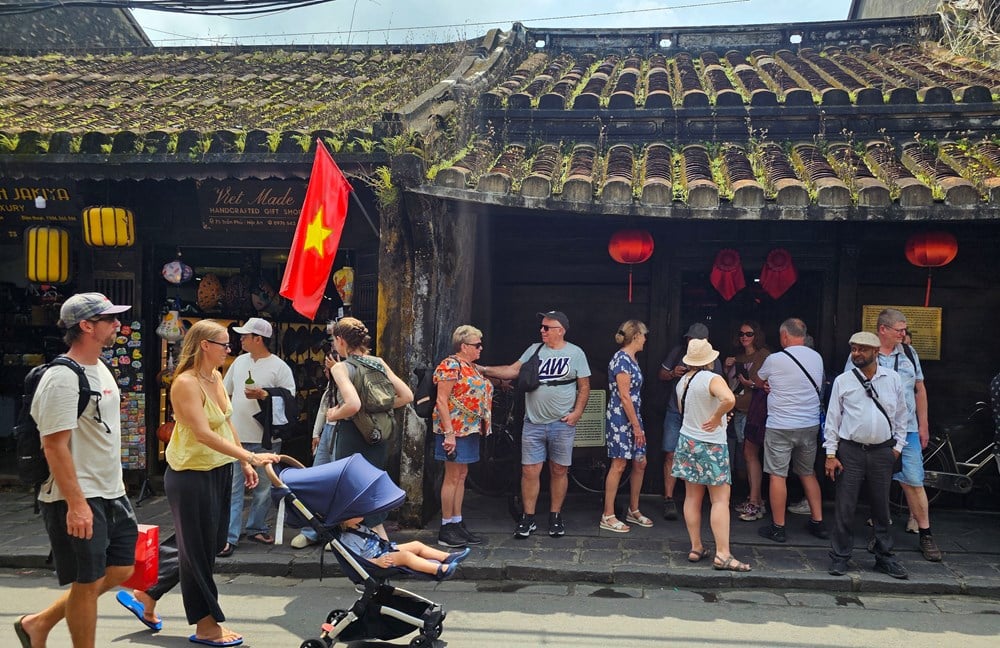
Understanding the culture - the foundation for improving service quality.
In recent years, Da Nang has gradually built an image of a friendly, safe, and hospitable destination in the eyes of international tourists. However, along with the strong recovery of the tourism industry after the pandemic, the structure of the tourist market has also changed rapidly, leading to new requirements in service organization and human resource training.
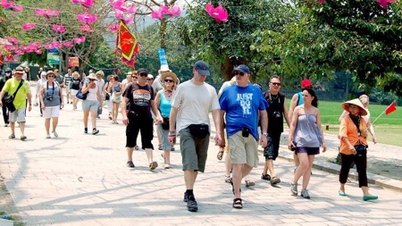
A noticeable trend is the increasing number of tourists from markets with distinct cultural characteristics, such as Islamic countries, India, the Middle East, or countries belonging to the Commonwealth of Independent States (CIS). This creates an urgent need for cultural adaptability throughout the entire tourism service chain.
In Hoi An, Halal-standard cuisine is being pioneered by several establishments. A representative from one restaurant stated that serving Muslim customers is not simply about changing the menu, but requires a comprehensive standardization process from ingredients and preparation methods to the dining environment.
Staff are trained in basic English communication along with specific phrases for Muslim guests, and are also familiar with principles such as not using pork, not serving alcoholic beverages, and ensuring food sources meet Halal standards. Religious considerations such as prayer times, privacy, and appropriate behavior are also given careful attention.
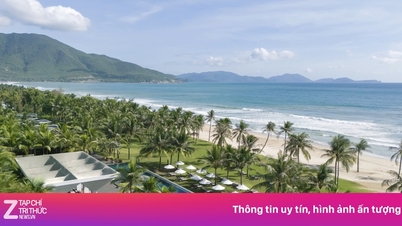
In the accommodation sector, many high-end establishments are also proactively raising service standards by diversifying the experience. A 5-star resort in Hoi An has improved its rooms, amenities, and landscaping to meet the needs of various guest groups such as families, couples, or those staying for extended periods.
Simultaneously, a service culture based on international standards is being developed. Staff receive thorough training in customer care skills, multilingual communication, and visitor experience management. On-the-job training is enhanced to improve practical skills and maintain consistency in service quality.
Notably, many businesses are beginning to apply technology and artificial intelligence (AI) to their operations. Data analytics systems help predict the needs of different customer groups to personalize services and optimize the experience. Amenities such as self-check-in also contribute to shortening waiting times, creating convenience for travelers right from the start of their journey.
From restaurants to hotels, from basic to high-end services, the current trend is to combine professional skills with cultural understanding. This is also the foundation for improving service quality in the context of the increasingly integrated tourism industry.
A long-term strategy is needed for each customer market.
According to experts, the rapid changes in the international tourism market are creating an urgent need for a shift in service mindset. While friendliness was previously considered a competitive advantage, it is no longer sufficient in the current context.
A representative from a travel agency commented that while Da Nang's tourism workforce is large and possesses a relatively good foreign language foundation, it still needs more specialized training to meet new demands. Standardizing both personnel and service processes is considered a key solution.
Accordingly, all personnel involved in the service chain – from receptionists, restaurant staff, drivers, tour guides to staff at destinations – need to receive regular training in intercultural communication, etiquette, and situation handling. In particular, the principle of respecting differences and non-discrimination must be prioritized in serving international tourists.
For specific markets such as Muslim or Indian, separate training programs are needed, focusing on consumer habits, beliefs, culinary requirements, and privacy preferences. This helps minimize errors in service and enhance the customer experience.
Besides the human factor, destination management is becoming increasingly important. In the age of rapidly developing social media, every feedback from tourists can spread very quickly and directly impact the image of a destination. Therefore, building a mechanism for receiving and processing feedback quickly, transparently, and responsibly is an indispensable requirement.
A professional destination is not one where incidents don't happen, but one that responds promptly, proactively, and fairly to all situations. This is also a factor that helps build trust and create a positive image in the eyes of international tourists.
From a management perspective, Da Nang City has issued a plan to improve the quality of tourism services by 2026, focusing on strengthening state management, standardizing infrastructure, and improving the quality of human resources. This is considered a necessary step to create a foundation for the sustainable development of the tourism industry. However, the current challenge remains how to maintain the "hospitable" brand in an increasingly diverse market. Each group of tourists has different cultural characteristics, habits, and needs, and conflicts can easily arise if not properly organized.
To address this issue, the city's tourism industry is strengthening coordination with associations and travel businesses to conduct in-depth research on each tourist market, thereby proposing appropriate solutions, aiming to build a harmonious and balanced tourism ecosystem.
In the future, planning dedicated areas for specific groups of tourists could also be considered. This solution optimizes the experience while minimizing cultural and customary clashes, contributing to a more civilized and friendly tourism environment.
In this new stage of development, improving service quality has become a vital requirement for Da Nang tourism. From human resource training and service standardization to destination management, every aspect needs to be implemented synchronously and systematically. Maintaining the "hospitable" brand today is no longer just about a beautiful image, but about a commitment to service quality, professionalism, and the ability to adapt to each tourist market. Only by achieving this can Da Nang continue to maintain its position as one of the leading attractive destinations in the region.
Source: https://baovanhoa.vn/du-lich/tu-men-khach-den-chuan-phuc-vu-quoc-te-233729.html

![[Photo] Secretary of the National Assembly Party Committee, Chairman of the National Assembly presides over the meeting of the Standing Committee and Executive Committee of the National Assembly Party Committee.](https://vphoto.vietnam.vn/thumb/1200x675/vietnam/resource/IMAGE/2026/06/03/1780480353201_ndo_br_bnd-2585-jpg.webp)


![[Photo] First session of the 14th Congress of the Vietnam Trade Union](https://vphoto.vietnam.vn/thumb/1200x675/vietnam/resource/IMAGE/2026/06/03/1780465947883_ndo_br_img-3852-jpg.webp)
































![[Video] Sunset at Lap An Lagoon – Where the sun sets over the fishing nets](https://vphoto.vietnam.vn/thumb/1200x675/vietnam/resource/IMAGE/2026/05/31/1780192137701_beach-landscape-sea-water-nature-grass-745871-pxhere-com.jpeg)

























Comment (0)