

285 undeveloped public land plots - To be saved or wasted?
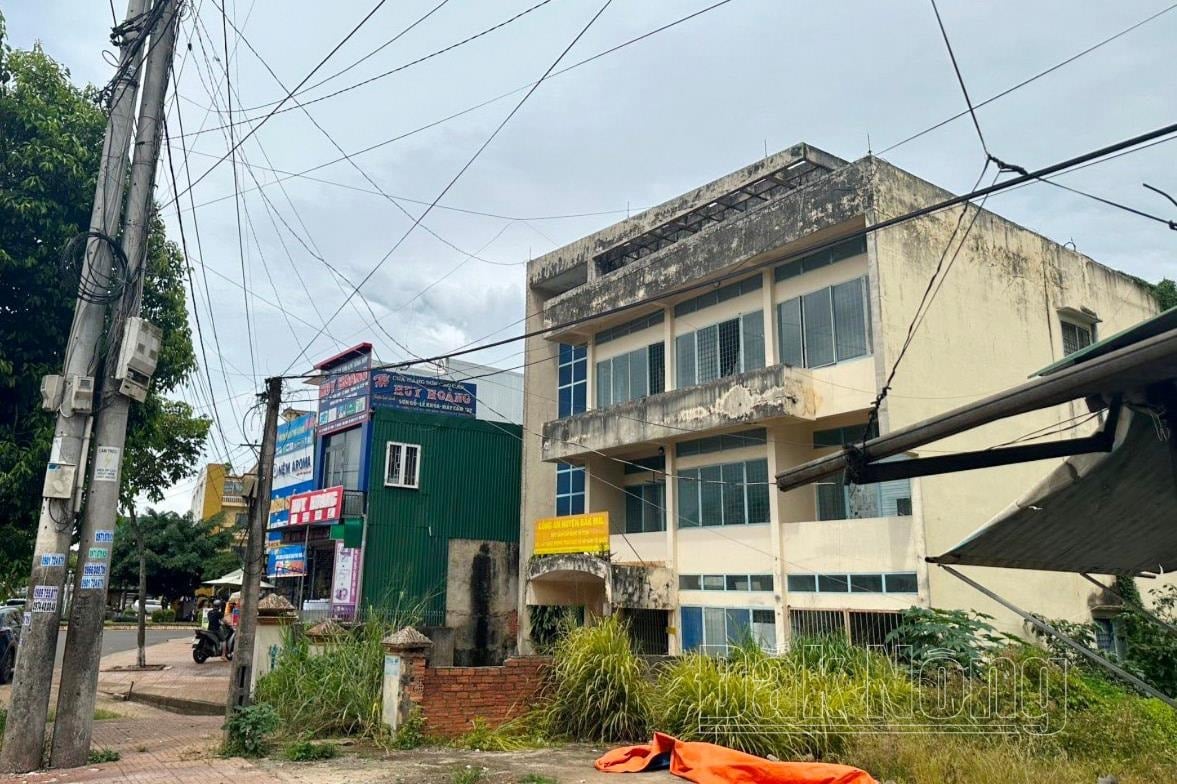
Gia Nghia currently has many vacant public land plots. The Thong Xanh Hotel land plot, located on 23/3 Street, is considered a prime piece of land due to its advantageous location.
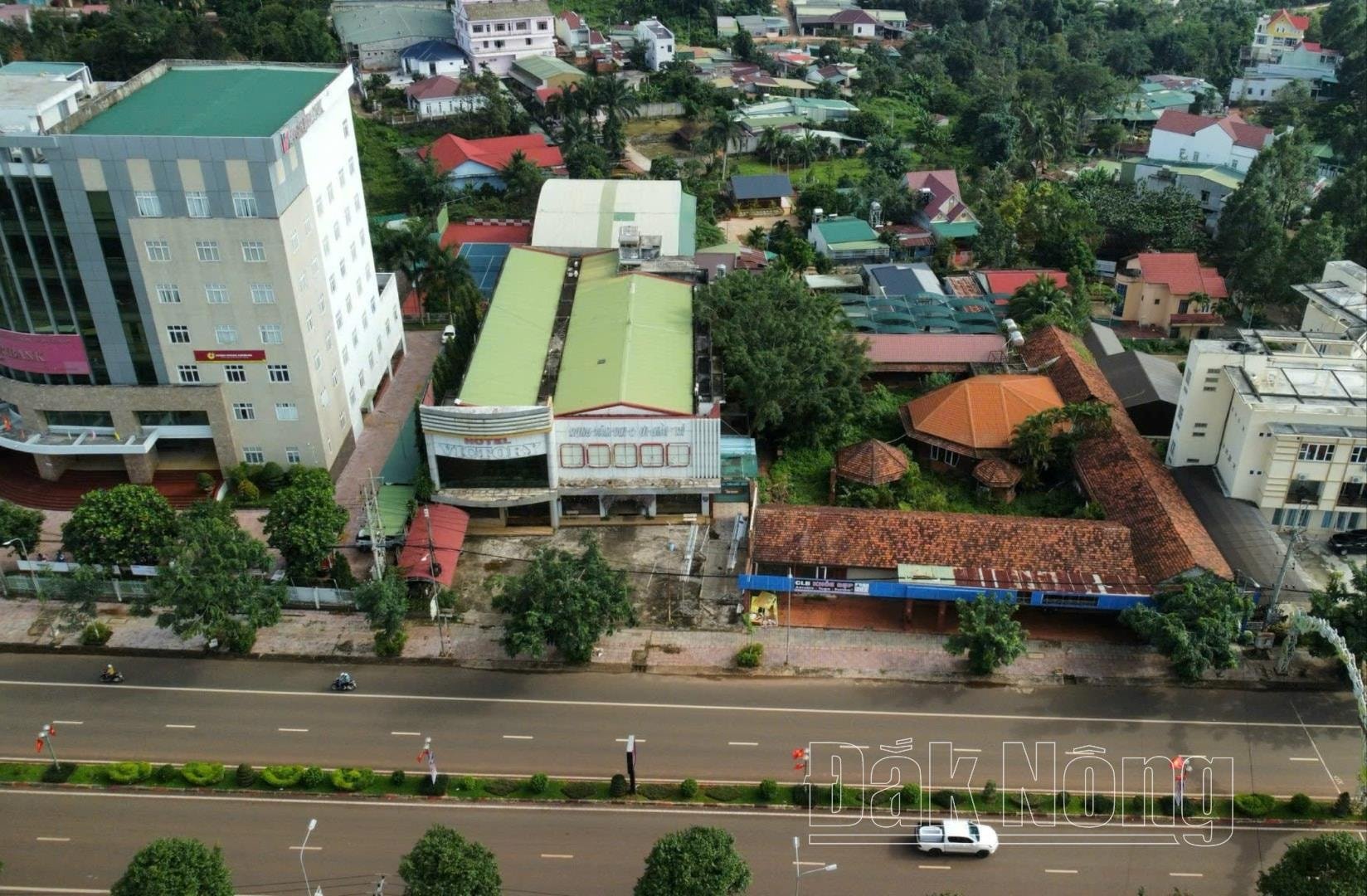
This plot of land has been eyed by many businesses considering investing in Dak Nong. However, for various reasons, its value has not been realized over the years.
According to the Land Development Center (Dak Nong Department of Natural Resources and Environment), in October 2018, the unit received the handover of this land area in accordance with Decision No. 1426/QD-UBND of the Provincial People's Committee.
The land plot has an area of approximately 4,255.6 m2. Previously, this land plot was under the management and use of Gia Nghia One-Member Limited Liability Company.
Currently, the land plot is occupied by assets held in a joint venture between Tan Phat Dak Nong Automobile Co., Ltd. and Gia Nghia Co., Ltd.
The valuation, relocation of assets, and handover of the site have not been completed. This means that the procedures and documentation are not yet complete for conducting the auction.
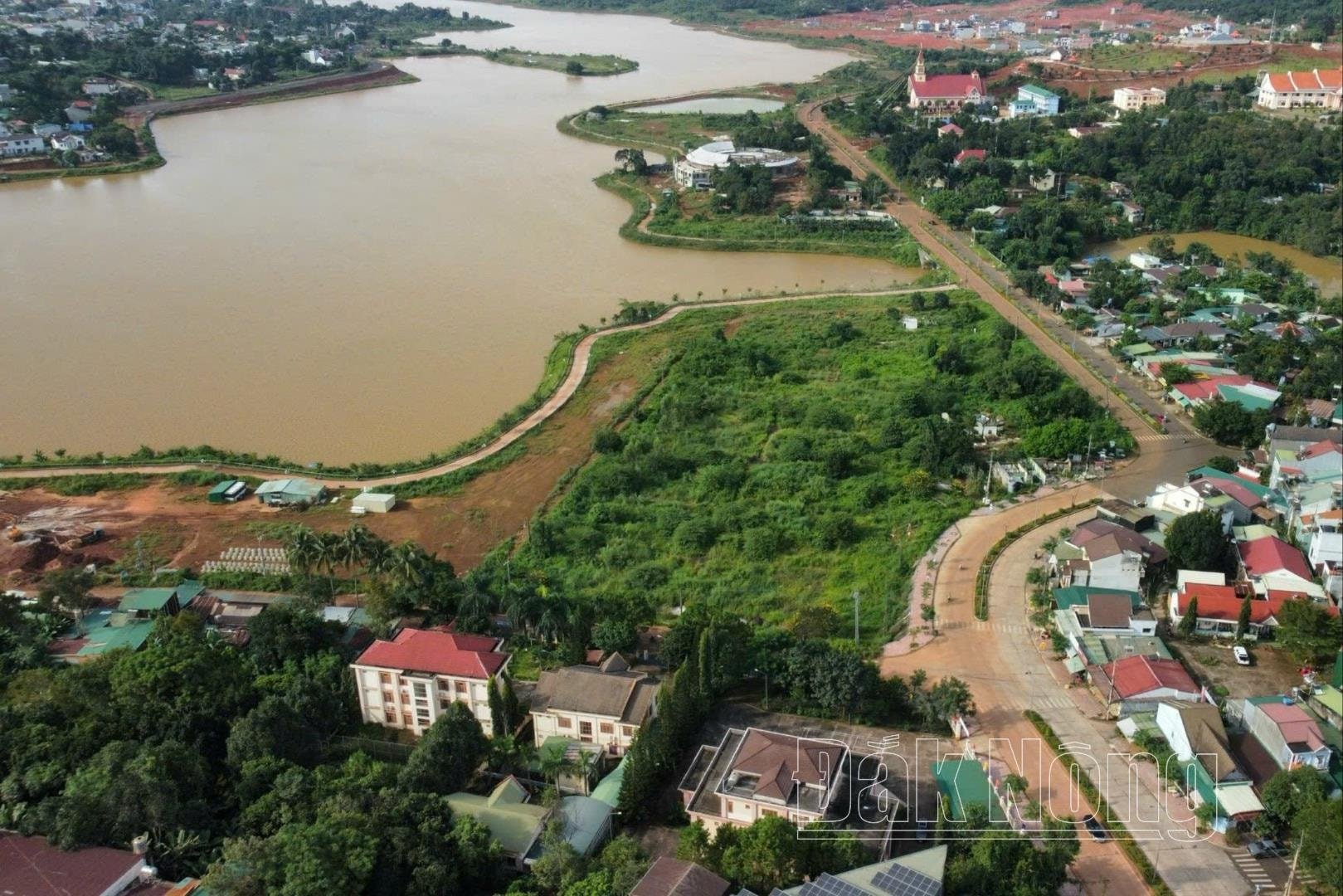
Not far from there, the 29,998 m2 plot of land formerly belonging to the Public Housing Complex is currently vacant. This is also considered one of the "prime land" areas. Despite its advantageous location, the area remains overgrown with weeds and vegetation due to its lack of development.
According to the People's Committee of Gia Nghia City, the land plot was previously subject to lengthy land clearance issues that lasted for many years. Recently, the local authorities have resolved the matter and handed it over to the Provincial People's Committee. However, due to some bureaucratic obstacles, the auction cannot yet be held.
Not only in Gia Nghia City, but also in Dak Mil and Cu Jut districts, many public land plots along major roads remain unused. Furthermore, many of these plots are being eyed by investors but cannot be auctioned off.
According to the Department of Finance, Dak Nong currently has 285 surplus land plots. Of these, 141 plots have been proposed by local authorities to be retained for allocation and use according to planning. The remaining 144 plots are expected to be leased through auction during the 2023-2025 period.
Of the 285 surplus land plots, 97 are ready for immediate auction. However, for various reasons, the rate of land use rights auctions in Dak Nong has remained low in recent years.
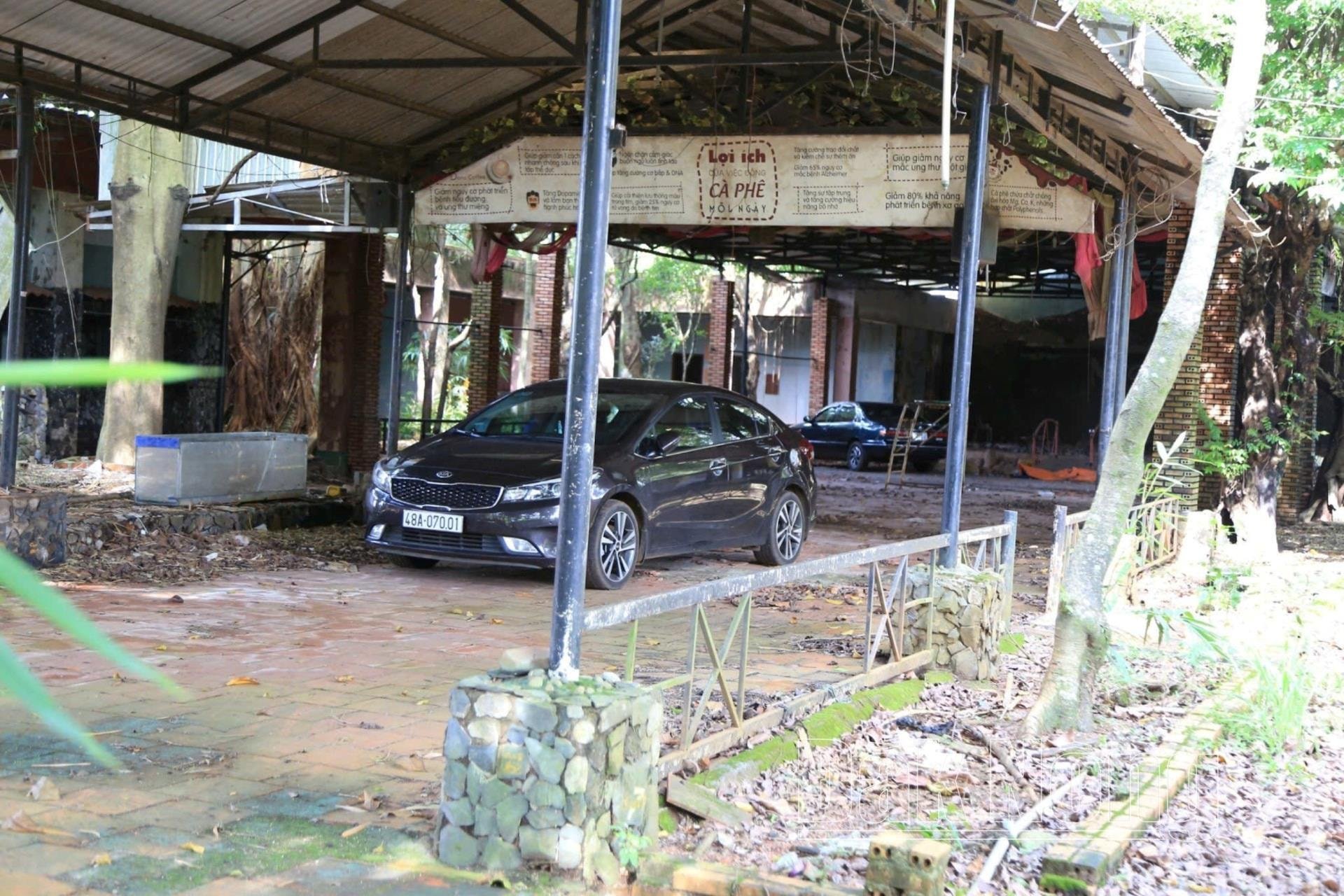
In reality, the rate of successful conversion and auction of public land is very low. There are many reasons for this, including: obstacles in mechanisms and policies; planning constraints; and a lack of close coordination among relevant units…
Therefore, the wasteful use of public land inevitably leads to a low proportion of the budget allocated to this sector.
Regarding this issue, the Director of the Department of Natural Resources and Environment, Nguyen Van Hiep, affirmed: "Land that has not been sold or leased is still there. However, in the short term, leaving land unused for too long will lead to a waste of resources and budget contributions."
Without proper management, exploitation will face difficulties in reinvestment.
Annually, revenue from land-related activities accounts for approximately 20-30% of the total budget revenue in Dak Nong. Sources of land revenue include: land auctions; land use conversion; land leasing; and land allocation with land use fees…
In 2024, Dak Nong province was allocated a state budget of 3,300 billion VND. Of this, revenue from land-related activities alone amounted to 850 billion VND, accounting for nearly 26%. By early December 2024, Dak Nong's actual budget revenue reached 2,800 billion VND, achieving nearly 85% of the annual target.
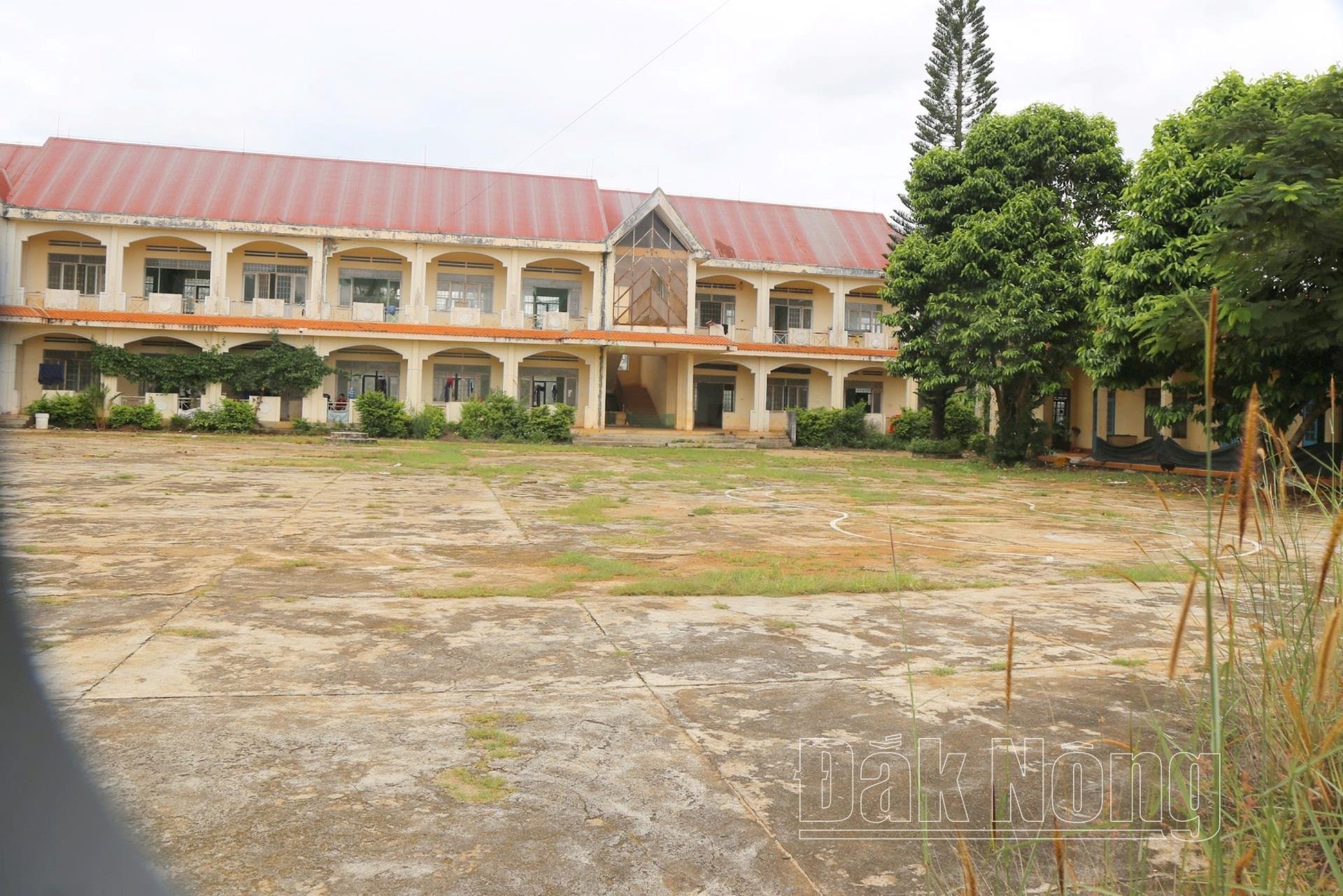
Of that total, revenue from land use fees accounts for a very low percentage. To date, the total revenue from land use fees in the province has only reached 361 billion VND, or 42.5%. Within that, revenue from land allocation and land auctions accounts for a very small amount.
Since the beginning of the year, many localities have collected virtually no revenue from land allocation and land auction activities. Examples include Dak Mil and Gia Nghia...
In reality, a number of public land plots in Dak Nong are being managed and utilized inefficiently. This situation has persisted for many years, leading to wasted resources and failing to generate significant revenue for development or local government budgets.
Dak Nong has 285 public land plots. Of these, nearly 100 plots can be put up for auction immediately (13 at the provincial level; 84 at the district and city level).
Nguyen Van Pho, Deputy Director of the Dak Nong Department of Finance
"We haven't been able to compile the exact figures yet. However, if we do a rough calculation, just 100 'clean' land plots successfully auctioned could bring in hundreds of billions of dong for the state budget," Mr. Pho affirmed.
Public land that is not utilized effectively means that its surplus value will not increase. This is a major bottleneck in socio-economic development. Annual state budget revenue includes: revenue from taxes, fees, land use fees, and other financial measures.
Tax, fee, and levy revenues are primarily allocated to recurrent expenditures. Revenue from the land sector will largely be used for reinvestment in infrastructure and urban development.
Therefore, if land resources are wasted and revenue from land is low, it means that funding for development investment will be difficult. Once development investment spending is limited, public investment will stifle economic growth at the local level.
Regarding land issues, especially public land in Dak Nong, Associate Professor Dr. Tran Hoang Ngan, Director of the Ho Chi Minh City Institute for Development Research, noted that Dak Nong has a very large land area, particularly public land. However, the province's exploitation of this potential remains limited.
If land resource exploitation is neglected and poorly managed, it will be difficult to mobilize capital. Once capital mobilization becomes difficult, where will the province get the resources for reinvestment?
Associate Professor Dr. Tran Hoang Ngan, Director of the Ho Chi Minh City Institute for Development Research
Source: https://baodaknong.vn/dak-nong-khat-von-dau-tu-nhung-dat-cong-con-o-khong-236947.html


![[Photo] Standing Committee member of the Party Central Committee Tran Cam Tu working with the Central Inspection Committee](https://vphoto.vietnam.vn/thumb/1200x675/vietnam/resource/IMAGE/2026/05/28/1779969579668_ndo_br_bnd-2495-jpg.webp)



































































Comment (0)