

Gifu Prefecture is renowned for its picturesque scenery, and Hida is an ideal location for cycling along tranquil rural trails through Japan.
Besides being famous for Shirakawa-go village – a UNESCO World Heritage site characterized by its traditional gassho-zukuri thatched-roof houses; Gifu Prefecture also boasts many peaceful villages with picturesque scenery, perfect for travelers who enjoy learning about local traditional culture and immersing themselves in nature.
Hida City, located in the northern part of Gifu Prefecture, is famous for its rural cycling experience (also known as Hida Satoyama Cycling). On a bicycle with guidance from locals, visitors can explore small villages scattered along the route, with their traditional thatched-roof houses and typical Japanese rural landscapes, creating a vibrant picture.
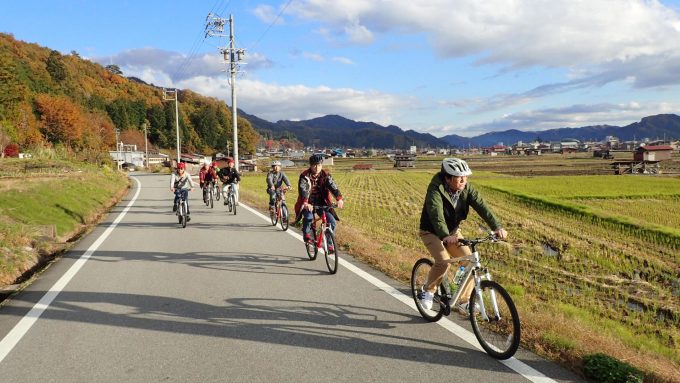
Cycling as part of a sustainable tourism experience in rural Japan attracts many visitors. Photo: Satoyama Experience
The Hida Satoyama Cycling Trail winds through ancient forests, alongside crystal-clear streams and lush green valleys. Cycling along these trails is not only a physical activity but also a form of therapy, helping visitors relax and embrace a greener, slower pace of life, temporarily escaping the hustle and bustle of major cities like Nagoya, Osaka, or Tokyo.
Visitors on this tour also have the opportunity to visit traditional craft workshops, tour vegetable gardens, and experience being a farmer for a day. Another special highlight is participating in cooking workshops, learning how to make sushi or soba (a traditional Japanese noodle dish) from locals. Hida is also famous for its sake, so after returning the bikes after the bike tour, visitors can explore a sake brewery and sample hundreds of different types.
An important part of this experience is connecting with the local community. Visitors are not only welcomed by the friendliness of the people but also have the opportunity to learn about the history and traditions of the area through stories and conversations with the locals.
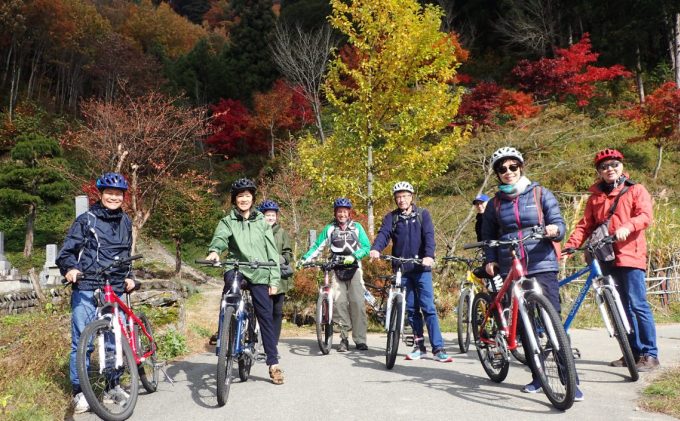
Visitors will cycle with a local guide for several hours and listen to stories about the history of Japanese rural life. Photo: Satoyama Experience
According to the Japan National Tourism Organization (JNTO) in Vietnam, the Hida Satoyama Cycling experience follows a sustainable tourism development model, demonstrating respect for and preservation of local culture. The area has developed a satoyama culture, signifying harmonious living with nature. Therefore, weather conditions are crucial to the cycling experience. Typically, on days with bad weather, such as rain or storms, the tour will be rescheduled to a more favorable day.
The Satoyama Experience, launched in 2010, offers tourists the opportunity to experience sustainable rural life in Gifu. Previously, the area was very isolated and only accessible via limited mountain roads. Local people learned to use rice not only as a food source but also as a building material and for clothing made from the straw after harvest. This rich cultural tradition is still respected by the Hida people, even as Japan and the world are modernizing and facing sustainability challenges.
Satoyama Experience offers a variety of cycling tour options to suit different interests and time constraints. From standard three-and-a-half-hour tours that offer a balance between village life and nature, to private tours suitable for beginners or families with young children, and even premium adventure tours through mountains and forests.
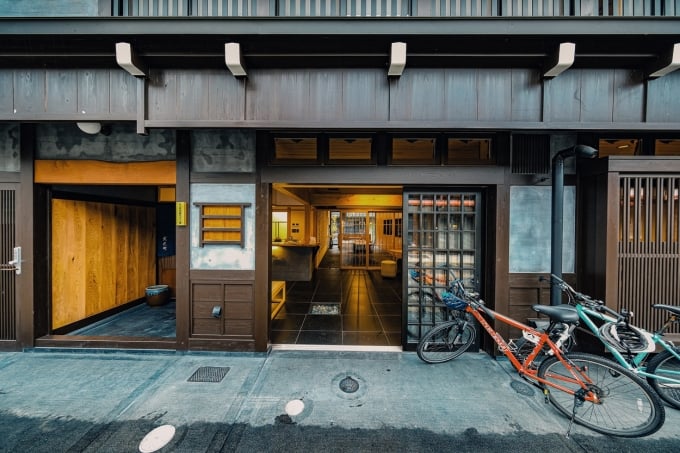
The pick-up and drop-off point for bicycles at Hida Satoyama Cycling. Photo: Nick M
According to the latest statistics on visitors to Japan released by JNTO, the number of visitors from Vietnam to Japan between January and November 2023 reached 536,800, surpassing the record of 495,051 in 2019 and setting a new all-time high. Statistics on international visitors to Japan in December will be released in January 2024, so the total number of visitors for the whole year of 2023 is expected to increase even further.
According to Mr. Yoshida Kenji, Chief Representative of JNTO in Vietnam, in 2024, the number of tourists from Vietnam to Japan will continue to increase. JNTO will also work with organizations and individuals in the tourism industry to promote three new tourism strategies proposed by the Japanese government: "Sustainable Tourism Development," "Attracting Increased Consumption," and "Promoting Local Visits," right here in Vietnam, thereby contributing to boosting tourist exchanges between the two countries.
>> Suggestions for popular cycling tours exploring the countryside in Hida
Nick M.
Source link


![[Photo] The courage of new recruits of Brigade 144 on the training ground.](https://vphoto.vietnam.vn/thumb/1200x675/vietnam/resource/IMAGE/2026/05/27/1779881651341_anh-man-hinh-2026-05-27-luc-18-32-52.png)
![[Photo] The heat at the fireworks display site on the opening night of the Da Nang International Fireworks Festival 2026](https://vphoto.vietnam.vn/thumb/1200x675/vietnam/resource/IMAGE/2026/05/27/1779889741485_ndo_br_z7872039145157-fecaba5112f39e8352544099d7ef4738-5140-jpg.webp)



























































































Comment (0)