

In recent years, digital transformation is no longer a foreign concept in agricultural production in the Mekong Delta. In rice fields, greenhouses, or aquaculture areas, many farmers have begun using smartphones to monitor the weather, keep production logs, manage crops, and access new farming techniques.

Many cooperatives are showing interest in applying digital technology to trace the origin of agricultural products. Photo: Kim Anh.
Speaking to the Agriculture and Environment Newspaper at the seminar "Digital Solutions Gradually Changing the Way Agriculture is Practiced in the Mekong Delta," Dr. Truong Minh Thai from the School of Information Technology ( Can Tho University) stated that smart agriculture, or precision agriculture, is essentially a combination of information technology, digital technology, automation, and data to support farmers in making more effective decisions in production. Instead of farming based entirely on experience, farmers will rely on data about the environment, crop and livestock needs, and actual conditions to choose appropriate solutions.
The core of smart agriculture is aiming for the "five rights": right input, right time, right location, right dosage, and right farming method. To achieve this, farmers need data on the production environment, the nutritional needs of crops, and fluctuations in natural conditions.
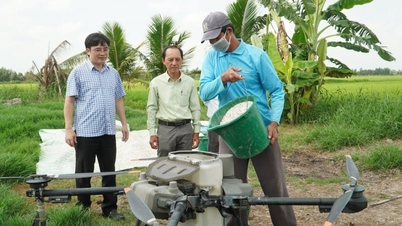
Arising from these practical needs, many digital technology solutions have been implemented in production in the Mekong Delta region. Among them, artificial intelligence (AI) is seen as a tool to support more accurate decision-making for farmers. IoT sensor systems help collect environmental data and monitor production conditions, while automation contributes to saving labor and reducing costs.
Furthermore, digital technology helps the agricultural sector solve the problem of traceability and transparency in the value chain. Current cloud computing platforms allow farmers to manage the entire production process in a digital environment, from keeping logs and monitoring crops to managing planting area codes.
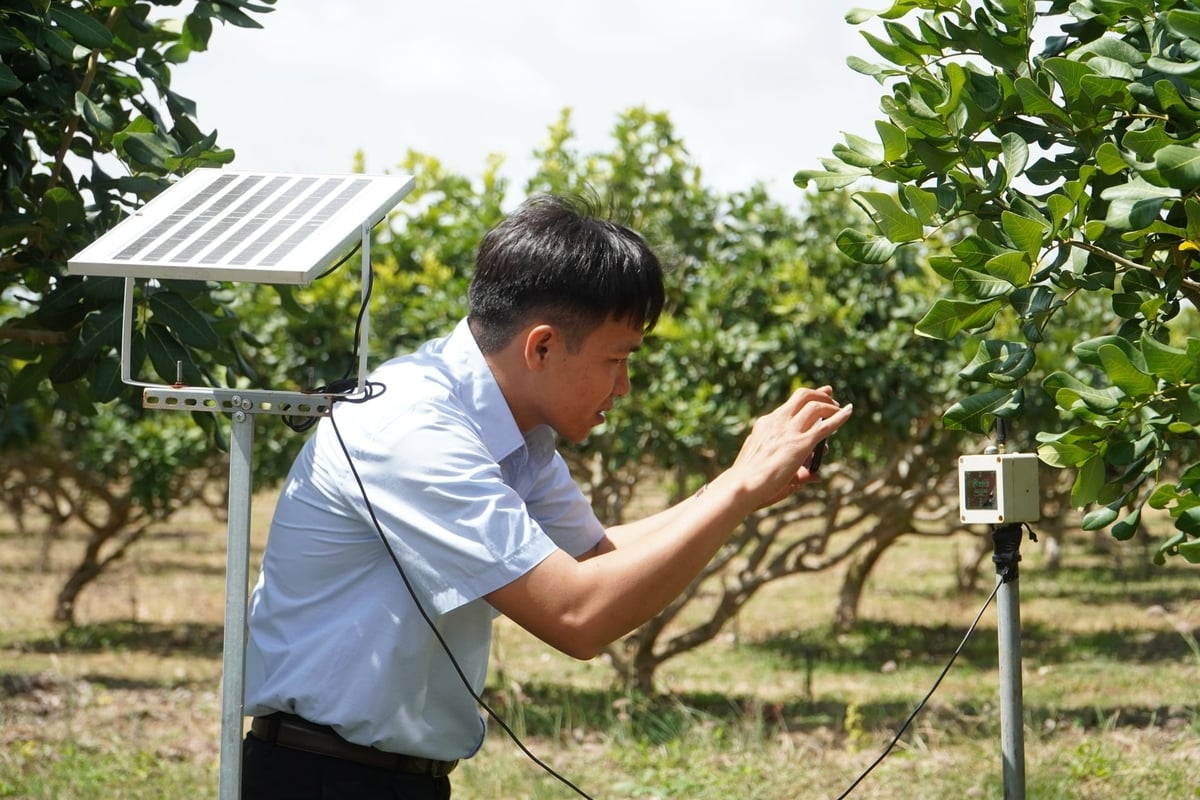
Farmers in production areas frequently affected by saltwater intrusion have adopted IoT sensor systems to monitor soil moisture. Photo: Kim Anh.
In particular, blockchain technology is being seen as a suitable solution for storing and verifying information in the agricultural production chain. Digitally recording farming logs not only helps to make the production process transparent but also builds trust in the consumer market, especially for export products.
According to Ms. Huynh Kim Dinh, Deputy Director of the National Agricultural Extension Center, models applying digital technology to manage growing areas, trace origins, record production logs, and measure greenhouse gas emissions are yielding clear results in the Mekong Delta. These models not only help increase the value of agricultural products but also contribute to increasing people's income through the transparency of the production chain.
According to Ms. Dinh, applying digital technology in smart agriculture also helps to make more accurate decisions in production, improve productivity and quality, and increase the competitiveness of agricultural products in the Mekong Delta region.
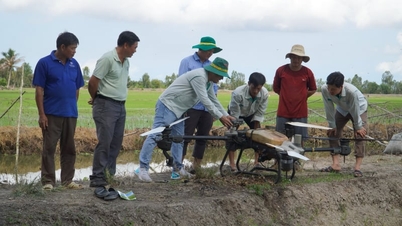
One notable trend today is the shift from data digitization to automation. Many models have implemented automated water level measurement systems in rice production or used identification technology to measure pests and natural enemies in the fields. From the collected data, farmers can make more informed decisions about pest management, reduce pesticide use, and strive for ecological balance.
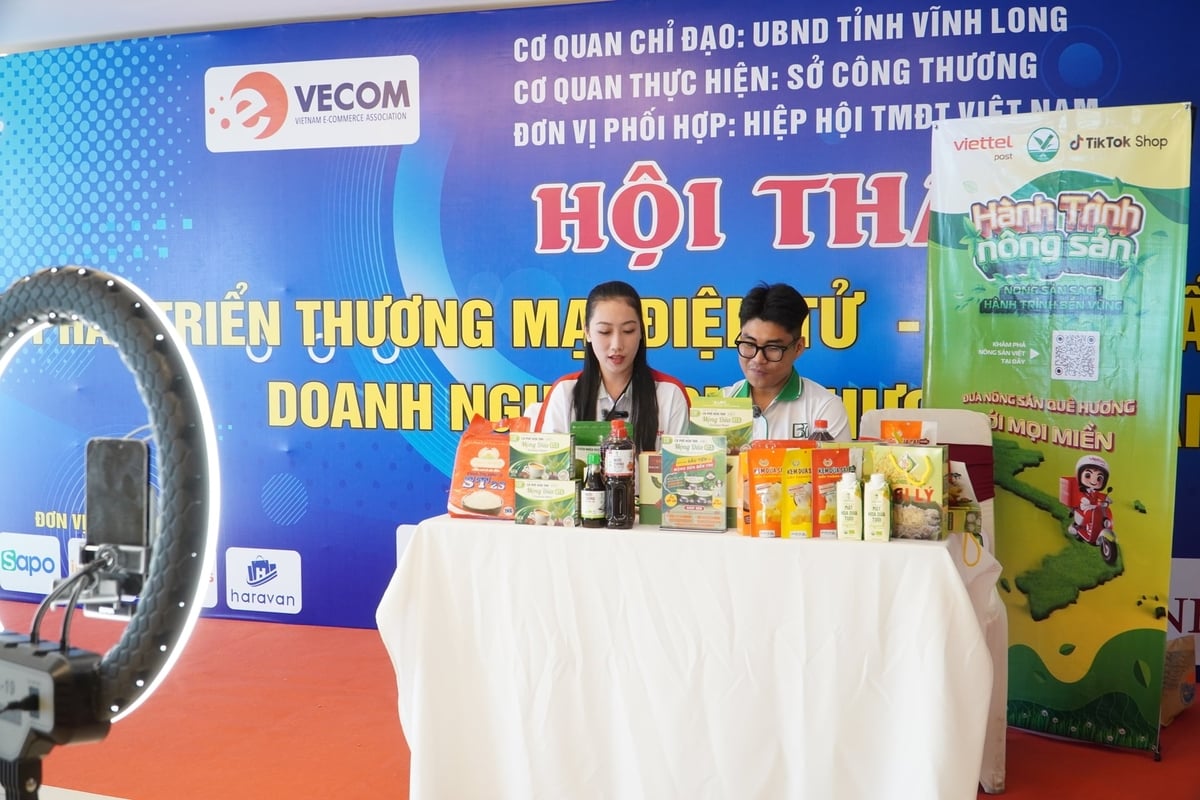
Digital technology has become an effective tool for localities in the Mekong Delta to introduce and promote their products. Photo: Kim Anh.
In addition, agricultural extension workers are gradually becoming "digital coaches" at the grassroots level. Besides providing guidance on farming techniques, extension officers also assist farmers in installing applications, creating accounts, using software, and accessing digital platforms to support production.
Currently, many localities in the Mekong Delta have formed digital agricultural extension teams, connecting with experts, research institutes, and related organizations to build digital technology models suitable to the actual conditions of each locality.
According to Dr. Truong Minh Thai, the important factor in the development of smart agriculture is not the number of participants but the farmers' ability to practically apply digital technology. Evaluating effectiveness should be based on the degree of change in awareness, the ability to maintain technology use, and the actual benefits farmers receive after each production season.
Source: https://nongnghiepmoitruong.vn/dbscl-tang-toc-phat-trien-nong-nghiep-thong-minh-d811294.html


![[Photo] Standing Committee member of the Party Central Committee Tran Cam Tu working with the Central Inspection Committee](https://vphoto.vietnam.vn/thumb/1200x675/vietnam/resource/IMAGE/2026/05/28/1779969579668_ndo_br_bnd-2495-jpg.webp)
































































Comment (0)