

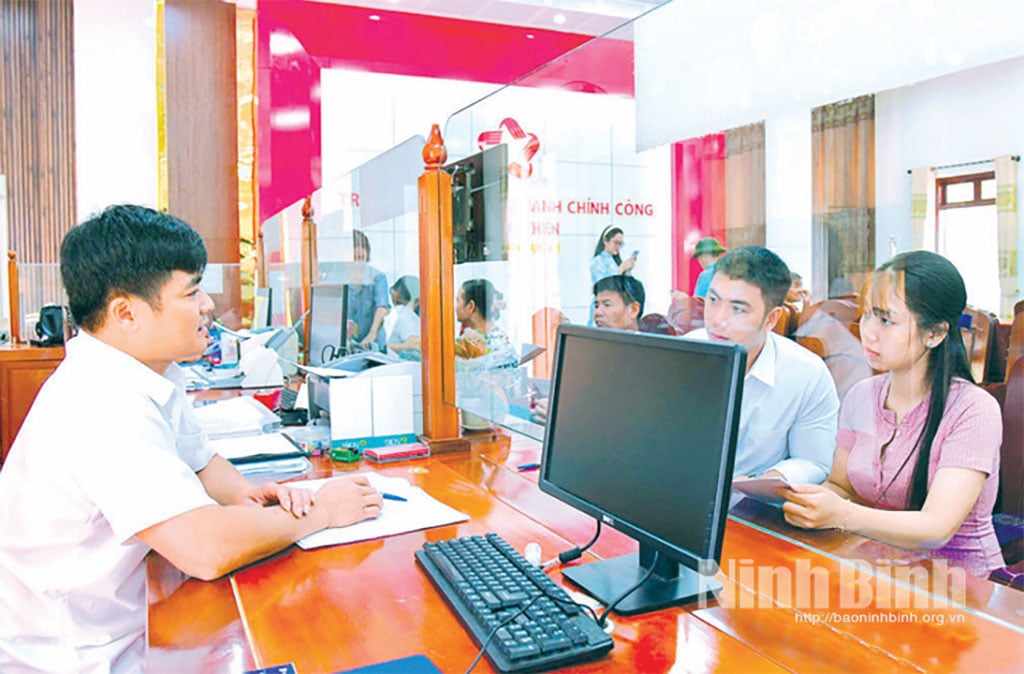
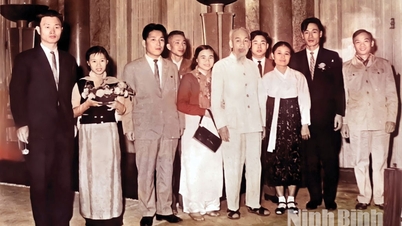
Throughout his life, President Ho Chi Minh always held deep affection for the land and people of this region. He visited many times to encourage the people, cadres, and Party members during important revolutionary periods and stages: the drought relief movement, the production increase movement, the cooperative movement, and visits to workers in factories and farms… On each visit, he always reminded cadres and Party members to always uphold the spirit of unity, set a good example, and wholeheartedly serve the people.
Bearing in mind those sacred teachings, the spirit of responsibility towards the people is multiplied many times over as Ninh Binh enters a new chapter after the historic merger. On this new journey, the province's new stature creates a strategic development space, connecting the coastal economic corridor, the Red River Delta, and the capital region.
However, larger scale also means greater responsibility. The initial administrative apparatus of the merged two-tiered local government model inevitably faced organizational disruptions, changes in staff morale, and a lack of standardization in work processes.
This challenge is where the political acumen and sense of responsibility of cadres and Party members in studying and following the thoughts, ethics, and style of President Ho Chi Minh are put to the test and affirmed. Cadres and Party members in the province see this as an opportunity to "reflect on President Ho Chi Minh's example," using the idea of "the people are the foundation" to strengthen unity and solidarity, quickly stabilize the organization, and put the lives of the people on a path of stable development.
Studying and following Ho Chi Minh's ideology, ethics, and style is not limited to slogans and movements, but has become a guiding principle for action, the core of "self-reflection and self-correction," and a powerful spiritual driving force to untangle "bottlenecks" and unlock resources for socio-economic development.
Imbued with President Ho Chi Minh's teachings: "Actions speak louder than words," and "Practice breeds knowledge," Ninh Binh today's most practical way to follow his example is to resolutely implement breakthrough solutions and strategies to successfully complete political tasks and achieve goals: building a comprehensively developed, modern Ninh Binh, aiming to become a Millennium Heritage City, a green and innovative economic and cultural center of the region.
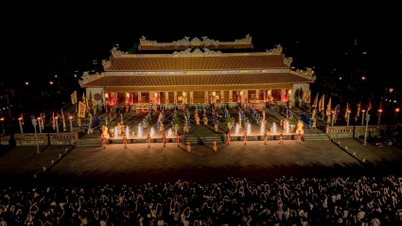
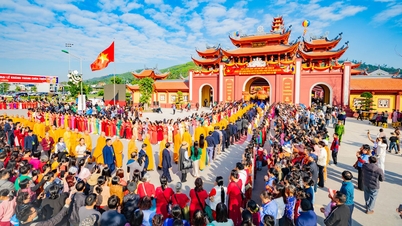
The development of green tourism, linking heritage preservation with the promotion of local cultural values, is a concrete manifestation of President Ho Chi Minh's ideology on economic development coupled with improving the spiritual life of the people, without sacrificing the environment for rapid growth.
The work of caring for the people's lives, as outlined in President Ho Chi Minh's Testament, has been realized through substantive social welfare programs. After the merger, the disparities in infrastructure and living standards between sub-regions have posed a balancing challenge. The province has prioritized budget allocation to upgrade the basic healthcare system, schools, and rural transportation network in areas far from the central hub.
Implement a comprehensive set of sustainable poverty reduction policies and address employment issues for rural workers arising from urbanization and industrial relocation to ensure that "no one is left behind".
Alongside the encouraging initial results, the province's development still faces numerous fundamental obstacles and challenges, requiring a frank assessment of the situation with a spirit of criticism and self-criticism in the style of Ho Chi Minh.
First and foremost is the challenge of stabilizing and improving the efficiency of the administrative apparatus, because "officials are the foundation of the work." This involves assigning positions that match professional capabilities; overcoming the phenomenon where a small number of officials still have a wait-and-see attitude, shirk responsibility, and fear making mistakes, affecting the progress of handling administrative procedures for citizens and businesses, or the implementation of key projects that are crucial to the province's breakthrough development goals in the short and long term.
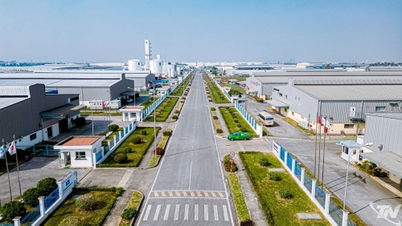
The incomplete development of key transportation routes is a major bottleneck hindering the attraction of large-scale investment projects. Furthermore, the risk of conflict between heritage preservation and industrial and urban development requires scientific governance and a profound strategic vision to solve this complex problem.
To thoroughly address these bottlenecks and enable Ninh Binh to make a strong breakthrough in the new phase, the Provincial Party Committee and government are focusing on implementing a comprehensive set of solutions: First, tightening administrative discipline and order, improving public service ethics in conjunction with studying President Ho Chi Minh's working style. Resolutely completing the restructuring and reform of the administrative apparatus and governance.
Focus resources on developing strategic infrastructure. Prioritize public investment in key transportation projects that connect regions, creating new development opportunities. Promote comprehensive digital transformation in administrative management and public services, building a digital government model that operates seamlessly from the provincial level to the grassroots, minimizing time and costs for citizens and businesses.
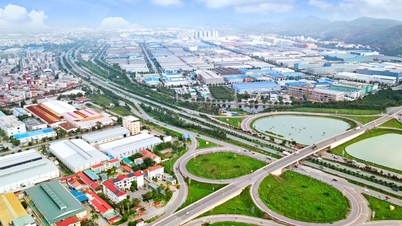
Implement comprehensive and harmonious planning that balances conservation and development. Develop eco-friendly and smart urban models, with cultural values and natural landscapes as the core of sustainability.
To awaken the spirit of great unity and the aspiration for self-reliance and self-strength among the people. To promote democracy, listen to and absorb the wisdom of all strata of the people, creating the highest level of social consensus in implementing the province's major policies, transforming the strength of over 4.4 million people into a unified bloc of solidarity, leading the homeland steadily forward.
Source: https://baoninhbinh.org.vn/de-xung-dang-voi-long-mong-doi-cua-bac-ho-260526161603696.html

![[Photo] Admire the coral "masterpiece" amidst the million-year-old heritage of Dak Lak province.](https://vphoto.vietnam.vn/thumb/1200x675/vietnam/resource/IMAGE/2026/05/30/1780107638639_y25-jpg.webp)



































































Comment (0)