

From music and fine arts to traditional arts, the digitalization process has opened doors to public access, while simultaneously creating a modern cultural ecosystem where the past and future engage in dialogue, nurturing national identity within the flow of globalization.
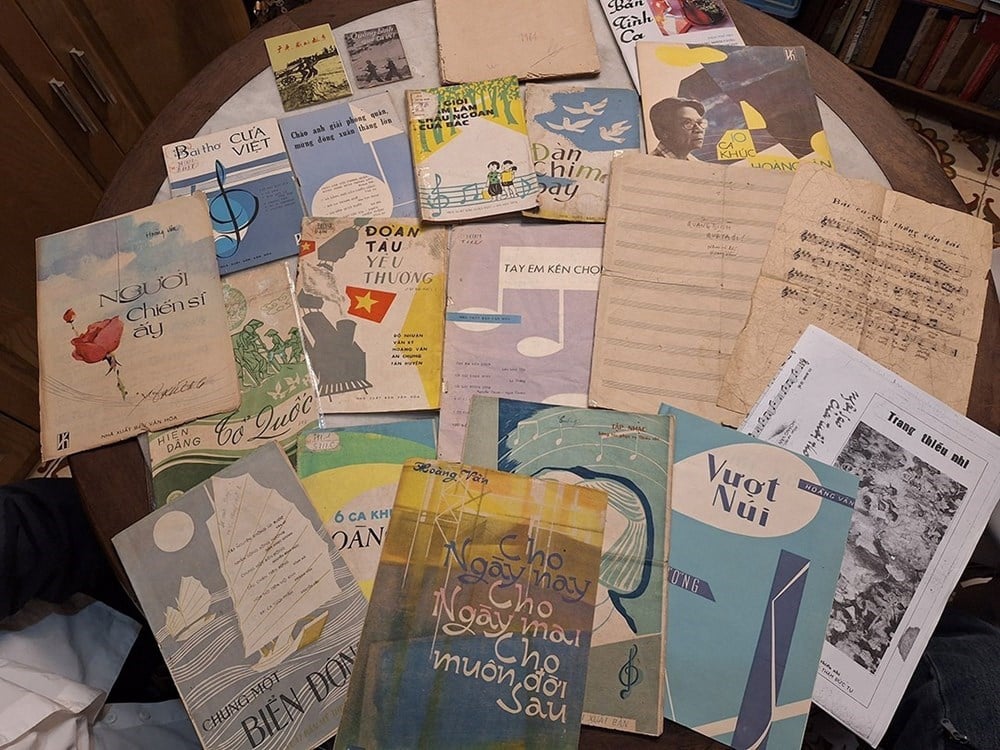
Preserving and disseminating artistic heritage.
As digital transformation accelerates globally, the treasure trove of cultural and artistic memories is facing promising opportunities for "rebirth." In Vietnam, recently, many models for storing and showcasing heritage in the digital space have emerged, contributing to both preservation and expanding accessibility, bringing cultural values closer to the public both domestically and internationally.
Prominent among these is the website project dedicated to the musical heritage of composer Hoang Van - www.hoangvan.org. Built by his family since 2018, after eight years of operation, the website has compiled over 700 works, nearly 200 recordings, along with numerous scores, manuscripts, images, and valuable research materials. This digital archive has become a repository for preserving the memories and achievements throughout the composer's artistic journey.
Recently, according to information from the family, version V2 of the website, developed over 24 months, was launched on April 10th, further enhancing the user experience. The modern interface, scientific structure, and flexible music playback across multiple platforms make accessing music more natural and accessible. Works are also re-categorized by theme, genre, and composition period, helping users better understand the diverse styles of composers, from songs and choral works to symphonies and film scores.
Another notable feature is the multilingual system comprising five languages (Vietnamese, English, French, Spanish, and Russian), expanding accessibility to an international audience while effectively serving academic research. Furthermore, the library sections, videos , and visual materials have been reorganized in a more intuitive way, directly connecting to the official YouTube channel, creating a seamless multimedia experience.
Dr. Le Y Linh, daughter of composer Hoang Van, stated that the new version is not simply a technical upgrade but also a process of "scientifically restructuring the entire archive." The late composer's son, conductor Le Phi Phi, also emphasized that the new experience allows users to "read, watch, and listen to music simultaneously," bringing them closer to how music exists in real life.
According to experts, the combination of physical and digital archiving, as exemplified by the website “www.hoangvan.org,” has opened a new direction in preserving the heritage of veteran artists in Vietnam. Many expect this model to have a ripple effect, encouraging artists' families and cultural organizations to boldly invest in technology and build a diverse digital cultural ecosystem where the essence of national art is not only preserved against the ravages of time but also has the opportunity to reach international levels.
From digitalization to building a digital cultural ecosystem.
Alongside the field of music, fine arts are also witnessing significant transformations in the digital space. For example, thousands of documents, images, and artifacts related to the renowned painter To Ngoc Van have been digitized and uploaded to online platforms. With the combination of 3D technology and artificial intelligence, viewers can not only "see" but also "experience" the heritage.
Through AI virtual guides and interactive platforms, the public can comprehensively explore the life, career, and contributions of the renowned painter to Vietnamese revolutionary art. This is a significant step forward, as art appreciation is no longer confined to physical spaces but is expanded into a vibrant digital environment.
In the field of traditional arts, the ongoing project to bring Southern Vietnamese cải lương (traditional opera) to the digital space also demonstrates a new vision in heritage preservation. Beyond digitizing the entire archive of rare materials such as scripts, audio recordings, and videos, the project aims to build a virtual museum, apply virtual reality (VR) technology, artificial intelligence (AI), multilingual narration, and even organize online cải lương classes…
The unique aspect of this model is that it goes beyond the scope of preservation, aiming to create a new creative ecosystem. From online platforms and interactive spaces to the application of AI and the Metaverse in creating Cai Luong (Vietnamese traditional opera) content, the project opens up opportunities for traditional art to reach the younger generation in entirely new ways.
Numerous digital collections of diverse scale and subject matter have also been built and introduced to the public. Previously, public museums such as the Vietnam National History Museum, the Ho Chi Minh Museum, and the Vietnam Fine Arts Museum... pioneered the implementation of virtual exhibitions, 3D museums, etc., promoting heritage on online platforms, helping artifacts overcome spatial and temporal barriers to reach a wider audience. This demonstrates an inevitable trend: digitizing heritage is no longer an option, but has become a mandatory direction. In this context, Resolution No. 80-NQ/TW of the Politburo on the development of Vietnamese culture has set out important directions, especially emphasizing the task of "building and operating a nationwide digital cultural platform".
In the spirit of the Resolution, the development of digital library services, digital museums, online performing arts, and online art classes aims not only at preservation but also at narrowing the cultural access gap between regions and social classes.
In the digital age, heritage no longer lies dormant in glass cases or little-known archives. Artifacts and documents are "alive" with every click and every interactive experience of the public.
Realizing the spirit of Resolution 80 through specific solutions such as proactively adapting to the development of science and technology, promoting innovation, accelerating digital transformation in cultural development; building "digital culture" institutions, training human resources for digital transformation… contributes to preserving national memory, while opening new horizons for preserving, creating, promoting and developing Vietnamese culture in the era of globalization.
Source: https://baovanhoa.vn/van-hoa/dia-hat-moi-cua-di-san-van-hoa-viet-218992.html


![[Photo] First session of the 14th Congress of the Vietnam Trade Union](https://vphoto.vietnam.vn/thumb/1200x675/vietnam/resource/IMAGE/2026/06/03/1780465947883_ndo_br_img-3852-jpg.webp)























































Comment (0)