


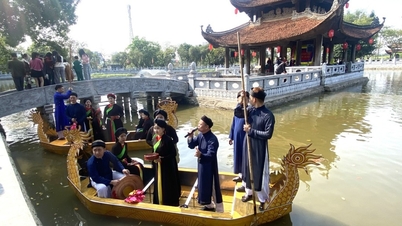
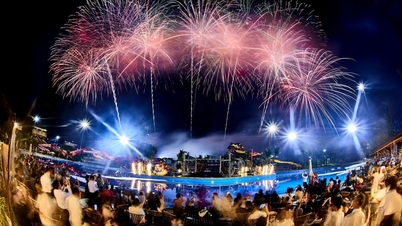
Over the years, the entire tourism industry has continuously strived to promote and attract tourists with many new promotional models and innovative approaches: applying digital technology , linking tourism with culture and art, appointing ambassadors, etc., in order to enhance Vietnam's recognition on the world tourism map.
Promotional activities have increased in number, frequency, and scale in many potential markets. As a result, in 2025, for the first time in history, Vietnam will reach the milestone of welcoming over 20 million international tourists and serving over 130 million domestic tourists; while continuously receiving prestigious awards from international tourism organizations and consistently ranking among the top destinations with the highest growth in tourist search volume…
However, many countries are repositioning their brands with new messages and images based on the guidance of big data... If Vietnam's tourism industry wants to improve its ranking, it must have a long-term, in-depth, and flexible promotion strategy, especially since some related strategies such as the Strategy for Developing Vietnam's Tourism Brand and the Strategy for Developing Vietnam's Tourism Products will expire at the end of this year.
Furthermore, the process of merging administrative boundaries of localities within the country also requires appropriate adjustments to tourism promotion efforts in order to maximize the overall utilization of resources.
According to Nguyen Thi Hoa Mai, Deputy Director of the Vietnam National Tourism Administration, despite some positive developments, Vietnam's tourism promotion efforts generally lack a comprehensive national-level campaign and a clear coordination mechanism between the central government, local authorities, businesses, and overseas representative offices.
Therefore, the image of Vietnamese tourism is fragmented and inconsistent. Furthermore, the financial mechanism for tourism promotion activities in our country is limited, inadequate, unstable, and based on a "yearly" basis, amounting to only a very small fraction compared to some countries in the region. This leads to a lack of significant improvement in the scale, frequency, coverage, and professionalism of Vietnamese tourism promotion activities, especially in foreign markets.
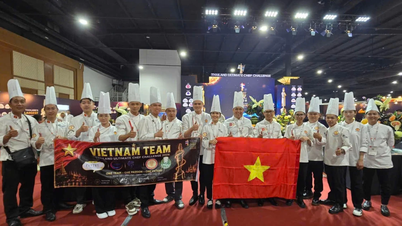
Recently, the Government requested the Ministry of Culture, Sports and Tourism to research and develop a plan to promote Vietnamese tourism and cuisine abroad for the period 2026-2030. This plan aims to focus on key areas of promotion, foster inter-sectoral, inter-regional, and international tourism cooperation, and contribute to enhancing the image, position, and competitiveness of Vietnamese tourism.
To accomplish this task, Ms. Mai believes that it is necessary to develop a national tourism promotion strategy with a long-term vision for the next five years, focusing on cuisine and cultural experiences as the core of the brand, combined with market research to boost promotion.
Target market groups are identified as large, nearby markets (such as China, South Korea, Japan) with good growth potential and many new segments (such as Thailand, Malaysia, Indonesia, Philippines); distant markets with high spending power (such as Western Europe, Northern Europe, North America) and good growth potential (such as Australia, Russia, Southern Europe, Eastern Europe); or potential markets (such as the Middle East, India)...
Furthermore, to avoid dispersing resources, a coordination mechanism needs to be reformed: the Ministry of Culture, Sports and Tourism should take the lead in developing and implementing the annual national tourism promotion program, while localities and businesses propose and contribute tasks or register to lead the implementation of tasks within the program based on shared ideas and financial contributions to ensure unified action and create a strong promotional effect.
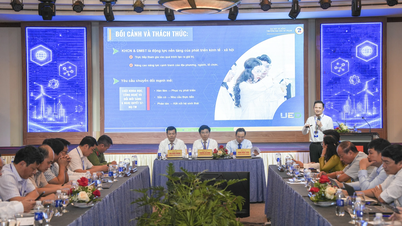
From a local perspective, Ms. Nguyen Cam Tu, Director of the Ho Chi Minh City Tourism Promotion Center, affirmed: Given the reality that the tourism behavior of international tourists is changing dramatically towards prioritizing information searching on digital platforms, consulting online reviews, and booking services through online travel agencies (OTAs)..., tourism promotion must shift from traditional methods to a data- and technology-based model.
That is why, in 2025, the Ho Chi Minh City Department of Tourism launched the key project, the HCMC Global Traveler Barometer (HCMC GTB), making Ho Chi Minh City the first locality in Vietnam to develop its own system for tracking and forecasting target tourist markets.
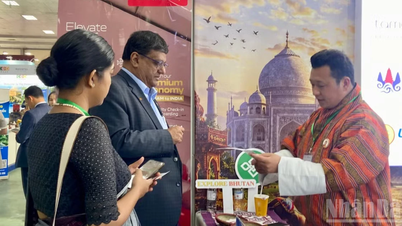
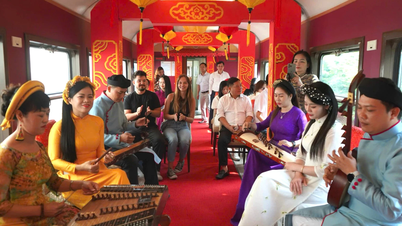
To create synergy and achieve breakthroughs, many experts suggest that the Ministry of Culture, Sports and Tourism should develop and publish an annual national tourism promotion event calendar to systematize information, enabling localities and businesses to proactively coordinate and participate, strengthening linkages and avoiding resource waste. Simultaneously, it should lead national promotion campaigns, enhance the presence of Vietnamese tourism at key international fairs and events; support the organization of national-scale famtrip and presstrip programs to promote Vietnamese products, services, and destinations to target markets; and leverage cultural diplomacy and international media to professionally, attractively, and effectively disseminate the image of Vietnam as a tourist destination.
Source: https://nhandan.vn/dinh-hinh-chien-strateg-xuc-tien-du-lich-quoc-gia-post934945.html











![[Photo] Reception to welcome General Secretary and President To Lam and his wife on their State visit to the Philippines](https://vphoto.vietnam.vn/thumb/1200x675/vietnam/resource/IMAGE/2026/06/01/1780295488620_vna-potal-chieu-dai-chao-mung-tong-bi-thu-chu-tich-nuoc-to-lam-va-phu-nhan-tham-cap-nha-nuoc-toi-philippines-8798060-7855-jpg.webp)









































Comment (0)