

Like millions of her compatriots, Valentyna Vysotska, a hairdresser, fled Ukraine to Germany when Russia launched its military campaign there. After a 10-month intensive German language course, she found work at a hair salon in Berlin.
"My German isn't very good, but my boss, colleagues, and clients are all very understanding," Vysotska, 54, told the French news agency AFP.
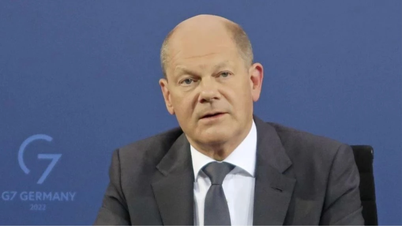
According to German Chancellor Olaf Scholz, Vysotska is an example he wishes he could see more of. Of the Ukrainian refugees who arrived in Germany in the last two years, only 170,000 have found employment.
Scholz himself recently urged newcomers to stand on their own two feet instead of relying on social welfare. The head of the Federal Government said: “We have provided them with integration classes and German language lessons. Now they have to find work.”
The urgency is driven not only by financial reasons. The cost of welcoming newcomers is certainly enormous – around 5.5-6 billion euros (5.4-6.1 billion USD) has been set aside for Ukrainians this year.
But Germany is also facing a serious labor shortage, while Ukrainian refugees could potentially do more. And there is a “political imperative” for Scholz’s government to produce more success stories of integration.
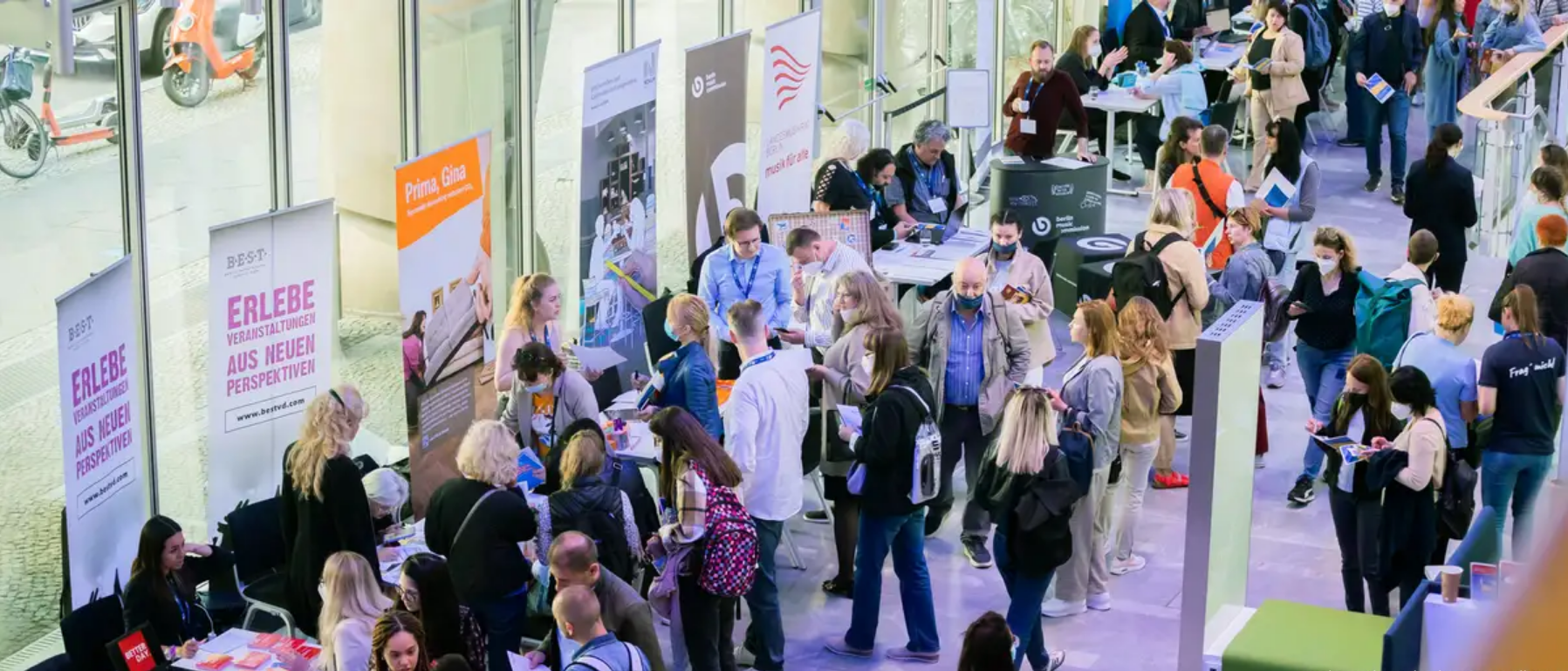
A job fair for Ukrainian refugees in Berlin, 2022. Photo: DW
Immigration and integration were hot topics in the recent European Parliament elections, with the far-right arguing that Europe's largest and currently weak economy needs to look after itself first.
Notably, the far-right AfD party entered the German Parliament (Bundestag) in 2017 following public outrage over the influx of millions of Syrians and Iraqis in the preceding two years, and Scholz's government was wary of what could happen if that outrage were to repeat itself.
To appease the arguments of the far right, the German government has recently moved to tighten regulations for asylum seekers. Among these measures is the introduction of a new payment card that provides social support to refugees in the form of credit that can only be used locally – effectively eliminating the possibility of migrants sending cash back to their home countries.
But for Ukrainian refugees in particular, the key to the government's strategy is to integrate them into a job market that is facing a severe labor shortage.
For example, Vysotska's boss, Civan Ucar, recalled the relief he felt finding the Ukrainian, who had 35 years of experience as a hairdresser in her homeland, at a job fair.
"It's very difficult to find qualified personnel," he said, pointing to Germany's aging population. Mr. Ucar shrugged at Ms. Vysotska's poor German language skills, saying it could only improve once she started working.
"We learn German faster when we work because we are forced to talk to our colleagues," he said.
But language is just one of many obstacles for job seekers in Ukraine.
Andreas Peikert, who runs a job center in Berlin, told the TAZ newspaper that Ukrainians seeking refuge in Germany are mostly women and children, but “we have too few kindergartens and schools.”
"If a mother can't be sure where she can get childcare, she won't look for work," Peikert pointed out.
A study by the Friedrich Ebert Foundation also showed that Germany imposes far more administrative barriers than countries like Poland or the Netherlands, where around 60-70% of Ukrainians are employed.
Professionals must possess equivalent qualifications in Germany to be licensed to practice and must apply for a license to be approved and recognized by the competent authority.
A high level of German proficiency is often required for office jobs, essentially eliminating the need for many newcomers to struggle with learning a new language from scratch in adulthood.
To smooth this process, the German government is encouraging large companies to relax language requirements and provide assistance to new employees to improve their skills.
But at the same time, the German government said that newcomers must also lower their expectations and take the first step.
"The issue isn't about finding your dream job, but about entering the job market and then gradually climbing the ranks," said German Labour Minister Hubertus Heil .
Minh Duc (According to AFP/Kyiv Post)
Source: https://www.nguoiduatin.vn/duc-yeu-cau-nguoi-ti-nan-ukraine-lam-viec-a668509.html


![[Photo] Ba Lang An Lighthouse - the "eye of the sea" amidst the "rock museum" of Quang Ngai province.](https://vphoto.vietnam.vn/thumb/1200x675/vietnam/resource/IMAGE/2026/05/29/1780038698840_anh-man-hinh-2026-05-29-luc-14-10-42.png)
![[Image] Pleasant weather helps students enter the 10th grade entrance exam with confidence.](https://vphoto.vietnam.vn/thumb/1200x675/vietnam/resource/IMAGE/2026/05/29/1780034401612_ngay-1-thi-lop-10-minh-duy-8-5009-jpg.webp)
















































































Comment (0)